


Starting Prices and Expectations
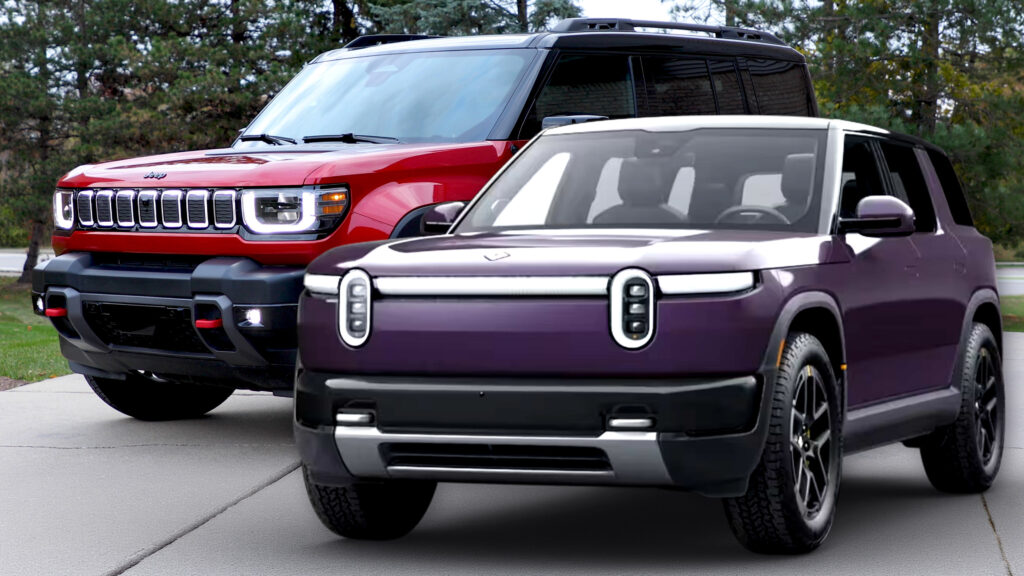
Rivian recently unveiled the long-awaited R2, and its price surprised many. Despite the company’s promise of a starting price of around $45,000, the base model costs $57,990.
Price, Performance, and Range
This amount is significantly higher than expected, yet it looks like a real bargain compared to the 2026 Jeep Recon, which starts at $65,000. The Recon is equipped with a 100 kWh battery and a dual-motor all-wheel-drive system producing 650 hp and 840 Nm of torque. This allows the off-roader to accelerate from 0 to 60 mph in 3.6 seconds and travel up to 230 miles on a single charge in the Moab version.
Rivian’s Most Affordable Model Arrives First In Its Most Expensive Form
The R2, on the other hand, has an 87.9 kWh battery and a dual-motor all-wheel-drive system with 656 hp and 825 Nm of torque. These figures are nearly identical to the Jeep’s, as is the 0-60 mph acceleration time, which is also 3.6 seconds.
The models also offer a similar fast-charging experience: the Recon’s battery charges from 5% to 80% in approximately 28 minutes, while the R2 charges from 10% to 80% in 29 minutes. However, there is a significant difference: the R2 Performance has a range of 330 miles. This is 100 miles more than the Recon Moab and 80 miles more than the future Jeep versions.
Off-Road Capabilities
In terms of off-road capability, the Recon Moab has a ground clearance of 9.1 inches, as well as approach, departure, and breakover angles of 33.8, 33.1, and 23.3 degrees, respectively. Although the R2 has a greater ground clearance of 9.6 inches, its angles are significantly more modest: 25, 26, and 20.6 degrees. The Jeep sits on 18-inch wheels with 33-inch tires, while the Rivian has 21-inch wheels and 32-inch tires.
Interior and Cargo Space
In terms of dimensions, the Recon is 193.3 inches long, 87.4 inches wide, and 73.8 inches tall with a wheelbase of 112.9 inches. This means it is 7.4 inches longer than the R2, despite having a wheelbase that is 2.7 inches shorter.
Despite its smaller size, the Rivian offers more cargo space thanks to a 5.2 cubic foot front trunk and a rear compartment that holds 79.4 cubic feet of luggage. The Recon, on the other hand, has a smaller 3 cubic foot front trunk and a main cargo area of 65.9 cubic feet.
Equipment
While the R2 seems to have an advantage in many aspects, the Jeep has a few aces up its sleeve. The most notable is the doors, rear side windows, and rear door glass, which can be removed without tools. This open-air experience can be enhanced with the optional Sky one-touch power roof. This sounds much more interesting than the R2, which has a retractable rear window and a panoramic glass roof.
Rivian hasn’t said much about the crossover’s interior, but buyers will find a Black Crater Signature interior with Birch wood trim. It is complemented by 12-way power front seats with heating and ventilation, as well as heated rear seats and steering wheel. Other features include a premium audio system with nine speakers and a flashlight integrated into the driver’s door.
The Recon’s interior looks a bit less luxurious, but it has a 12.3-inch digital instrument cluster and a 14.5-inch multimedia system. These are complemented by front seats with Capri synthetic leather, heating, and 8-way power adjustment. Other advantages include dual-zone automatic climate control, ambient lighting, wireless smartphone charging, and an 11-speaker premium Alpine audio system.
Customers will also be able to get a Comfort package, which includes ventilated front seats, heated rear seats, a digital rearview mirror, and a passenger camera.
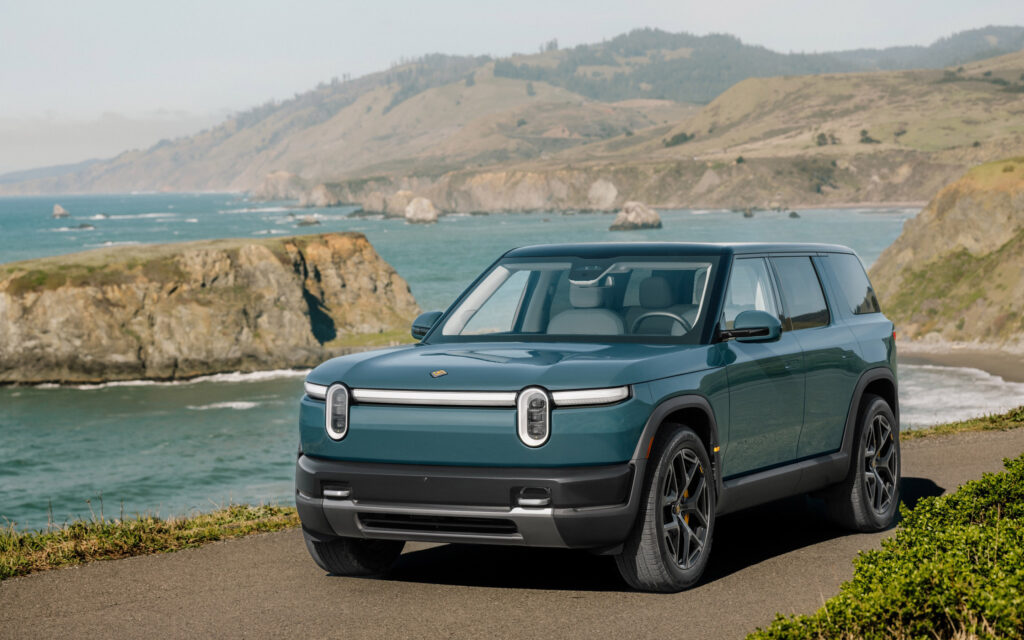

Both cars are clearly aimed at the electric off-roader market, but they go about it differently. The Rivian R2 bets on practicality, long range, and a modern tech-filled cabin, while the Jeep Recon retains the spirit of a classic off-roader with unique open-air capabilities and likely more developed features for serious off-roading. The choice between them essentially boils down to priorities: what is more important to the buyer—maximum autonomy and space or an authentic off-road experience and the possibility of fully transforming the vehicle. Price also remains a significant argument in favor of the Rivian, which could be a deciding factor for many.