
 by
by Rivian Sales Dropped After Federal Tax Incentives Ended
Rivian was one of the first to announce its 2025 sales results, and they turned out to be disappointing. The main reason cited for the decline is the termination of federal electric vehicle tax credits in September.
The key figures look like this:
Details of Quarterly and Annual Results
Specifically, in the fourth quarter of 2025, the company delivered 9,745 vehicles to customers. For comparison, during the same period in 2024, this number was 14,183 vehicles. Thus, the drop amounted to 31.3%, which is a significant indicator.
For the entire year of 2025, Rivian delivered 42,247 vehicles, whereas in 2024, 51,579 pickups and SUVs were sold. This means an annual decrease of 18.1%.
The company’s production also decreased: 10,974 vehicles were manufactured in the fourth quarter, and 42,284 units for the year. These figures correspond to demand, but they are lower than the 2024 indicators, when 12,727 and 49,476 vehicles were produced, respectively.
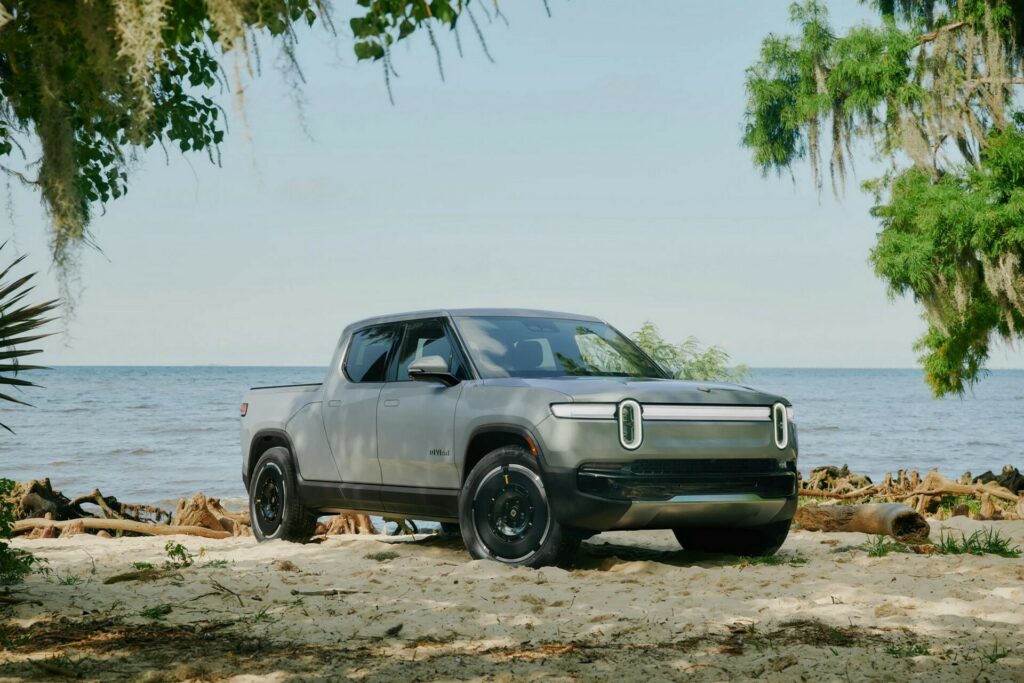
Company and Investor Reaction
Rivian representatives noted that such results were expected. Official comments were minimal, but the company reported that full financial results for the fourth quarter and 2025 will be published on February 12.
Investors seem to have taken the news calmly. At the time of the report’s publication, Rivian shares fell by only 1.95%, to $19.32 per share. It is worth noting that overall, over the past year, the stock price has increased significantly: on January 2, 2025, they were worth $13.25.
Plans for 2026
Despite a challenging 2025, Rivian has big plans for the future. The most anticipated new product is the R2 model, whose launch is scheduled for the first half of 2026. The estimated starting price will be $45,000.
Details about the car have not yet been disclosed, but it is known that it will be built on an entirely new platform. The model will receive two battery pack options, one of which will provide a range of over 300 miles (483 km). Single-, dual-, and tri-motor powertrains are also expected. The latter is said to accelerate the car from 0 to 60 mph (0-96 km/h) in less than three seconds.
Technological Updates
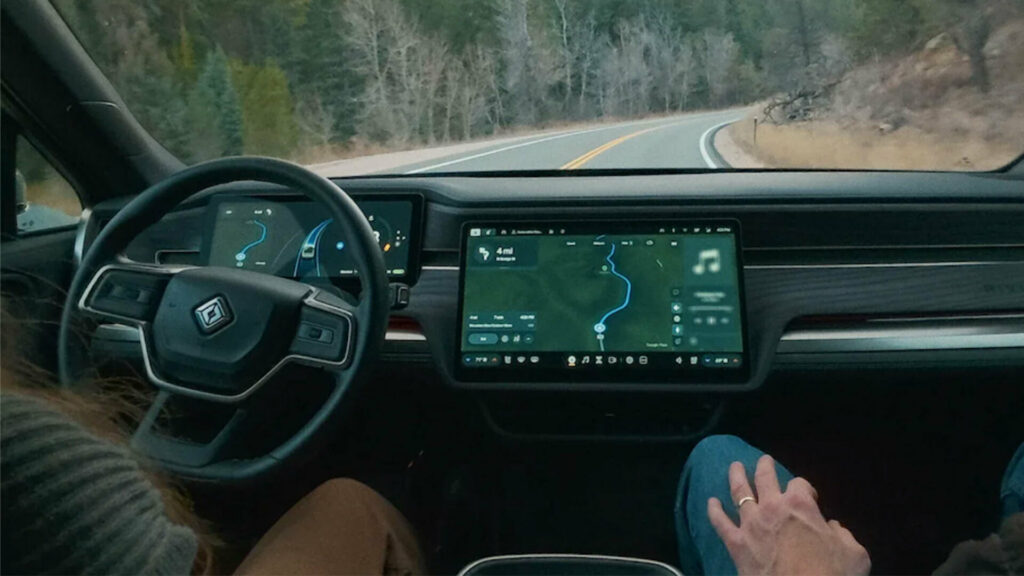
In addition to the new model, the company recently announced a series of updates. Among them is the Universal Hands-Free Driving system, which will appear in the R1 lineup. It will allow for hands-free driving on over 3.5 million miles of roads in the US and Canada. This feature will become part of the new Autonomy+ subscription, which will cost $49.99 per month or $2500 as a one-time payment.
The drop in sales after the cancellation of government support is a telling example of how sensitive the electric vehicle market can be to regulatory changes. This situation indicates that for stable growth, brands need not only innovation but also predictable government policy. At the same time, Rivian’s plans to launch the more affordable R2 model could become a key factor in attracting a new, broader audience of buyers, less dependent on temporary incentives. The success of this model could largely determine the company’s future in the coming years.