


Update for Autonomous Taxis
Following the news that the Tesla Cybercab prototype received a wash for the rear camera, new information has emerged about the expansion of this feature. The first Model Y cars being used in the company’s autonomous taxi (Robotaxi) pilot program are also being equipped with external camera washers.
Unlike many other manufacturers, Tesla is known for its commitment to using an exclusively visual system (vision-only) for autonomous driving. This approach is cheaper than equipping cars with radars and lidars, but has its problems. For example, if the camera lenses get dirty, the system will not be able to function properly, which is critical for millions of driverless cars without a human at the wheel.
Practical Implementation of the System
Last week, Tesla made important changes to its Robotaxi fleet in Texas, eliminating the need for a safety driver in the passenger seat. Instead, operators now accompany the autonomous Model Ys in separate cars following behind.
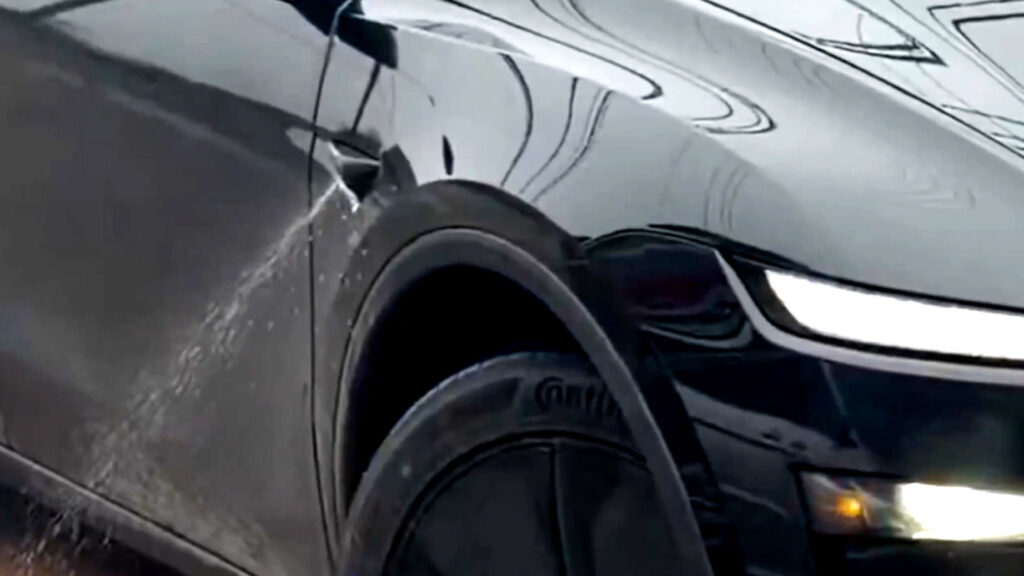
Repeater camera cleaning in action on Robotaxi Model Y cars
Spray nozzle in action: https://t.co/qqE32wDheD pic.twitter.com/zyIMIXAMUO
As part of this update, Model Ys now have functional washers for their external cameras. A washer has been added to the rear camera above the LED light bar, and additional washers have been installed for the cameras in the front fenders.
Newer Cybercab prototypes appear to be receiving a similar update. Along with the rear camera washer, these test vehicles have washers installed for the side cameras on the B-pillars.


Mass Implementation of the Technology
If Robotaxis and Cybercabs are getting washers, it is almost certain that, for economies of scale reasons, regular production Teslas will soon receive the same hardware. This is not just about component costs. Software also plays a role, as Tesla typically standardizes features across its entire fleet to simplify development. Supporting different configurations adds complexity, which goes against the company’s usual efficiency-driven approach.
Questions for Owners
The main question now is whether owners of existing Tesla models, many of whom have already spent thousands on the Full Self-Driving package, will be able to install these camera washers on their cars.
Probably yes, but don’t expect it to be a free upgrade. Tesla may soon offer an option to add these washers to older cars, but given the company’s history, it’s hard to imagine it will bear these costs itself, regardless of how important this equipment is for the system people have already invested in.
Looks like Tesla’s newly built Model Y Robotaxis in Austin now have three changes that previous Model Ys don’t have.
• Rear camera washer
• Side repeater camera washers
• Black lines surrounding the entire front camera housing, which could mean improved sealing to prevent… pic.twitter.com/oPpESkLuP9
New Model Y rear camera washer in action on Robotaxi.
Thx for the video @DavidMoss! pic.twitter.com/TxCxa8vtpC
The implementation of camera washers for autonomous taxis indicates a pragmatic step by Tesla in solving a practical problem that could have become a serious barrier to the commercial success of their vision-only strategy. It also raises interesting questions about how the company balances innovation, cost, and obligations to customers who purchased future technologies today. The development of such hardware upgrades could become a new business direction for the automaker, especially in an environment where software updates no longer generate the same wave of excitement as before.