


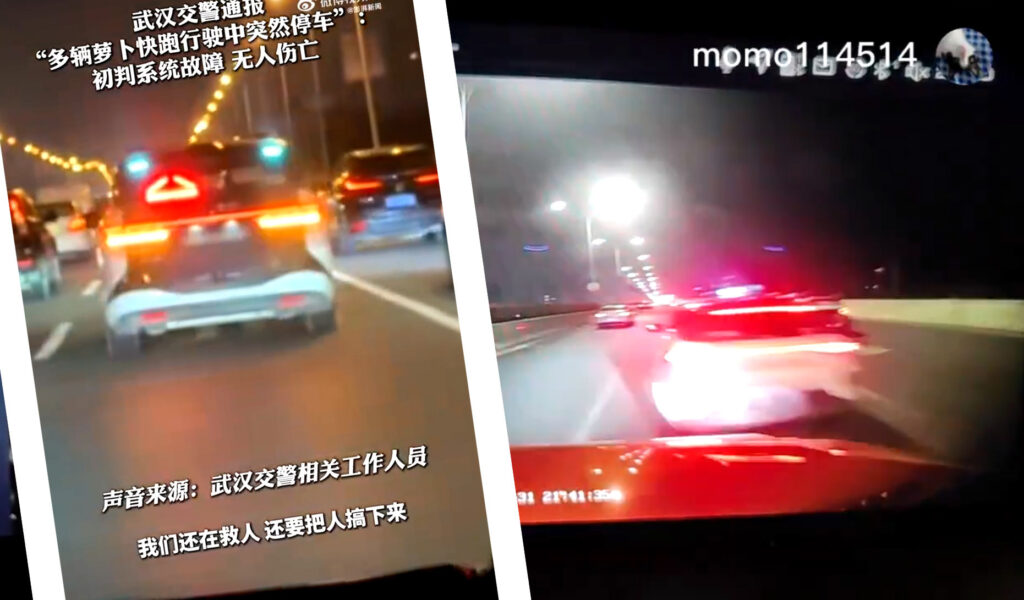
Baidu Robotaxi Incident in Wuhan
Several autonomous robotaxis from Baidu Apollo Go caused a series of traffic accidents on Chinese highways earlier this week. This event serves as a reminder that malfunctions in such systems can quickly lead to dangerous situations on the road. The incident has once again drawn attention to how autonomous fleets respond to unexpected technical failures in real-world traffic conditions.
Causes and Consequences of the Stoppage
As it turned out, “system malfunctions” caused several Baidu robotaxis to stop suddenly on highways in the city of Wuhan. Videos spread on social media showing several vehicles with hazard lights on, standing in the middle of traffic lanes or on the shoulder, unable to continue their journey.
One dashcam video, published online, shows how a driver collided with the rear of a robotaxi that was stationary in the central lane of a wide highway. According to the driver, he had no time to react, and the collision resulted in his SUV sustaining serious front-end damage.
Scale of the Incident and Company Response
At least two other collisions were recorded that same day. In one case, a Baidu robotaxi was rear-ended by another car. Beyond the accidents, the technical failures also led to numerous passengers being trapped inside the robotaxis, adding problems beyond the accidents themselves.
NEW: Dozens of robotaxis by Baidu stopped on the road in Wuhan, causing crashes on highways and trapping passengers in the cars—some for more than an hour. One passenger told me it took her 30 minutes to even connect to a customer representative. Here’s a video of a crash.
A local student reported that she, along with two friends, sat in one such car for 90 minutes. According to her, the robotaxi stopped four or five times during the trip before finally coming to a halt near an intersection. The in-car display instructed passengers to remain buckled up, but it took 30 minutes just to connect with a Baidu representative.
Context of Road Traffic in China
Several decades ago, cars were a relative rarity on Chinese highways, which were dominated by scooters, bicycles, and motorcycles. However, with the country’s growing prosperity, local roads have become congested with cars. Add fully autonomous robotaxis that can stop suddenly at any moment, and you have a perfect recipe for dangerous situations.
This case in Wuhan raises important questions about the readiness of mass autonomy technologies for the chaotic conditions of real roads. Flawless operation in a perfect environment is one thing, but the true test is the system’s ability to safely handle a critical failure during peak traffic. Such incidents can significantly slow public acceptance and legislative approval of autonomous vehicles, as trust in them is built over years but can be lost in an instant. Developer companies will likely have to review emergency response protocols and communication with passengers, especially in situations where the vehicle becomes immobile in the path of other traffic.