 by
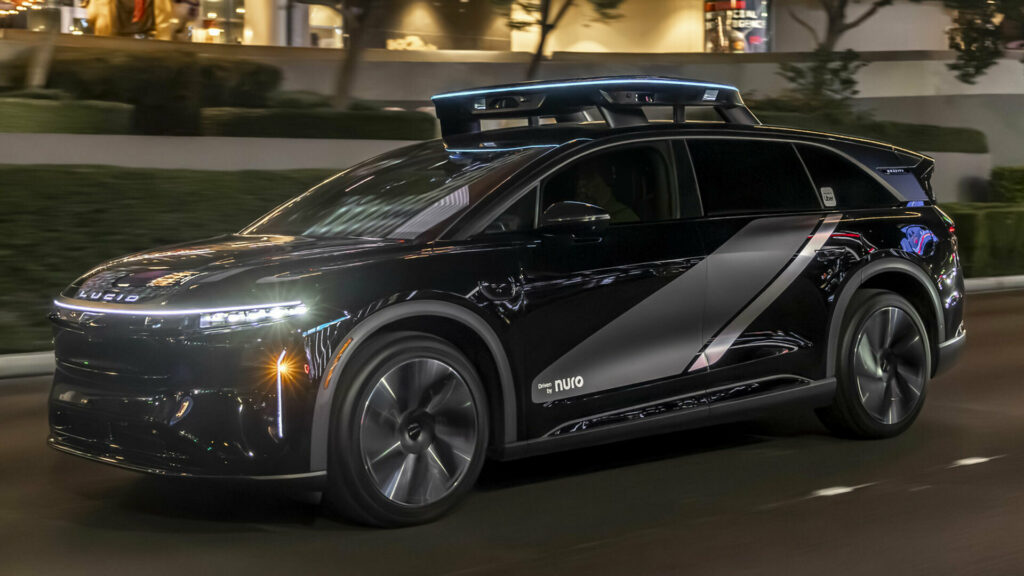
by At CES, Lucid, Nuro, and Uber presented a robotaxi ready for serial production and demonstrated the passenger interface inside the cabin. The companies also announced that road testing of the vehicle began back in December of last year. The planned launch of the service is set to take place in the San Francisco Bay Area this year.
Technical Foundation and Partnership
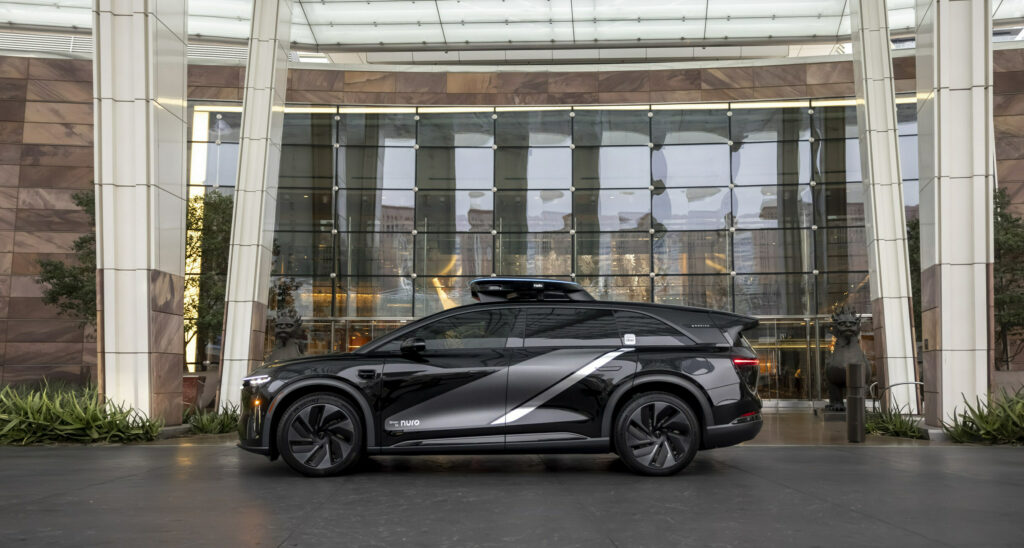
The robotaxi is built on the platform of the Lucid Gravity electric crossover. It is equipped with a Level 4 autonomous system. The next-generation sensor suite includes high-resolution cameras, solid-state lidars, and radars that provide a 360-degree view of the surroundings. This equipment is integrated into the car’s body and a special module on the roof.
Data from the sensors is processed by the “Nuro Driver” autonomous control system. Its operation is powered by the Nvidia Drive AGX Thor computer, enabling high-performance computing and real-time AI data processing.
Uber’s role in this alliance is to own and operate the robotaxi fleet (together with partners) and provide services through its popular ride-hailing platform.
Passenger Experience: From Pickup to Ride
The companies revealed some details on how passenger interaction with the robotaxi will be organized. When the car arrives, the displays on the top module (the “halo”) show the customer’s initials, helping them identify their vehicle.
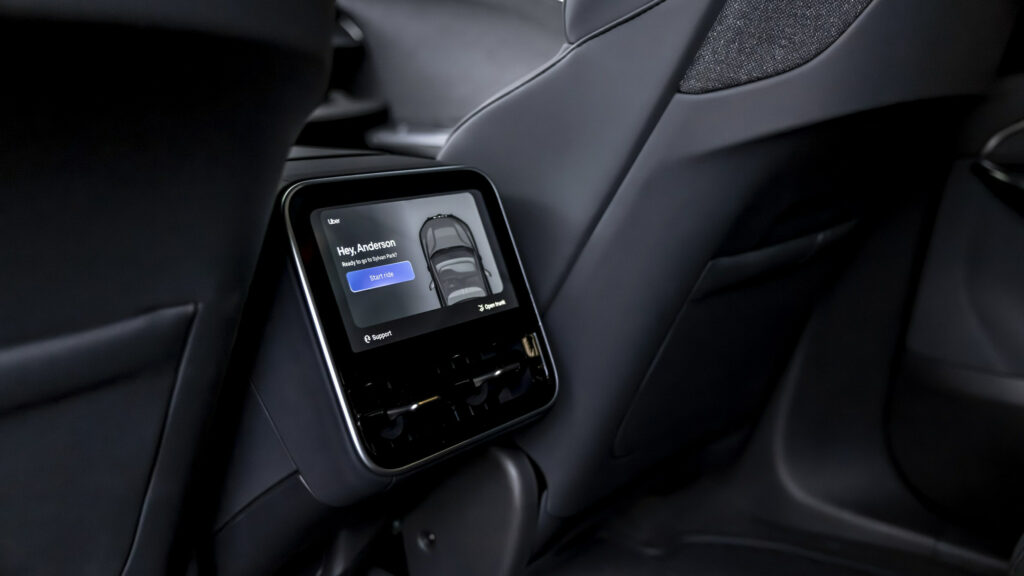
It is assumed that passengers will sit in the second row of seats. There, they will be greeted by a screen displaying their name and destination. A digital button will also be available to open the trunk for luggage.
When the passenger is ready for the trip, they press the “Start Ride” button. After that, the screen will show the estimated time of arrival and an animation illustrating what the car “sees” and plans: for example, how it yields to pedestrians, stops at a traffic light, changes lanes, or pulls over for drop-off.
Control and Comfort in the Cabin
Passengers will have access to basic cabin control functions: they can adjust the climate control, seat heating, and audio system. A button for contacting support and a command to ask the vehicle to pull over are also provided. Of course, the familiar Uber map for tracking the route will be available.
Although many trips will likely be solo, the robotaxi is designed for groups. It can simultaneously carry up to six passengers along with their luggage.
Future Plans
Additional information about the robotaxi is expected to be revealed in the coming months. Production of the Lucid vehicles is planned to start this year in Arizona, after which they will be deployed in the San Francisco Bay Area.
If all goes according to plan, Uber will deploy at least 20,000 Lucid robotaxis over the next six years across dozens of markets worldwide.
The emergence of such a joint product from three leading companies indicates an acceleration in the commercialization process of autonomous vehicles. The success of this initiative could significantly impact the passenger transportation market, making driverless rides a mass phenomenon initially in specific regions and later globally. An important aspect remains not only technological perfection but also public trust in the safety of such systems, as well as the adaptation of the legal framework in different countries.