 by
by Tragedy on Christmas
On Christmas night, the driver of a Tesla Cybertruck, according to the investigation, crossed into the oncoming lane and collided with a Toyota Corolla. As a result of the crash, 14-year-old Malachi James, a passenger in the Corolla, was killed. This tragedy forced the boy’s family to raise questions about the safety of the vehicle itself and call for a ban on the operation of the Cybertruck on public roads in the USA, following Europe’s example.
Victim’s Family Demands Action
Malachi’s aunt, Royael Saez, stated in a comment to the media:
We will do everything in our power to find ways to ban these cars from being on the streets.
She also called the Cybertruck a “tank,” expressing the opinion that the car is too big and fast to safely coexist with regular traffic. The family points out that similar vehicles are already banned in Paris, which, in their opinion, indicates obvious risks.
Safety and Weight: Official Standards and Expert Assessments
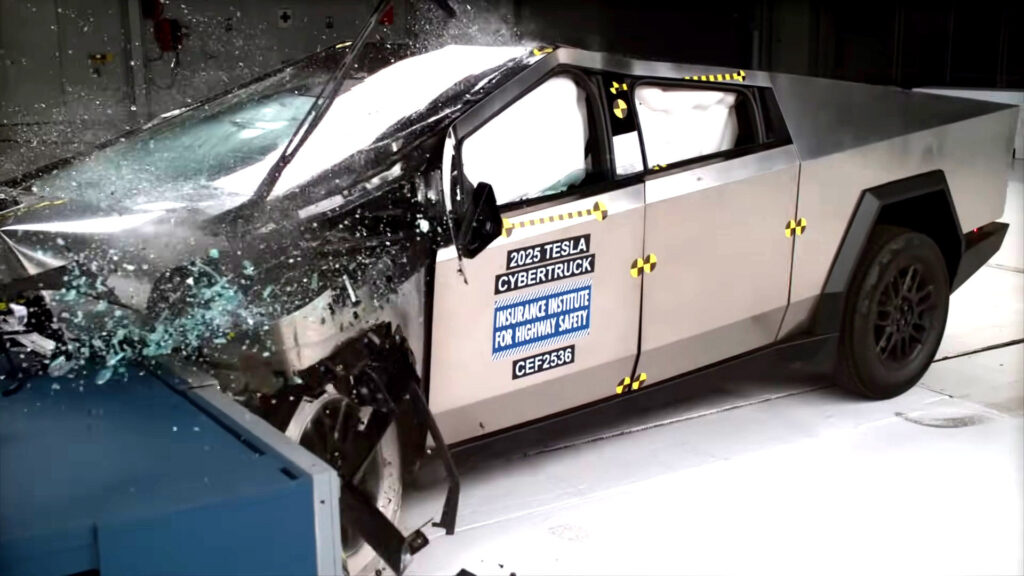
Despite the Cybertruck meeting US safety standards and having a five-star rating from the National Highway Traffic Safety Administration, experts emphasize that its dimensions and mass remain critical factors affecting the severity of crash consequences. Dr. Eric Jackson from the Connecticut Transportation Institute explained that it is a very large and heavy vehicle with an all-metal body. He also noted that the Cybertruck is equipped with 11 cameras that record data upon impact, which aids in investigation. The lightest model of this pickup weighs over 3 tons.
Cybertruck is Not Alone Among Heavy Vehicles
Although the family has focused specifically on Tesla, it is important to understand that the Cybertruck is far from the only heavy vehicle on the roads. The Rivian R1T electric pickup weighs approximately the same. Conventional full-size pickups from Ford, General Motors, and Stellantis can also have similar or even greater mass. Heavy-duty trucks like the Ford F-350 can weigh over 7,000 pounds and are significantly larger. Regardless of engine type or shape, heavier vehicles are worse in many key road safety metrics: braking, handling, and visibility compared to regular passenger cars.
Circumstances of the Fatal Crash
Regarding the specific incident, police have already detained the suspected Cybertruck driver. At the time of the crash, 11 criminal cases were already open against him, including one for reckless driving. Surveillance camera footage shows that immediately before the collision, he was overtaking other cars at high speed in the oncoming lane. Such driver behavior poses a threat regardless of the specific vehicle he is driving—a large pickup or a regular passenger car.
This tragedy once again raises the important issue of regulating the weight and size of personal vehicles, which are constantly increasing. The safety dialogue often focuses on individual, unusual models; however, the risks associated with mass and dimensions are inherent to all large pickups and SUVs. Society and regulators may need to consider more general approaches to assessing the danger posed by super-heavy vehicles in urban environments, where they often interact with significantly smaller and lighter vehicles. Progress in passenger safety inside such vehicles should not overshadow the growing risks for all other road users.