


Exclusive Electric Roadster from Rolls-Royce
Against the backdrop of other automakers scaling back their electric programs, Rolls-Royce, on the contrary, is strengthening its presence in the premium electric vehicle market. The company has unveiled the unique two-door convertible Project Nightingale, which will become the first representative of the new Coachbuild Collection. This car will feature a completely individual design, and its production is limited to only one hundred units.
The main characteristics of the novelty are:
Design Inspired by History and the Sea
In its dimensions, the Nightingale is very close to the Phantom, featuring a raked windshield, a two-seat cabin, a long rear end, and specially shaped 24-inch wheels, the design of which resembles yacht propellers. The front of the car is dominated by the famous Pantheon grille, machined from a solid block of stainless steel. It is flanked by ultra-thin vertical LED headlights.
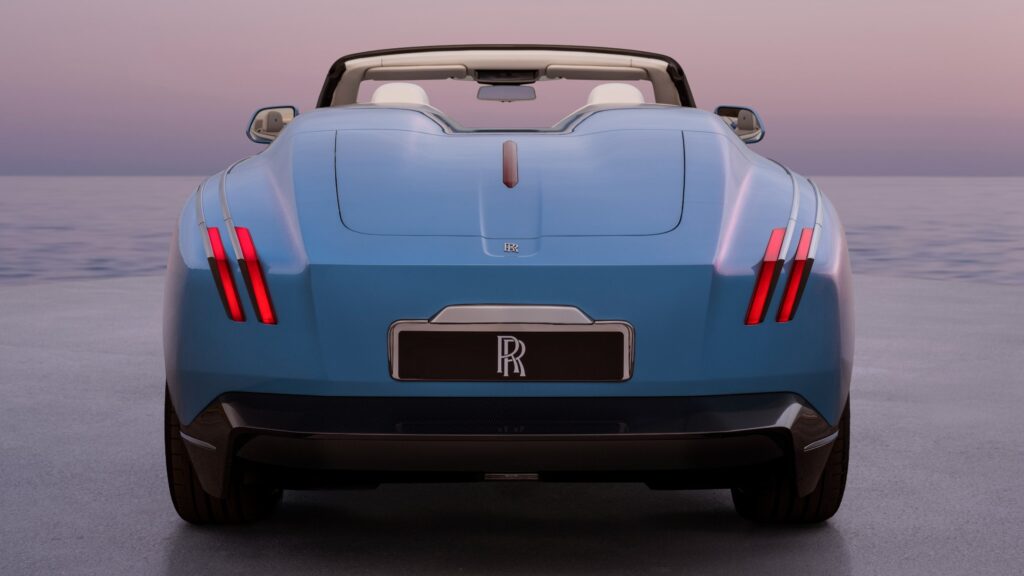
These lines continue along the entire flank via polished steel inserts, which emphasize the characteristic profile line and connect to the rear lights. The rear diffuser, designed for efficient airflow management, made it possible to do without a conventional spoiler, which was enabled by the absence of an exhaust system.
The color of the presented model is Cote d’Azur Blue with a slight effect of red sparkles combined with silver accents and a canvas top of the same hue. This pale blue color was inspired by the experimental Rolls-Royce 17EX from 1928.
Luxurious Two-Seat Cabin
Although the dashboard looks familiar to the brand’s clients, the car’s interior is designed exclusively for two passengers. The seats are framed by shapes reminiscent of a horseshoe. One of the features is a saddle-shaped armrest that slides back, revealing the Spirit of Ecstasy figurine controller, which is one of the five rotary control elements.
Another striking detail is the “Starlight Breeze” option, which includes 10,500 individual optical fibers that create a starry sky effect around the passengers. In typical Rolls-Royce fashion, these stars are not placed randomly but form a special pattern obtained by analyzing the sound waves of a nightingale’s song.
For the interior of the presentation car, the designers chose a combination of Charles Blue and Grace White colors with Deep Navy details, Peony Pink accents, and Openpore Blackwood wood inserts.
To preserve the special atmosphere of open-top driving, the canvas roof is made from a composite blend of cashmere and high-tech fabrics. This material is specifically tuned to allow the sound of raindrops through while effectively blocking technical noise.
Technical Foundation and Prospects
As expected, the Nightingale is built on the modular aluminum “Architecture of Luxury” platform used by the entire current Rolls-Royce lineup. The car will also receive the fully electric powertrain already applied in the Spectre model.
Detailed technical specifications have not yet been disclosed. The company has promised to reveal more information as the car undergoes a global testing and refinement program.
Selective Clientele and Pricing Policy
The new model is less exclusive compared to previous bespoke projects like the Sweptail, Boat Tail, or Drop Tail, as it will be produced in a run of one hundred units. However, the right to purchase will not be granted to all who desire it, but only to those clients selected by the company itself. Deliveries of the first cars to clients are planned for 2028.
As sources report, the starting price will be approximately 7 million pounds sterling, although the final cost of each example will likely be significantly higher due to extensive personalization possibilities. In addition to the car itself, the Coachbuild Collection program includes exclusive behind-the-scenes access to design and testing processes for its participants, as well as participation in special global events.
The emergence of Project Nightingale clearly demonstrates Rolls-Royce’s strategic course towards electrification, while simultaneously raising the bar for individuality and luxury in this segment. The limited series, selective clientele, and price exceeding most supercars underscore the car’s status as a unique object of art, not merely a means of transportation. This step also shows how traditional luxury brands are adapting their age-old values—craftsmanship, exclusivity, and attention to detail—to the demands of a new, electrified future. The success of this model could set the tone for future projects where technology becomes an integral part of the luxury experience, not just its technical foundation.