


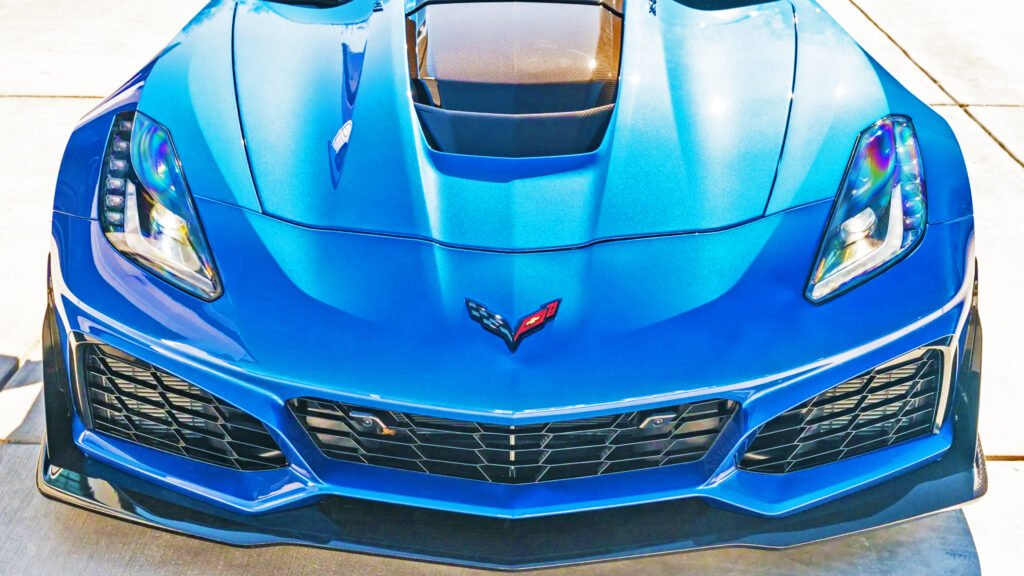
The collector car market shows interesting dynamics using the Chevrolet Corvette ZR1 as an example. The new C8 ZR1 model offers incredible performance at an accessible price, yet some buyers are willing to spend similar amounts on the previous generation C7 ZR1.
Competition with Europeans and Price Dynamics
When Chevrolet introduced the top version of the seventh-generation Corvette, it became a serious competitor not only to the Dodge Viper but also to many European supercars. The new price of these cars was around $120,000, but now individual low-mileage examples cost more than the new 2025 Corvette ZR1, despite a significant difference in performance.
Examples of Auction Sales
In January 2019, a ZR1 with only 3000 miles (4800 km) and Admiral Blue paint was sold for $340,000. This amount is impressive when you recall that the car’s original price was $137,780. This example was one of only 37 coupes of that color equipped with the ZTK package.
That same month, another 2019 ZR1 with 2800 miles (4500 km) was sold for $220,000. Its black color, the less popular convertible body style, and the lack of the ZTK package likely lowered the final price. However, it still turned out to be $35,000 higher than the base price of the new ZR1.
Current Trends and Buyer’s Choice
An auction for another 2019 Corvette ZR1 is currently ongoing. The car has only 1200 miles (1900 km) on the odometer, is painted in Elkhart Lake Blue Metallic, and is equipped with the premium 3ZR package and the ZTK package with a fixed rear spoiler. Given its perfect condition and recent sales results, it is quite likely that bids will exceed the $250,000 mark.
If you had the money, would you choose the new Corvette ZR1 with its 1064 horsepower and robotic transmission, or the 2019 model with 755 horsepower and a seven-speed manual gearbox?
Interestingly, the value of certain cars over time can not only be preserved but also increase, forming a separate investment segment. The demand for the last manual Corvettes of the C7 generation, especially in rare configurations, indicates nostalgia and a desire to own “the last of the Mohicans” in the age of automation. This creates a unique situation where a technologically more advanced car can cost less on the secondary market than its predecessor with a more “analog” driving experience. Such dynamics may influence the future strategy of manufacturers, who might consider limited series with manual transmissions to satisfy collector demand.