


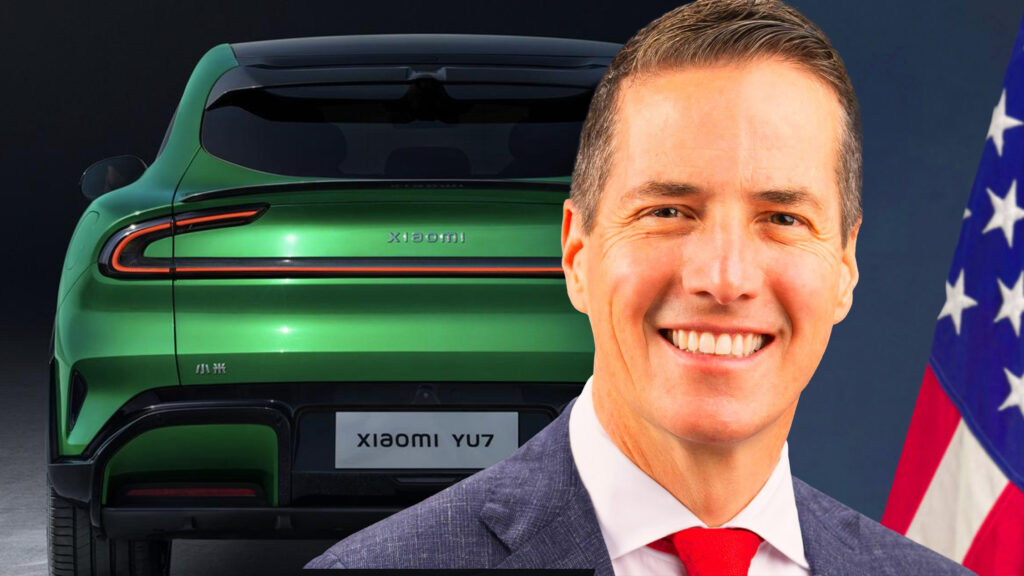
US Senator Calls Chinese Cars “Cancer” and Demands Permanent Ban
Chinese cars now account for one in every ten new cars sold in Europe, yet in the US you won’t find brands like BYD or Xiaomi for sale. Ohio Senator Bernie Moreno is determined to keep it that way. He aims to permanently ensure that Chinese automakers never make it to America in the form of imported cars, partnerships, or even just lines of code embedded in software.
Senator Bernie Moreno is preparing legislation that goes beyond the existing restrictions introduced in early 2025 by the Biden administration. Those rules already blocked access for Chinese passenger cars over fears they could collect drivers’ confidential data. Moreno’s proposal aims to close every remaining door and then double-lock them for good measure.
Speaking at an automotive event ahead of the New York International Auto Show, he did not mince his words.
We don’t allow Huawei into our telecommunications infrastructure. We will not allow Chinese automakers into this market. We will prevent cancer from entering our market, and we need other countries to undergo chemotherapy.
Appeal to Other Nations
The plan is not just about imports. Moreno wants to block anything connected to China, including software integrations and joint ventures. In other words, even a hint of Chinese involvement could be enough to disqualify a vehicle for US roads under his vision. He also hopes Mexico, Latin America, Canada, and even Europe will follow suit.


Unsurprisingly, US automakers and industry groups support this initiative. They are actively lobbying for high barriers, arguing it protects both national security and domestic jobs. It also conveniently prevents market disruption from a wave of competitively priced electric vehicles.
The Question of Fair Trade
For its part, China is not pleased. Officials have pushed back, calling such an approach protectionist and accusing the US of stacking the deck against fair competition. This tension adds another layer to the already delicate economic relations between the two countries.
There is an added complication. Donald Trump previously stated he would welcome Chinese automakers building plants in the US, provided they hire American workers.
This legislative initiative unfolds against the backdrop of significant growth in the presence of Chinese automakers in global markets, especially in the electric vehicle sector. Their ability to offer technologically advanced cars at competitive prices poses a serious challenge to established automakers. The US stance could trigger further fragmentation of the global automotive market, where countries and trade blocs create their own rules regarding technology and origin. The long-term consequences for consumers, innovation, and international trade remain uncertain, as geopolitical considerations increasingly influence an industry that has traditionally been globalized.