


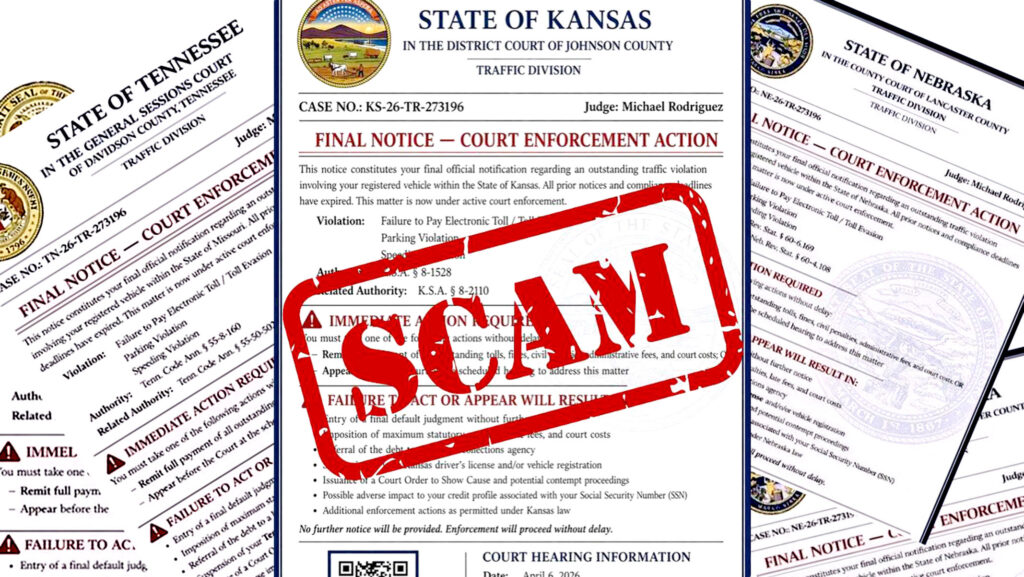
Scammers are sending US drivers fake court summons via SMS
Across the United States, drivers are receiving text messages with fake court summons demanding payment of fines. Law enforcement warns that this is a scam, and real courts never demand payment via SMS.
How the scam works
The perpetrators send SMS messages with an image that looks like an official document titled “Final Notice – Judicial Enforcement Collection.” This fake document contains a case number, a judge’s name, legal terms, and a QR code for payment. The message claims that the recipient must pay a fine for toll evasion or parking violations, threatening driver’s license suspension and damage to credit history in case of non-payment.
As reported by the Chadron Police Department in Nebraska, no links in such messages should be clicked. The only safe way to verify a summons is to contact the local court or county office directly.
Law enforcement response
Attorneys General and police from various states, from Washington to California, are united in their advice to citizens. They emphasize that courts do not send summons via text messages, especially on weekends or holidays.
California Attorney General Rob Bonta urged citizens to be vigilant: “Scammers use a sense of urgency to make you feel guilty and act immediately. Be suspicious of any messages demanding money or personal information.”
How to protect yourself
Experts give clear instructions on what to do upon receiving such a message:
This scheme has become a widespread alternative to other known scams, such as fake parking or toll road fines. Drivers should remember that even a very official-looking document does not make it genuine, and legitimate authorities will always provide an opportunity to appeal a decision and will never demand immediate payment through unusual communication channels.
Such stories remind us of the general vulnerability to social engineering, where fear of legal trouble outweighs healthy caution. Technology has only made it easier for scammers to scale their schemes, but the basic principle remains unchanged: official institutions do not use messengers to resolve financial matters. The increase in such cases may indicate the method’s effectiveness for criminals, which, in turn, requires enhanced public awareness campaigns, especially among those less confident in using digital services.