


Record Profits for Shell Amid War
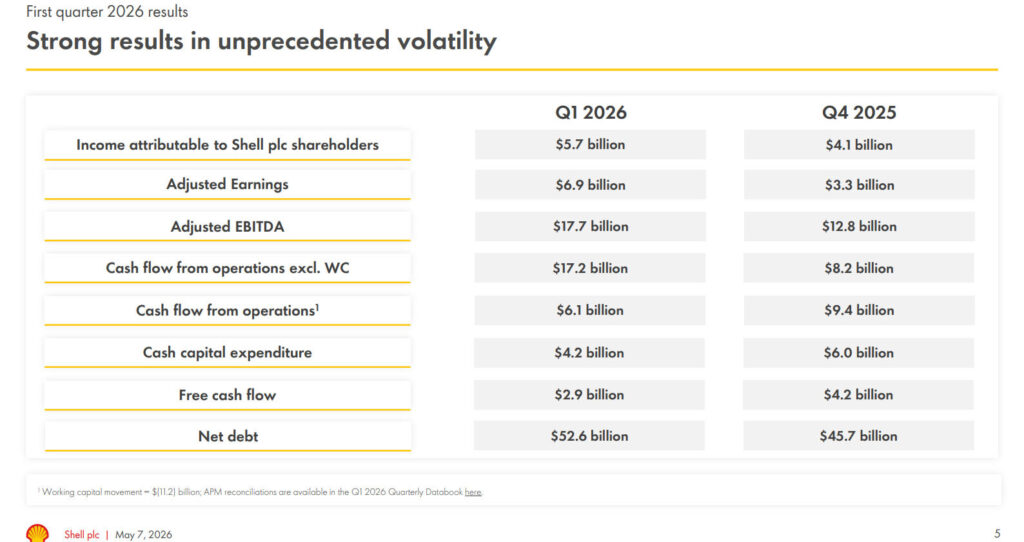
Shell announced profits of nearly $7 billion for the first quarter. This is more than double the figures of the fourth quarter of 2025. Such financial results have sparked a wave of public outrage.
Fuel Prices Hit Records
The average price of a gallon of gasoline in the US has reached $4.558, while diesel fuel is only 14.2 cents away from its historical high of $5.816. For comparison, a year ago, gasoline cost only $3.154 per gallon. This sharp price increase has hit drivers’ wallets hard.
War as a Source of Excess Profits
While consumers suffer from high prices, oil giants are reaping enormous profits thanks to the war in Iran. Shell CEO Wael Sawan recently mentioned “unprecedented disruptions in global energy markets.”
Details: Shell’s adjusted profit for the first quarter amounted to $6.9 billion. This is a significant jump compared to the previous three months, when profit was “only” $3.3 billion.
Reaction of Investors and the Market
Investors should have been pleased with this news, as Shell is launching a $3 billion share buyback program and increasing dividends by 5%. Shareholders will receive $0.3906 per share. However, Wall Street was not overly impressed, and the company’s shares fell by 3.39% today.
Impact of the War on Company Operations
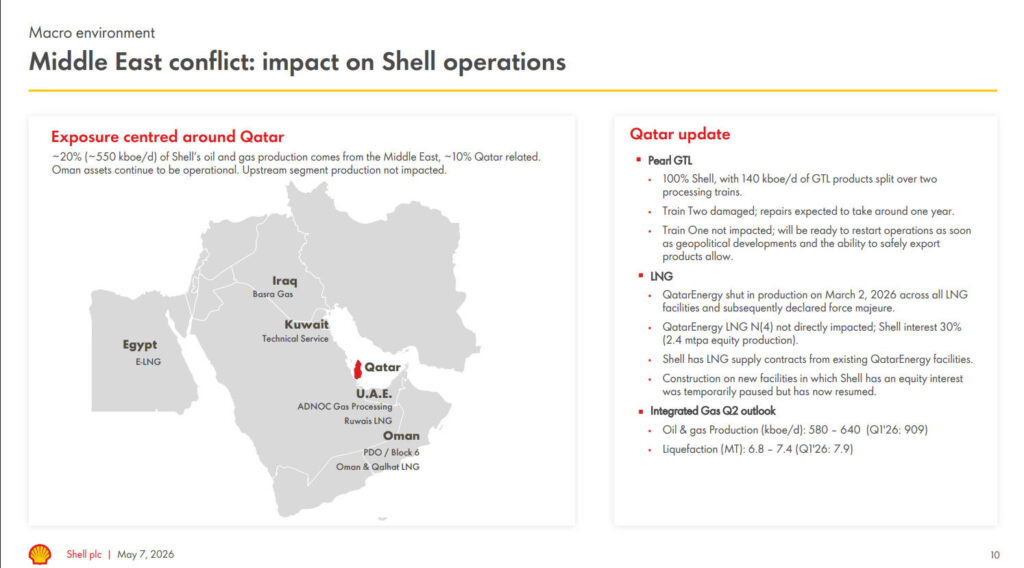
Despite significant profits, Shell notes that the war is also affecting their operations. About 20% of the company’s gas and oil production comes from the Middle East. While assets in Oman remain operational, the conflict is causing problems in other parts of the region.
Public and Environmentalist Outrage
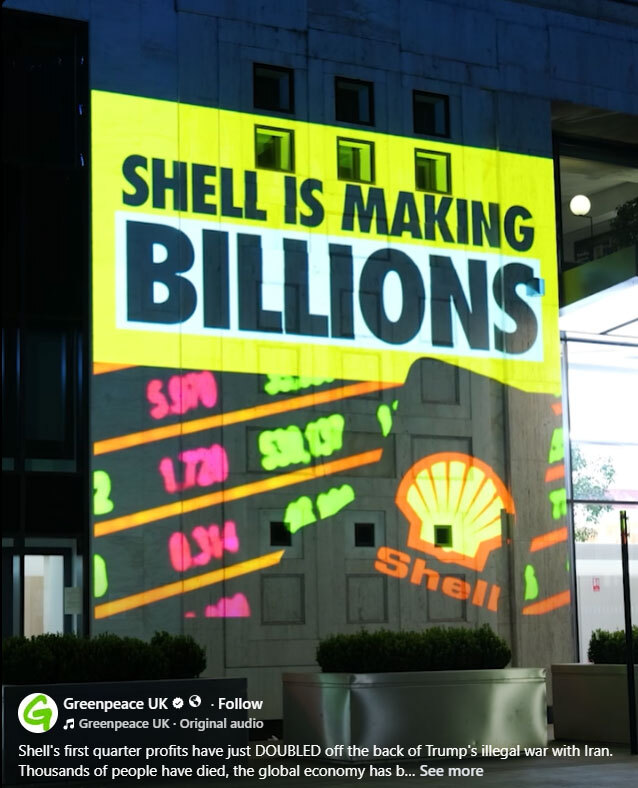
Drivers and environmental activists were quick to express their outrage on social media and in person. Greenpeace UK chose the latter route, using a projector to criticize the company on the facade of its headquarters in London.

The organization stated that “Shell’s profits have doubled since Trump started his illegal war with Iran,” and that they are “making billions while thousands die, an entire region is destabilized, and our energy bills skyrocket.”
Greenpeace called Shell and other oil giants “war profiteers.” They urged the public to support taxing Shell’s profits to “help families struggling with the cost of living crisis and the consequences of the climate catastrophe.”
Important Context
It is worth noting that the war in Iran began only on February 28. This happened relatively late in the first quarter, although oil prices quickly rose and remain high.

The situation surrounding Shell’s profits demonstrates a deep divide between the financial successes of oil corporations and the economic hardships of ordinary citizens. The war in Iran has acted as a catalyst, allowing companies like Shell to generate excess profits while simultaneously causing a sharp rise in fuel and energy prices for consumers. This raises a legitimate question about the need to strengthen regulation and taxation of such excess profits, especially in times of global crises when ordinary people suffer the most. The Greenpeace protests and outrage on social media indicate growing public dissatisfaction with this situation.