by
by Update from the Manufacturer
After releasing teasers earlier this year, the Korean automaker KGM has officially unveiled the first images and new details of its next-generation Musso pickup. This information updates previous data about the model.
A New Player in the Mid-Size Pickup Market
The global mid-size pickup market is experiencing a real boom, and manufacturers are trying to compete with hits like the Ford Ranger and Toyota Hilux. Kia has already entered the fray with the Tasman model, and now KG Mobility (formerly SsangYong) is joining it. The company plans to turn the Musso name into a separate sub-brand for electric, hybrid, and conventional pickups.
The electric Musso EV recently debuted, and now KGM is showing a new model with a tougher and more powerful design. This pickup, with the internal code Q300, will succeed the Rexton Sports model, which is known internationally as the Musso. The car was initially shown in sketches and has now fully revealed its exterior.
Design Inspired by Leaders
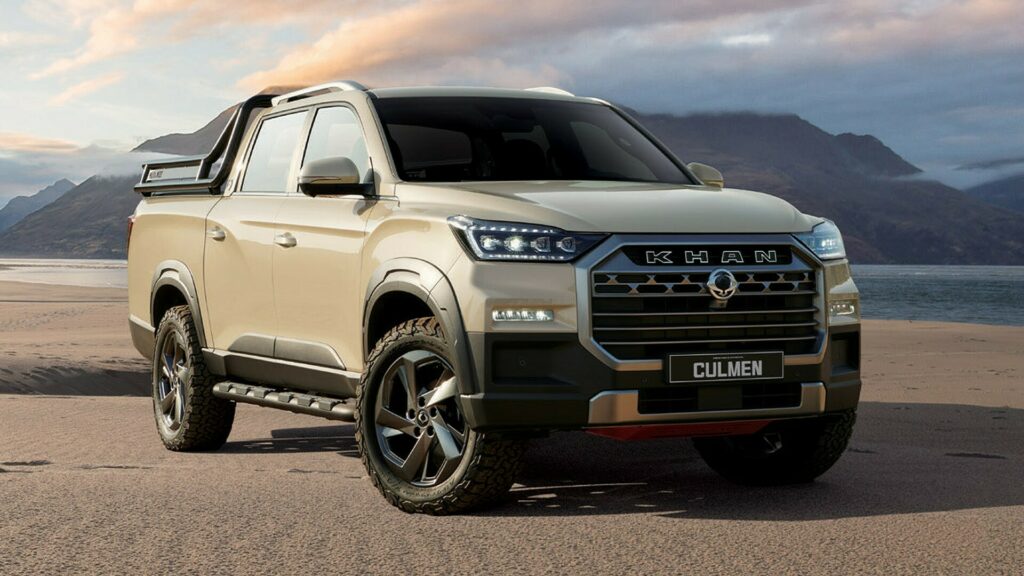
The front of the car attracts attention with LED optics, the design of which clearly resembles the Ford F-150. A similar approach is also used by the BYD Shark and the Nissan/Dongfeng Frontier Pro.
The radiator grille with five illuminated horizontal slats creates associations with Jeep, giving the car additional expressiveness. A massive skid plate dominates the bumper area, and large air intakes and powerful details emphasize the pickup’s off-road ambitions.
KGM will offer two versions: a standard one and a more stylized “Grand Style Package” with additional off-road accents.
Construction and Exterior
In profile, the Q300 retains plastic body cladding and integrated orange turn signals, like the electric Musso EV. The roofline, pillars, and roof rails appear unchanged compared to the previous Rexton Sports model, although most of the body panels are new. This is a combination of already known technical solutions and updated surfaces.
The rear is styled with vertical LED taillights, between which is a relief tailgate with the KGM logo. The lower part is surrounded by black plastic protection, which includes an updated bumper with integrated steps. A long tubular roof bar is installed on the roof, adding utility.
“Musso was designed to suit different lifestyles through a design that combines everyday use and active outdoor recreation. Based on durability and practicality, we will provide customers with a comfortable and enjoyable driving experience,” a KGM representative noted.
Expectations for the Interior and Powertrains
The interior of the new model has not yet been shown, but the double cab and overall proportions suggest a five-seat layout with a digital instrument panel, similar to the one in the electric variant.
The current generation of the KGM Rexton Sports / Musso was introduced back in 2018, with a facelift in 2023. The car uses the same ladder-frame platform as the Rexton SUV and is equipped with conventional gasoline and diesel engines. The new version is expected to retain this platform but receive structural improvements and a hybrid powertrain as an option.
Market Launch Plans
The full presentation of the pickup is scheduled for January 2026, after which sales will begin in the domestic South Korean market. International availability has not yet been confirmed, but the Q300 could reach markets such as Europe, the UK, and Australia. There, it will enter into direct competition with a whole range of popular models, including the Ford Ranger, Toyota Hilux, Mitsubishi L200, Nissan Navara, Isuzu D-Max, Mazda BT-50, Volkswagen Amarok, Kia Tasman, GWM Cannon, and Maxus T60.
The emergence of the new Musso from KGM further intensifies competition in a segment traditionally considered the domain of Japanese and American brands. Korean manufacturers like Kia and now KGM demonstrate a deep understanding of global trends, offering technically sophisticated products with a pronounced identity. The success of these models will depend not only on design and technical characteristics but also on the manufacturers’ ability to build a reliable dealer network and ensure competitive pricing in each of the target markets.