 by
by New Nissan Stadium introduces exclusive club
The new Nissan Stadium in Tennessee, the future home of the Tennessee Titans, is opening a very special establishment for fans. Despite the team’s unsuccessful seasons, construction of the modern stadium continues, and it will feature the premium ‘Nissan 1960 Club’.
Club features and concept
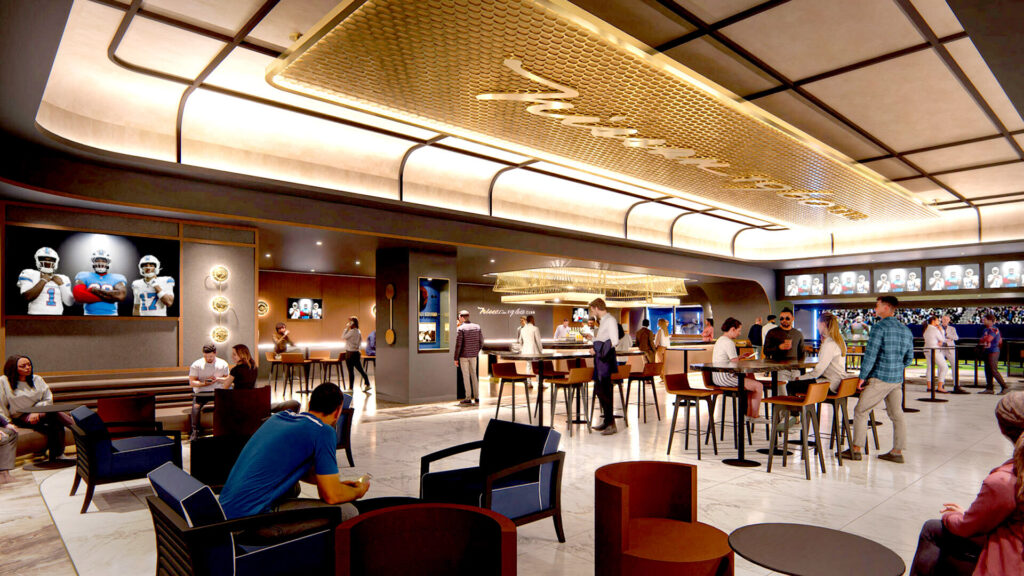
The club gets its name from two important events: the year Nissan was founded in the USA and the year the Tennessee Titans team itself was created, when it was called the ‘Houston Oilers’. The establishment is located at field level along the home sideline and can accommodate up to 550 visitors.
Its design is executed in the ‘speakeasy’ aesthetic – the style of underground bars. The entrance is decorated with gold letters inspired by the 1960 Nissan logo. Inside, according to the renders, visitors will find a bar, various lounge areas, numerous TVs, as well as a special zone for viewing events right by the field. Furthermore, the interior will feature exhibits related to the history of Nissan and the team.
The club “celebrates more than 65 years of innovation, performance, and passion, and brings it to life in a way that feels unmistakably Nissan”
Access and prospects
Full information about the club will be revealed closer to its opening, but it is already known that visitors will be offered a comprehensive culinary experience. This service will be available not only during home games but also at concerts and other stadium events. However, gaining access to the club is already impossible – all spots are sold out.
The partnership between Nissan and the Titans is of a special nature, as the automaker’s US headquarters is located nearby, in the city of Franklin. This underscores the brand’s local roots and connection with the community.
This project demonstrates how sports arenas are transforming, offering not just a place to watch the game, but also a high-class experience for a premium audience. It is also an example of the deep integration of corporate partnership into the city’s infrastructure and culture, creating new spaces for communication and honoring shared history. The success of such a club, despite the team’s sporting results, may indicate a shift in emphasis in the business model of modern stadiums, where service quality and unique offerings become important.