


The Essence of the Problem
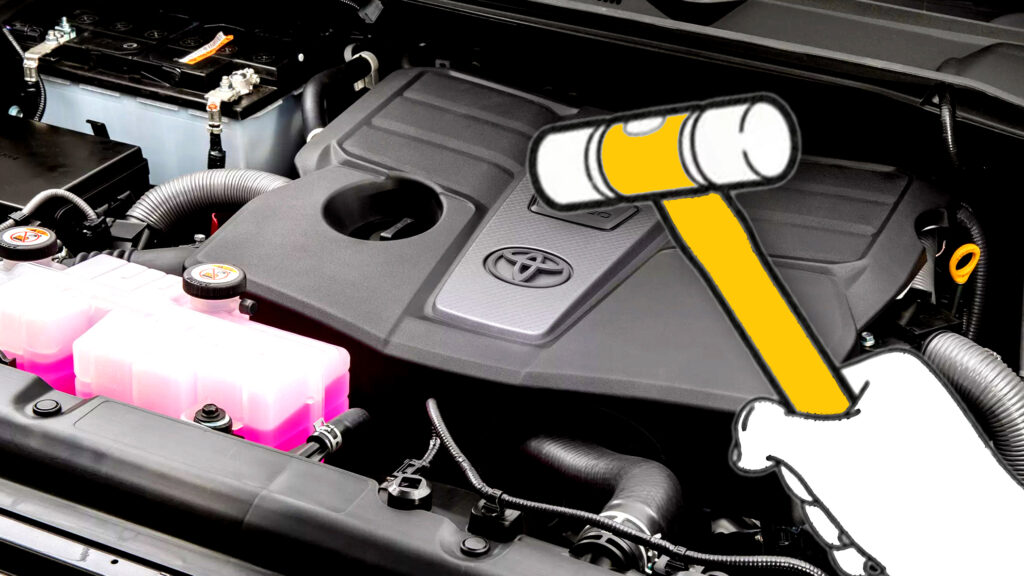
For over a year now, Toyota has been trying to solve a serious problem with the V35A-FTS engine. This is a 3.4-liter twin-turbocharged V6 installed in the Tundra pickup truck, as well as in the Lexus LX600 and GX. Due to a defect on the production line, metal shavings could remain inside the engine blocks. Over time, these small particles can cause catastrophic engine failure.
Scale of the Recall
The problem has already affected more than 250,000 Toyota and Lexus vehicles. However, as Pickup Truck + SUV Talk found out, the automaker is not giving new engines to all owners. Instead, dealers have been trained to perform a hammer test to determine which vehicles need replacement. In fairness, the procedure is a bit more complicated than simply hitting the block and listening.
It was previously reported that more than 44,000 Tundra pickups joined this recall.
How the Hammer Test Works
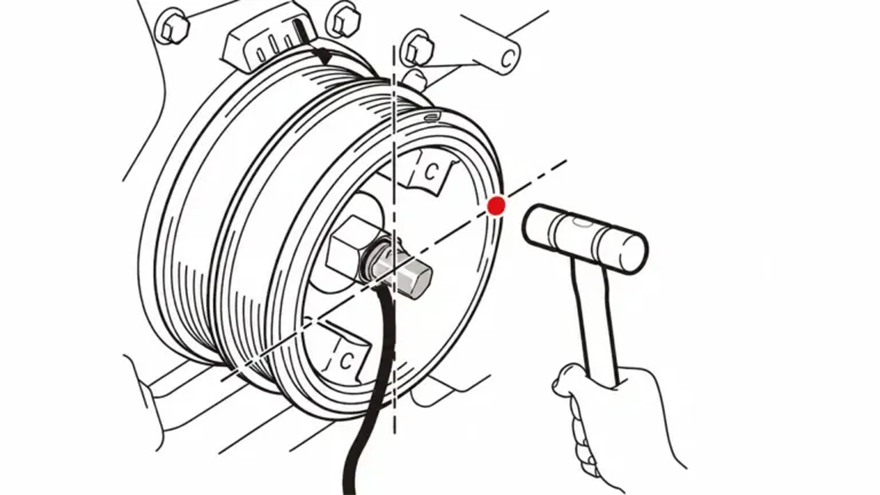
To check the engine, Toyota technicians must drain and replace all fluids, then bring the V6 up to the specified operating temperature. After that, all drive belts must be removed and the crankshaft set to a specific position. Next, a specialized accelerometer is attached to the bolt of the front crankshaft pulley.
When everything is ready, the technician must strike the crankshaft pulley with a 250-gram plastic hammer in the “3 o’clock” position. Specialized software records the impact force, so three strikes with the correct force are required. The accelerometer measures the frequencies produced by the hammer strikes and sends the data to the cloud. There, it is compared with data from healthy and faulty engines. This allows the technician to understand whether the vehicle needs an engine replacement.

What Exactly the Test Detects
Toyota notes that metal shavings that may have remained inside the engine can become pressed into the crankshaft main bearings, especially the first main bearing. If this happens, such a bearing resonates at a different frequency than one without metal fragments.
Is This Solution Enough
Clearly, Toyota came up with this method to avoid replacing engines in all affected models. This saves millions of dollars. Theoretically, the test is good at detecting the current problem with the engine. However, it cannot predict future wear and is unlikely to reassure owners worried about the reliability of their vehicles.
This approach raises questions about trust in a brand that has always been renowned for reliability. Even if the test shows the engine is fine now, there is no guarantee that the shavings will not affect other engine parts later. Owners may get only temporary relief, not certainty that their vehicle is fully protected from sudden breakdown.
Sources: Pickup Truck + SUV Talk, TheDrive, Hemmings