


New Tire Replacement Robot
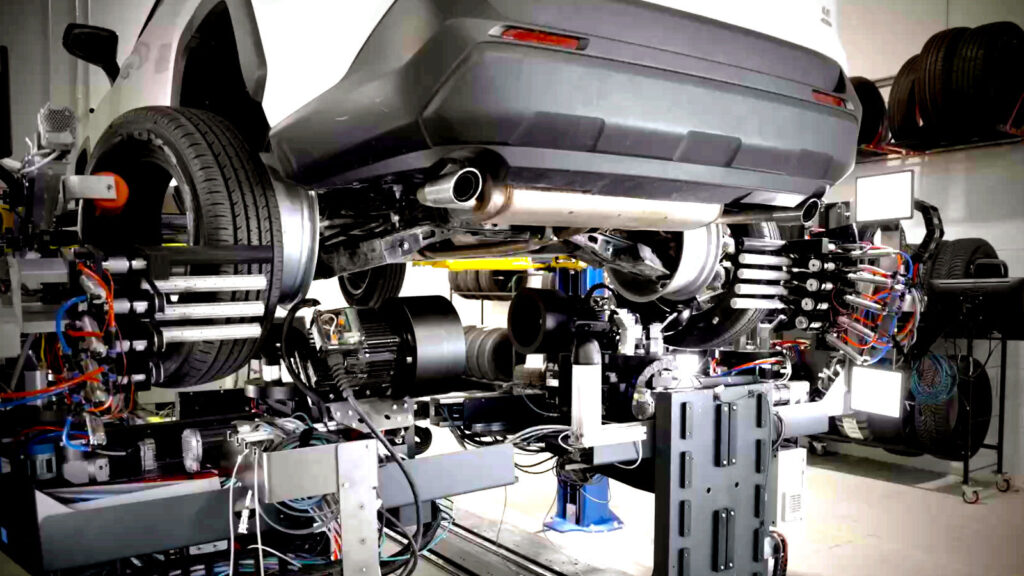
A new product has entered the market, set to become a quiet assistant during tire changes. It is called SmartBay — an AI-based robot that performs almost all the work of a tire fitter, with minimal human involvement. If the technology catches on, it promises to speed up the tire replacement process, improve work quality, and possibly enhance safety both in the workshop and on the road. At the same time, many questions remain to be answered before workshops decide to invest in this new robot.
How It Works
Automatic Tire Inc, a robotics startup from Boston, is behind the creation of SmartBay. Andy Chalowski, CEO of Automated Tire, Inc., explains the process:
The car is lifted just like on a regular lift, but instead of unscrewing lug nuts, interfering with the tire pressure monitoring system, and removing the wheel, SmartBay removes the tire directly from the rim while the rim stays on the car.
In fact, the system can do even more. It can balance the new tire on the rim after installation. It can cut balancing weights down to 0.1 ounce, which is exceptional in terms of balance and waste. A camera provides the technician with information about the condition of the braking system. Renting the machine costs $4,900 per month, or nearly $59,000 per year, which, according to ATI, is still cheaper than hiring a dedicated tire technician.
These calculations depend on which tire technician you compare it with. National averages range from about $17 per hour for beginners to $24 per hour for experienced technicians at large chains, according to PayScale, ZipRecruiter, and Glassdoor. At the low end, a full-time tire technician earns roughly $35,000 per year. At the high end, about $50,000. This places a full-time technician well below the $59,000 SmartBay rental cost, but ATI may also factor in benefits, training, and turnover costs, not just hourly wages.
SmartBay Efficiency in the Workshop
The proposition for workshops is not necessarily to replace people. It is about speeding up the process.
Instead of relying on a technician to manually remove the wheel, dismount the tire, balance it on traditional equipment, and put everything back, SmartBay performs the tire replacement and wheel balancing independently, with only minor operator oversight,
Chalowski told Fox News. Reducing the workload for one vehicle potentially frees up a technician to work with multiple SmartBays in workshops that have them.
ATI claims that one person could theoretically manage three units simultaneously while the machines do most of the heavy lifting.
One technician can operate two or three SmartBays in parallel, handling approximately 24 tires per hour, compared to about four tires in 75 minutes today,
Chalowski told Fox News.
In Chalowski’s view, this also eliminates the problem many workshops face when they are understaffed.
Anyone who has spent time in a tire shop knows how quickly a busy day can go wrong: a technician gets sick, the first car in the morning takes longer than expected, and the backlog of appointments throws off the entire schedule,
Chalowski said.
The Other Side of the Tire
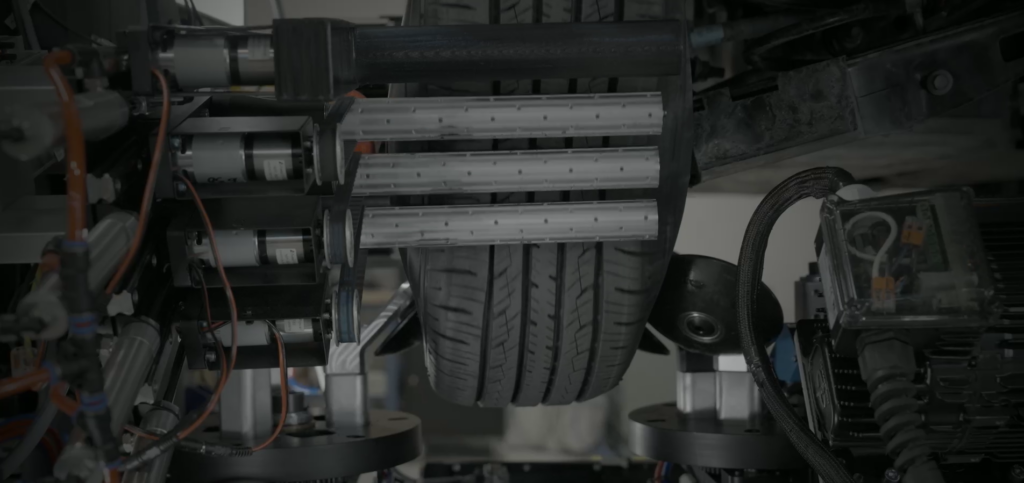

There are many questions to ask here. For example, what are the system’s limitations? Many customers today want large tires sized 33 or 35 inches. Will they fit into ATI’s mounting system? Such tires can weigh over 40 pounds each, and apparently, technicians will have to lift and install the tire into the system. Of course, they already lift and lower similar tires along with rims, but there is a nuance.
When lifting or lowering a large wheel with a tire, most technicians stand directly in front of it and perform a movement similar to a barbell squat in the gym. According to ATI’s promotional video, technicians seem to reach across the side of the tire changer to load or unload tires. This could lead to a new type of strain and potential injuries.
Three Units, One Technician, One Problem
Chalowski’s claims about how this solves the problem of workshops being understaffed also seem unconvincing. If one technician can manage three SmartBays, it does not mean workshops will hire additional workers just to stand around. So when that technician does not show up for some reason, you will have not one unit idle, but three. Three very expensive units, and that is not all.
SmartBay is not something a workshop can buy once and own forever. All are offered through rental. Yes, it is like a subscription, but ATI claims it is beneficial because it is cheaper than just one tire technician. According to Fox News,
The company says its first machines are aimed at a 45-minute four-tire change “door-to-door,” with mounting and balancing. As the technology learns, this time could drop to 30 minutes.
Based on my experience as a tire shop manager, I see potential benefits and challenges here. One good technician can complete a full set of four tires in about 30 minutes if everything goes smoothly. They absolutely cannot do three sets in the same roughly 30-minute timeframe. If ATI’s SmartBay is truly reliable without frequent downtime, it could significantly save workshops overhead costs and improve service times.
Some Questions That Arise
Nevertheless, there are other things to consider. How does it handle low-profile tires? How does the balancing system work? Does the technician have to leave the car in neutral on the lift? What safety protocols are in place to ensure balancing occurs without increasing the risk of the car falling off the lift?
We tried calling ATI at their publicly listed phone number, but only an AI chatbot answered the call. It could not answer any of these questions and allowed us to leave a message. The company also does not have a public email address, so we reached out to its PR agency in hopes of getting answers. Hopefully, the SmartBay AI will prove more competent than the company’s AI agent on the phone.
After writing the article, ATI responded with a few very vague answers. It stated that it cannot disclose information about how the balancing system works because it is proprietary.
ATI does not disclose specific vehicle positioning requirements as they are part of the company’s proprietary workflow. However, SmartBay is designed for use in a standard 12-foot service bay with a managed workflow that allows technicians to safely and consistently prepare the vehicle before automation begins.
Regarding compatibility, the company told Carscoops that
SmartBay is designed to service tires from 14 to 24 inches in diameter, covering the vast majority of the current consumer tire market. Like any automated system, it is optimized for high-performance, real-world use cases in service centers, not niche applications such as extreme off-road tires or highly specialized supercar setups.
In other words, no need to worry about technicians having to lift heavy 33- or 35-inch tires, as the system cannot handle them anyway.
Main image: ATI
Overall, SmartBay appears to be an interesting but ambiguous innovation. On one hand, it promises to solve the staffing shortage problem and increase productivity, which is particularly relevant for large chains. On the other hand, the high rental cost, limitations on tire sizes, and potential ergonomic and safety risks raise doubts. Moreover, reliance on a single person operating multiple units could create new vulnerabilities in workshop operations. For now, the question remains whether this technology can become mainstream or remain a niche solution for certain businesses.