 by
by Currently, the Tesla Cybertruck remains banned from roads in most European countries due to non-compliance with local safety standards. However, a Swiss company is confident it has found a solution to this problem and has moved closer to obtaining approval for its own country. Despite this, approval for the entire European Union still seems unlikely, even considering pre-orders.
Difficulties with European Presence
It is known that the launch of the Tesla Cybertruck was accompanied by delays, and two years after its presentation, this pickup truck still cannot be seen on European roads. This is not for lack of attempts – many enthusiasts and businesses, besides Tesla itself, have tried to import the vehicle. Most of these attempts have ended in failure.
As reported back in January, UK police confiscated one Cybertruck specimen. Another importer, YouTuber and luxury car dealer Yianni Charalambous, also imported a pickup and even modified it, hoping to obtain permission. When that seemed to fail, he announced he would leave the UK along with the car.
Another example is Bruno Dvorsky, who successfully imported a Cybertruck to the Czech Republic last year. He is convinced the car is as safe as any other pickup on the continent, but even he cannot drive it outside his country.
The Swiss Approach to Legalization

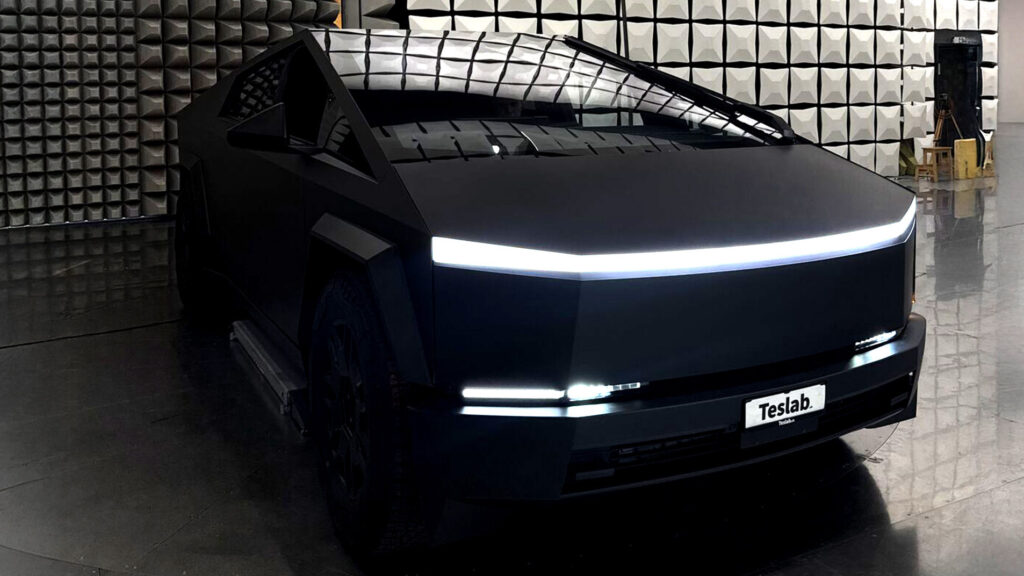
This is why the company Teslab may find itself in a unique position. Under the leadership of Raven Zegoltzer, the brand is working on modifying the Cybertruck to a state that meets the requirements first of Switzerland and later, possibly, the EU.
To achieve this goal, the vehicle has been altered much more seriously than in other cases. The edges of the panels received rubber trims, the electrical wiring was reworked according to European standards, and a new special front bumper was also installed.
“The car was practically completely disassembled,” Zegoltzer said, adding that the modified Cybertruck has already passed several key state tests in Switzerland. He believes registration is now only a matter of time, although the approval will only be valid locally.
However, Switzerland is not part of the EU, and Zegoltzer acknowledges that obtaining approval for all of Europe will be much more difficult.
Additional Obstacles: Insurance and Weight
Import and registration are not the only problems. If someone manages to overcome them, they will still need to insure the vehicle, which will also prove to be a challenging task. If that is not enough to consider the appearance of the Cybertruck in Europe an unattainable dream, there is also the issue of weight.
“In Switzerland, the maximum weight for a passenger car is three and a half thousand kilograms. The [modified] Cybertruck falls just short of this limit, which means you won’t be able to load much onto it,” explains Zegoltzer.
In other words, if this Tesla does eventually become legal, it will have to be used primarily as a “lifestyle pickup,” not as a work truck. At least then owners will operate it the same way many Americans do.
The desire to own a Cybertruck in Europe collides with the harsh realities of regulation. The Swiss experience shows that technically the car can be adapted, but this process requires deep intervention in the design and significant costs. Even in case of success, weight limitations substantially narrow its functionality as a cargo vehicle, effectively turning it into an expensive status symbol. This calls into question the economic feasibility of such projects for the mass market. The situation also vividly illustrates the fundamental differences between American and European approaches to vehicle safety standards and design, which even an innovative company like Tesla has so far been unable to easily overcome for a specific model.