


Speed has always come at a price, but new data shows that prices for high-performance cars are rising at a completely different pace than most other new vehicles.
Rapid Price Growth for Powerful Cars
According to data from Kelley Blue Book by Cox Automotive, luxury vehicles showed the largest price jump among all segments in February. The average transaction price reached an impressive $133,918, which is 14.5% higher than the same period last year.
This is almost triple the industry average price and is a clear reminder that buyers with deep pockets are still generously spending large sums on speed.
In turn, the average transaction price for Porsche increased by 11.1% to $125,458.
Luxury Pickups Are Also Becoming More Expensive
Luxury pickups are not far behind their speedy “relatives” in the inflation race. Their average transaction price increased by 13.9% compared to last year, reaching $99,698, meaning fully equipped trucks are now approaching the six-figure mark.
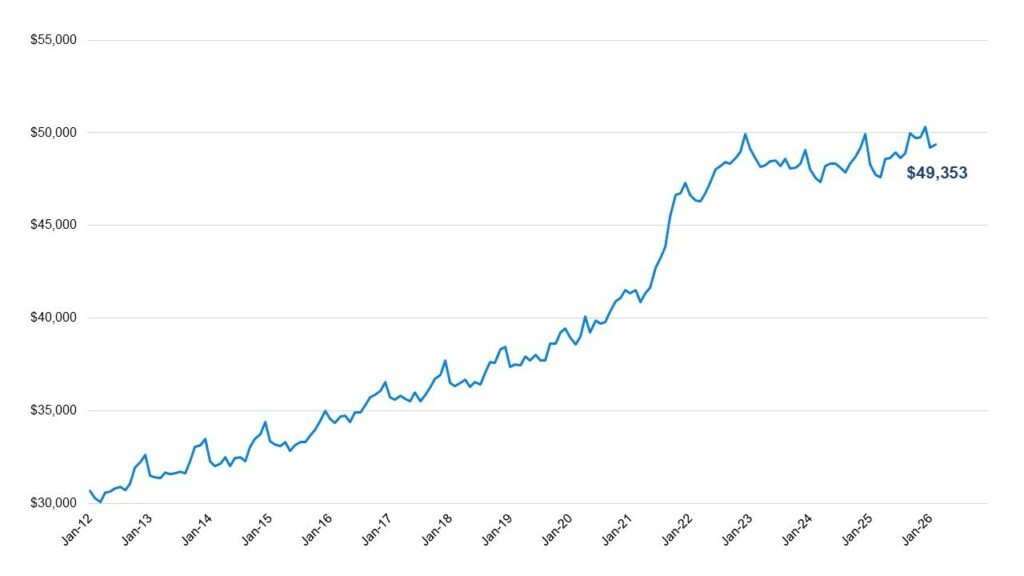

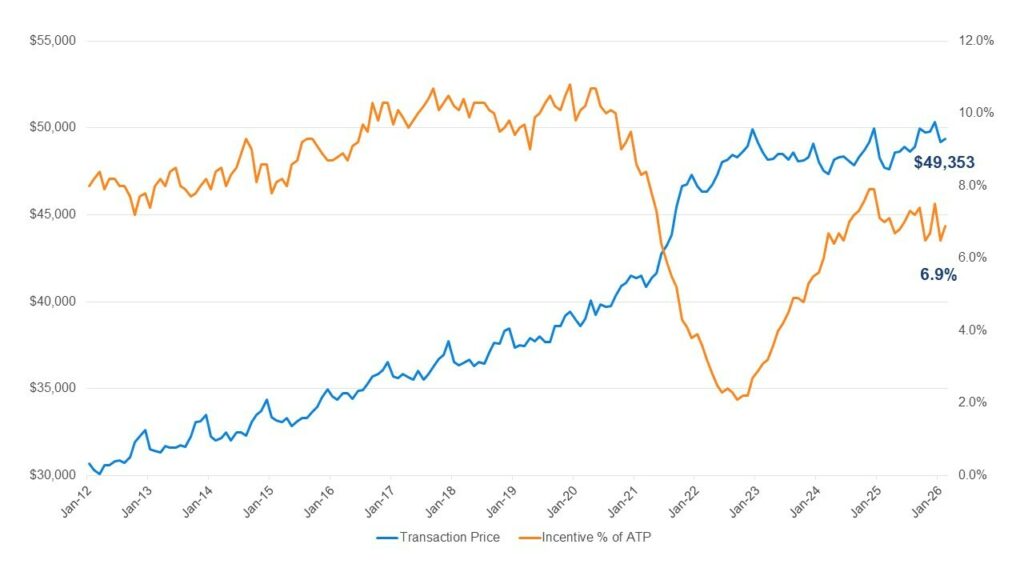
Meanwhile, the broader market looks much calmer. The industry-wide average transaction price, i.e., what buyers actually pay, reached $49,353 in February. This is 3.4% higher than a year ago and only 0.3% above January. Prices are still rising, but at a significantly slower pace than during the pandemic chaos.
Kelley Blue Book data also shows that the average Manufacturer’s Suggested Retail Price (MSRP) continues to rise. The typical MSRP reached $51,440 in February, marking the 11th consecutive month that the industry’s average MSRP remained above the $50,000 mark.
Subcompacts Cost Almost as Much as Compacts
At the opposite end of the market, something interesting is happening with the smallest and cheapest cars. Subcompact cars showed one of the largest increases in the entire data sample: prices jumped by 11.9% compared to last year, reaching $24,939, which is not far from the average price of $27,341 for the compact class.
This may seem surprising, but it’s worth remembering that several of the segment’s cheapest models have quietly disappeared. The Mitsubishi Mirage is already gone, and the Nissan Versa is preparing to exit, leaving fewer ultra-cheap options that would lower the average price.
This shift may also explain why Nissan and Mitsubishi recorded some of the largest price increases at the brand level in the report, with transaction prices for both rising by more than 10% compared to last year.
High Incentives for Electric Vehicles
However, as KBB data shows, electric vehicle prices have shifted slightly in the opposite direction. Their average price fell to approximately $55,300 in February, aided by significant incentives that now average over 14% of transaction prices. As gasoline car prices rose slightly and electric vehicle prices softened, the gap between electric and internal combustion engines narrowed to about $6,500, one of the smallest gaps recorded to date.
Industry incentives also increased somewhat in February, averaging 6.9% of transaction prices, compared to 6.5% in January and roughly on par with the 7.0% recorded a year ago. The most generous offers were on luxury cars and compact SUVs, while high-performance cars and full-size SUVs were among the least discounted.
Sales data also indicate that demand for electric vehicles remains uneven. Tesla’s estimated sales for February were about 38,500 cars, down 8.9% from a year ago and the company’s lowest monthly figure since late 2021. In the broader electric segment, sales fell by approximately 26% compared to the same period last year.
But regardless of the shape, size of the car you buy, or the fuel it runs on, an average transaction price knocking on the door of $50,000 means a significant financial commitment.
Despite this, most buyers are still purchasing cars at prices below the overall industry average. The five most popular segments together average about $44,000, and if full-size pickups are excluded from this mix, the weighted average price drops closer to $39,000.
Price Trends in Numbers
Detailed data tables clearly illustrate the dynamics. For example, the average transaction price for manufacturers like Tata Motors (which includes Land Rover) exceeds $100,000, while for Honda, Hyundai, and Mazda it remains in the $36,000–$40,000 range. Among brands, Porsche, Land Rover, and Mercedes-Benz occupy the top positions, while Mitsubishi, Nissan, and Volkswagen offer the most affordable average prices among mass-market manufacturers. Segment analysis confirms that the highest price growth rates are observed precisely in the niches of high-performance cars and luxury pickups.
This data points to a deeper market trend: polarization. Affordable options are gradually disappearing, forcing buyers seeking budget transportation to consider more expensive categories. At the same time, the luxury segment seems almost unfazed, demonstrating that demand from solvent customers remains high and not very elastic. This creates two different worlds within one market, where manufacturer strategies and consumer preferences are diverging further and further.