 by
by Modern Headlights: Technology and Unexpected Costs
Over the past 15 years, automotive headlights have undergone significant evolution. The era of simple halogen lamps, which equipped most cars, is almost over. They have been replaced by complex LED systems. Some premium cars now offer even more advanced solutions, such as matrix LEDs and laser headlights, which are so powerful they could even illuminate the Moon.
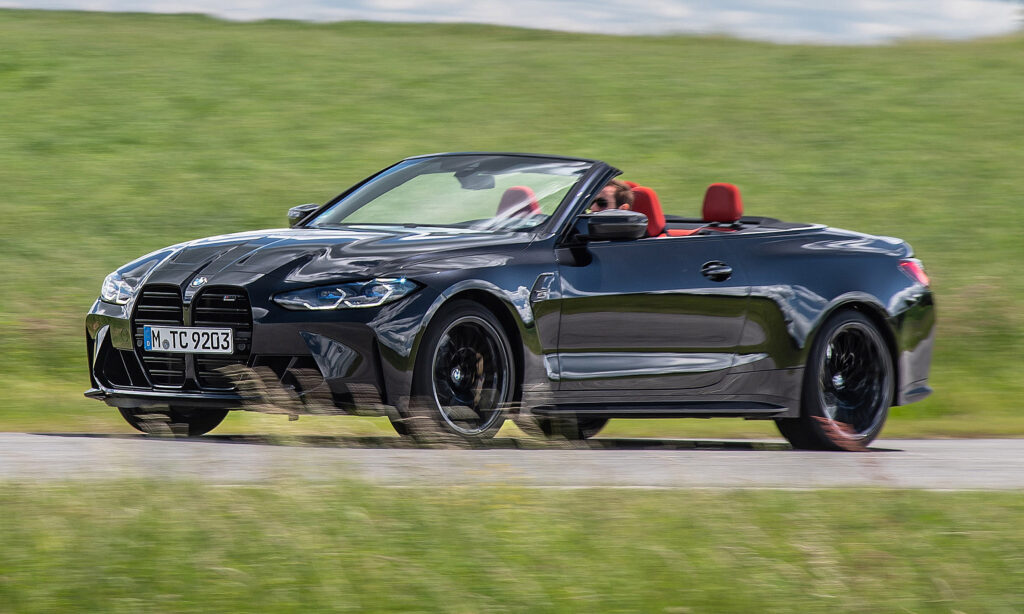
However, these high-tech lighting systems have their drawbacks. They can be too bright for oncoming drivers, and when something breaks, the repair can be shockingly expensive. The owner of a 2023 BMW M4 Competition Convertible in the US recently learned this firsthand.
A Big Problem Due to a Small Part
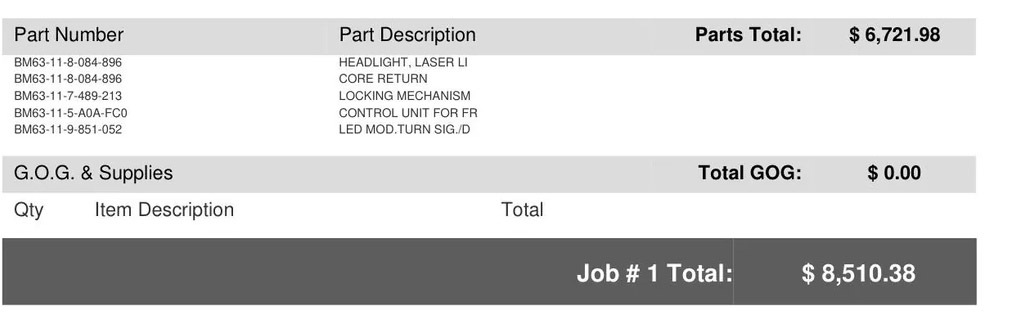
As the owner explained, sharing the story on Reddit, a seal in one of the headlights failed, and now the entire unit needs replacement. An experienced car owner who likes to do everything themselves might attempt a low-cost repair, but dealerships rarely resort to such methods. Their approach is simple: remove the faulty part and install an expensive new one. In this case, the faulty seal means the entire laser headlight assembly has to be replaced.
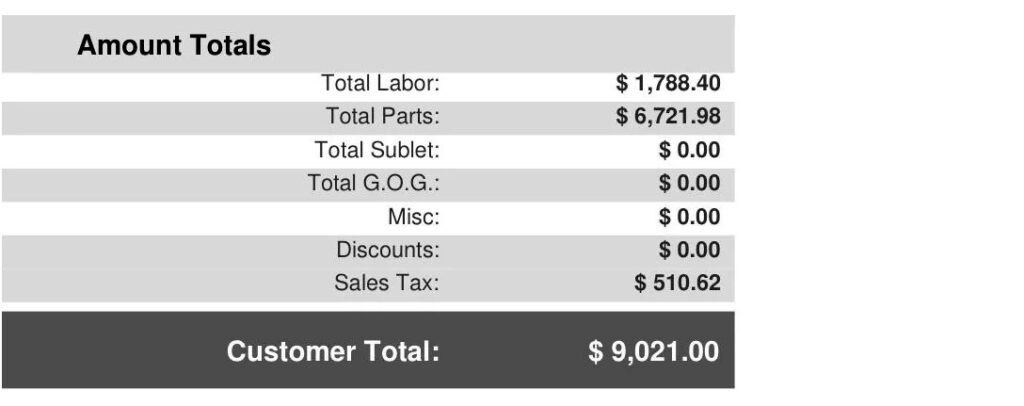
The cost of the part alone is an incredible $6,721. Add another $1,788.40 for labor, and the total repair bill, including sales tax, rises to $9,021. Yes, that’s for one headlight. While the labor charge seems inflated for what appears to be a simple replacement, the job is not that elementary. The new unit needs to be programmed to the car, and to access it, the front bumper must be removed. Even considering this, the amount seems exorbitant for one, albeit very fashionable, headlight.
Is a Full Replacement Always Necessary?
For owners facing a failure of modern headlights, the dealership is not the only solution. In many cases, the problem is only a damaged seal. If the rear plastic housing is cracked and moisture is getting inside, the fix can be surprisingly simple. Carefully applying a sealant, such as JB Weld, can eliminate the gap and protect against moisture. If done correctly, the headlight can work like new again.
Another option is to turn to the non-original parts market. Replacement headlights are often available at a significantly lower price than at the official BMW parts counter. And if you insist on original parts, it’s worth monitoring local salvage yards. Perfectly suitable components are regularly obtained from wrecked cars for a fraction of the new price.
Another obvious way to save money is to do the job yourself. Replacing a headlight is not always a five-minute task, especially if the bumper needs to be removed, but avoiding dealership labor rates can significantly reduce the final bill.
This story clearly demonstrates how technological progress in the automotive industry sometimes leads to paradoxical situations, where the cost of repairing one, even very complex, part can constitute a significant portion of the car’s entire value. Owners of premium models are increasingly facing the fact that the complexity and integration of systems make their local restoration impossible, forcing the replacement of entire units. This raises questions about the long-term economic feasibility of owning such cars after the warranty period expires, as well as about the availability and transparency of the repair services and parts market. The BMW headlight story is just one example of a general trend where the owner’s right to repair clashes with manufacturer policies and the architecture of modern machines.