


Slate Auto: An electric vehicle that promises profit from first sales
Unlike Rivian and Lucid, which incurred losses for years on the path to profitability, startup Slate Auto has more ambitious plans. The company believes it can achieve positive free cash flow and earnings before interest, taxes, depreciation, and amortization as early as 2027. And all this while producing a vehicle with a starting price below $25,000. Among Slate’s investors are Amazon founder Jeff Bezos and Los Angeles Dodgers controlling owner Mark Walter. The company claims that every vehicle produced will immediately have a positive gross margin.
Half the plant pays the bills
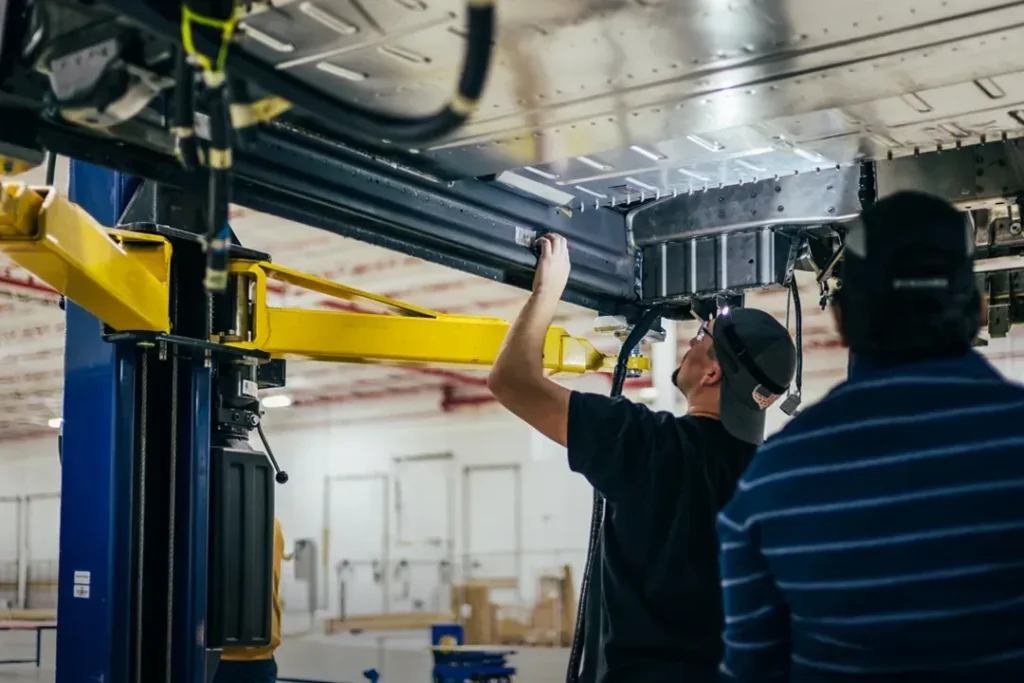
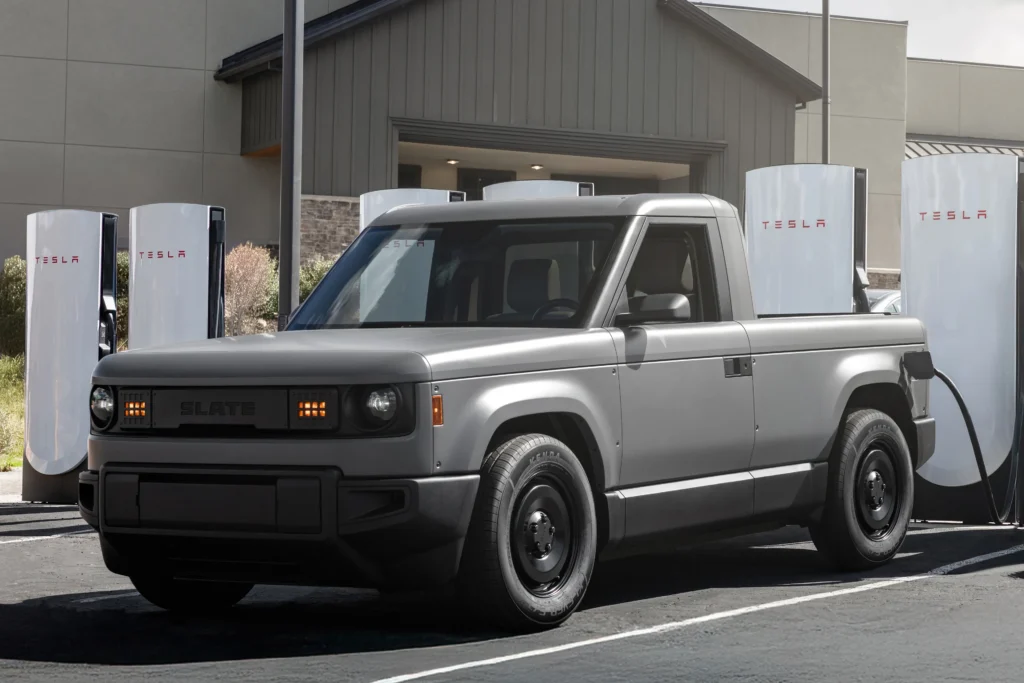
The company sets its break-even point at approximately 80,000 vehicles per year, which is slightly more than half the annual capacity of its future plant in Warsaw, Indiana, which is designed for 150,000 units. The electric pickup truck is not only cheaper than other electric vehicles sold in the U.S., but also significantly cheaper to produce thanks to a simple philosophy and low-cost components, including plastic body panels.
Slate Auto explains this with a “different cost structure and a different business model than other automakers,” pointing to the truck’s simplified design, manufacturing process, and approach to customization.

In an interview with CNBC, CEO Peter Farisi acknowledged that achieving a positive gross margin by 2027 is an “ambitious goal,” but that is what the company is striving for.
“No other car company has been able to do this before. So it’s ambitious. It will take a lot of work. Nothing in life is guaranteed, but you have to have ambitious goals if you want to achieve great things,” he said.
Earlier this week, it was confirmed that the fully electric pickup truck will cost from $24,950 before taxes, fees, and delivery charges. While this is more than the initial sub-$20,000 price Slate had promised, it came after the Trump administration canceled the $7,500 federal tax credit for electric vehicles. Two SUV versions complete the lineup: the Squareback from $29,950 and the Fastback from $31,950.
Will low prices mean high demand?
Chris Barman, Slate’s president of automotive, expects SUVs to account for about 60 percent of sales. The number of reservations has already exceeded 180,000, and booking now requires a non-refundable deposit of $300, up from the initial refundable deposit of $50.
All versions have the same powertrain: a battery pack providing a range of 205 miles (330 km), and a rear electric motor with 181 hp and 195 lb-ft (264 Nm) of torque. Each vehicle comes off the assembly line identical, and buyers decide on differences later using dozens of updates and accessories.
Wrap it yourself
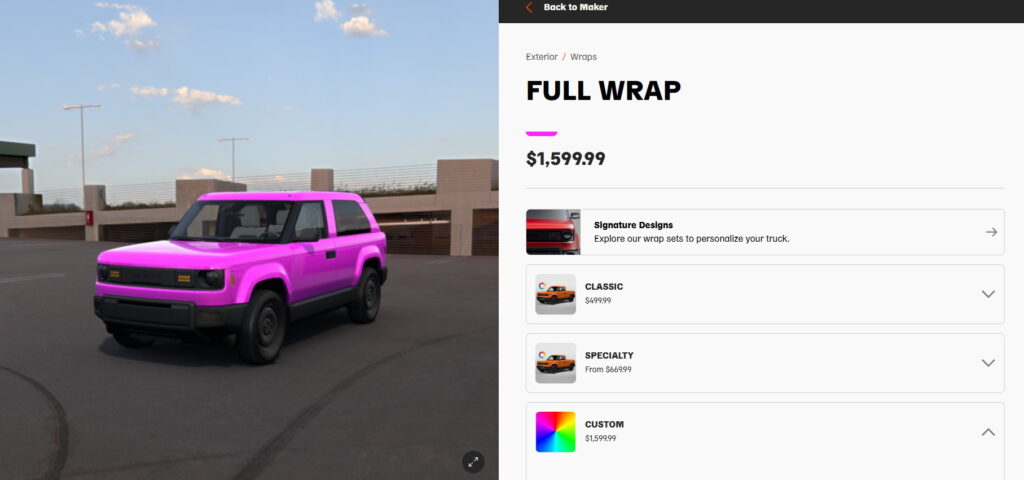

The initial catalog features over 175 accessories, over 80 of which cost less than $500. Slate will also sell over 100 standard vinyl wrap colors priced from $499.99 to $1,599.99, using ready-to-wrap composite body panels instead of paint, completely avoiding the cost of a paint shop. The catch is that the wrapping falls on the buyer, as Slate provides the materials but leaves the work to you.
An IPO, eventually
The startup has raised over $1.3 billion across three funding rounds, starting with a round led by an investment linked to Bezos and continuing with two others led by Walter’s TWG Global. Farisi said an IPO is still on the agenda, although he believes “2027 is probably too early,” as Slate wants to first launch production and scale the business before going public.
Slate Auto’s approach generates significant interest, as the company tries to rethink the very economics of electric vehicle production. Instead of relying on expensive technologies and complex manufacturing processes, the startup is betting on maximum simplification and involving the buyer in finalizing the product. This allows the initial price to be reduced to a level unattainable for most competitors and potentially achieve profitability faster. However, only time will tell if there will be sufficient demand for a vehicle with limited range and the need to handle its appearance independently. Slate’s success could be a new chapter in the development of the electric vehicle market, proving that affordability and profitability can go hand in hand.