


Stellantis Asked Students to Design the Future of SRT Performance
Dodge has just announced the winners of its Drive for Design competition, and the results are impressive. These are not professional designers, but school students, although you wouldn’t be able to tell from some of the entries. Among the presented projects are cars with yellow hoods, one with a hammock instead of a rear seat, and the spiritual successor to the insane Tomahawk motorcycle with the Viper V10 engine.
Task from Dodge: Show the Future of SRT
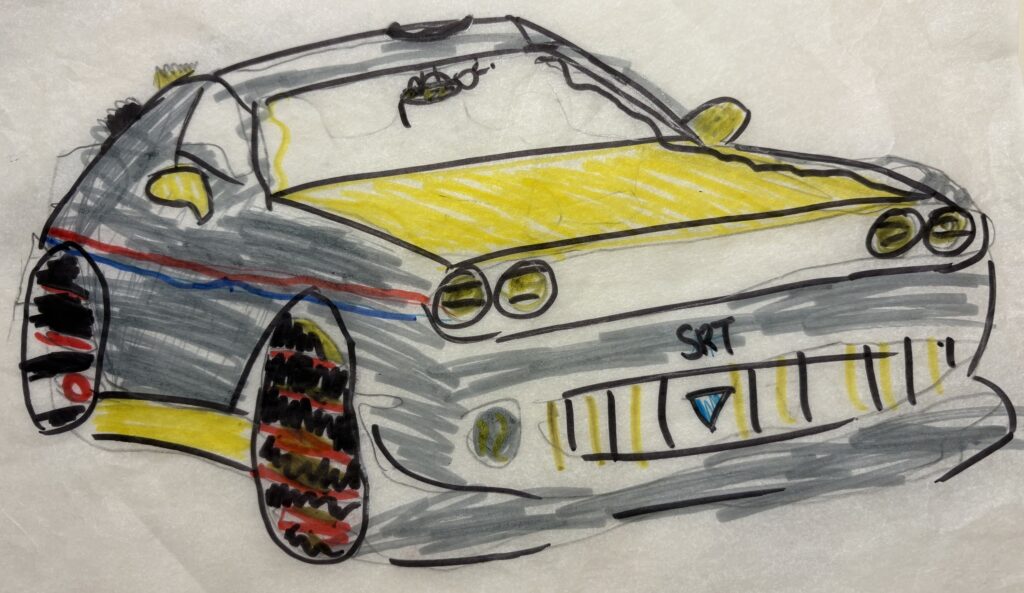
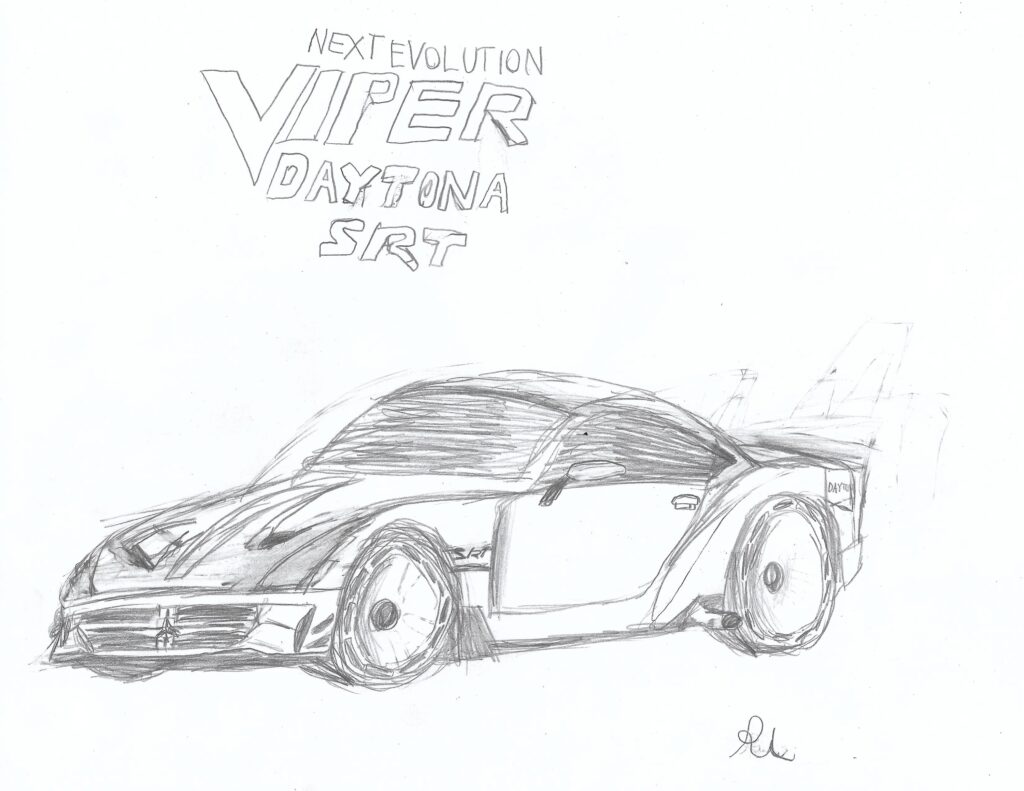
The conditions of the Dodge competition were simple: demonstrate what you envision as the future of SRT performance. Let’s start with the two youngest winners — Kateryna Kodunya, a first-grade student, and Richie LeBlanc, a fifth-grade student. Each of them presented one angle of their cars.
Kodunya’s sketch emphasizes color and a combination of retro forms. The front shows a clear connection to modern models like the Challenger, but at the rear, we seem to see something like a shooting brake. If Dodge takes anything from this competition, a muscle car-style shooting brake sounds like a great option.
LeBlanc took a much tougher approach. His sports car features somewhat Porsche-like curves, a classic Dodge grille, and serious hood scoops. If this becomes the basis for the next generation Viper, there is plenty to be excited about. Now let’s move on to the older participants who made a big impression.

Most Interesting Projects: From SUV to Motorcycle
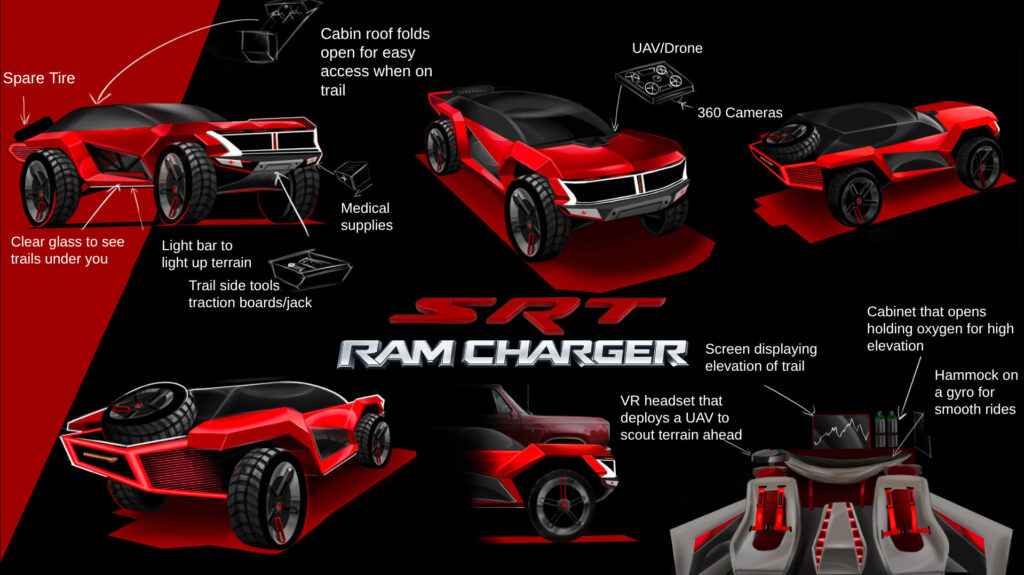
Eighth-grade student Jackson Brobst created one of the most intriguing designs. His SRT Ram Charger is not a truck, not an SUV, and not even a muscle car. It is something in between all of these. It looks almost like a lifted 2040 Charger. The car features massive off-road tires, a drone built into the hood, a spare tire on the back, glass in the doors for better track visibility, and yes, a hammock instead of the rear seat. You’d love to see someone trying to take a nap while the driver jumps a ramp at 80 km/h.

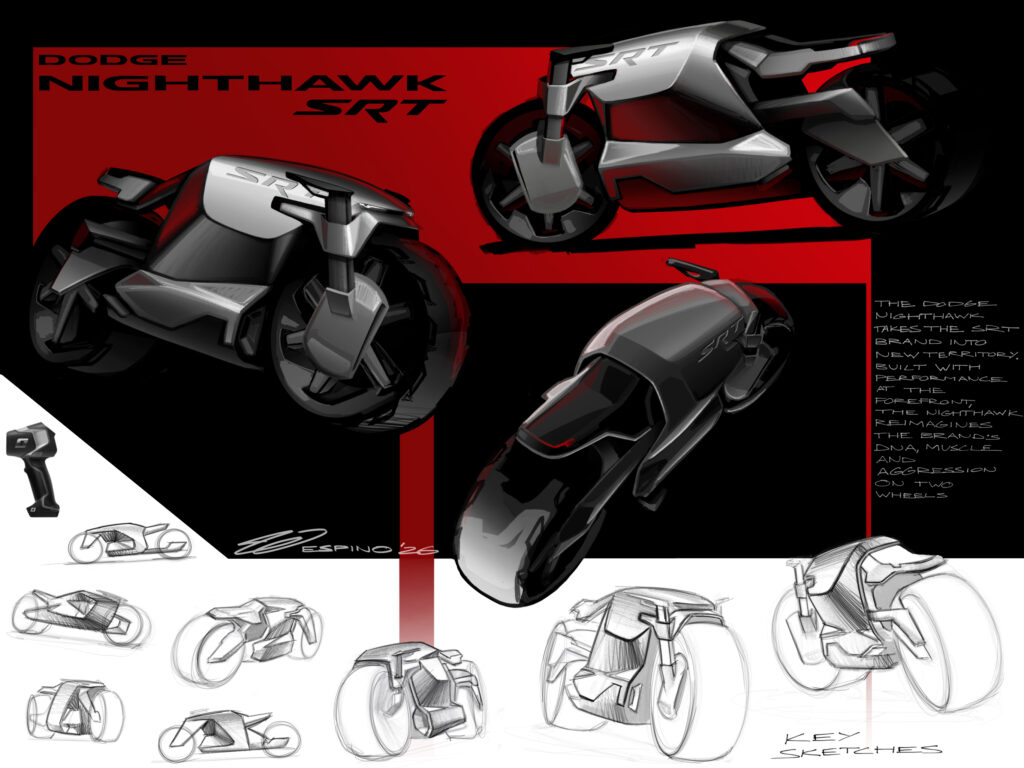
Finally, let’s look at the top three winners. Start with Javier Espino and his Nighthawk SRT. It is a great name, as this is the spiritual successor to the Tomahawk, and it looks the part. It is unclear what powers it, but the style is aggressive, without unnecessary details.

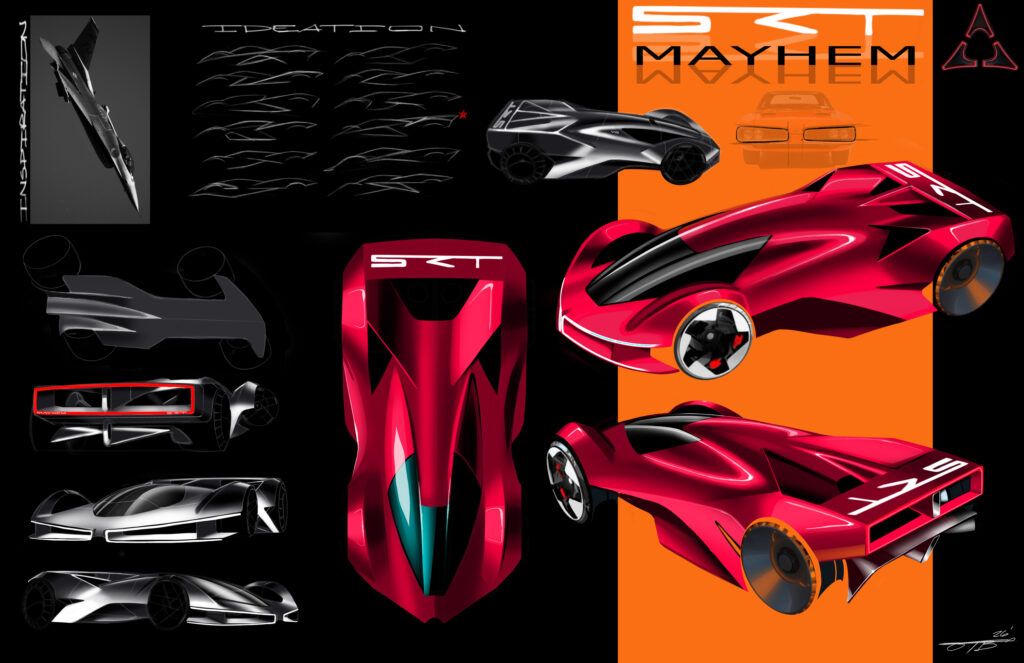
Second place went to 12th-grade student Owen Bronson with his SRT Mayhem. It draws inspiration from fighter jets and classic Dodge muscle cars. The result is an angular car with a central driver position. It would look very much at home on a racetrack.

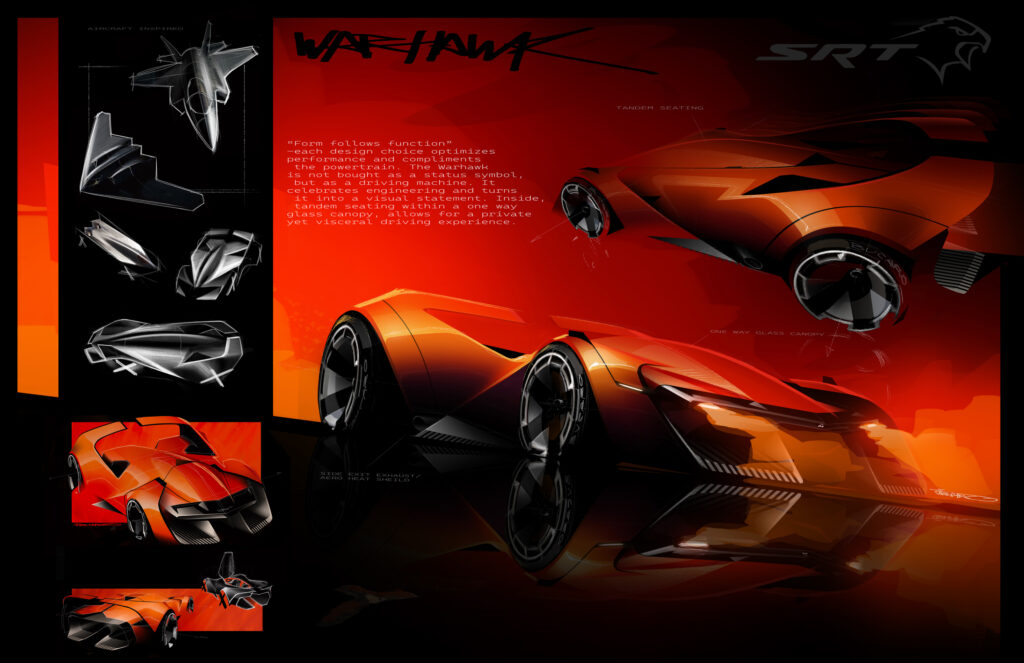
This year’s winner, Felix Bucaro, is also in the 12th grade. His design is called the Warhawk. It is also inspired by military aircraft, but the result is less angular and more rounded. When compared to Dodge’s own SRT Tomahawk Vision Gran Turismo, released in 2015, the similarity is striking. Perhaps the brand is still considering something truly unusual for its next flagship vehicle. One can only hope.
Interestingly, the Drive for Design competition not only showcases the talents of young designers but also allows automakers to see how new generations envision the future of their brands. The winners’ works cover a wide range of ideas, from reimagining classic muscle cars to creating hybrid SUVs and even motorcycles. This indicates that even in times of electrification and the search for new forms, the spirit of performance and bold design solutions remain in the spotlight. Perhaps some of these concepts will one day be realized in production models, as history knows cases where student projects became a source of inspiration for real cars.