


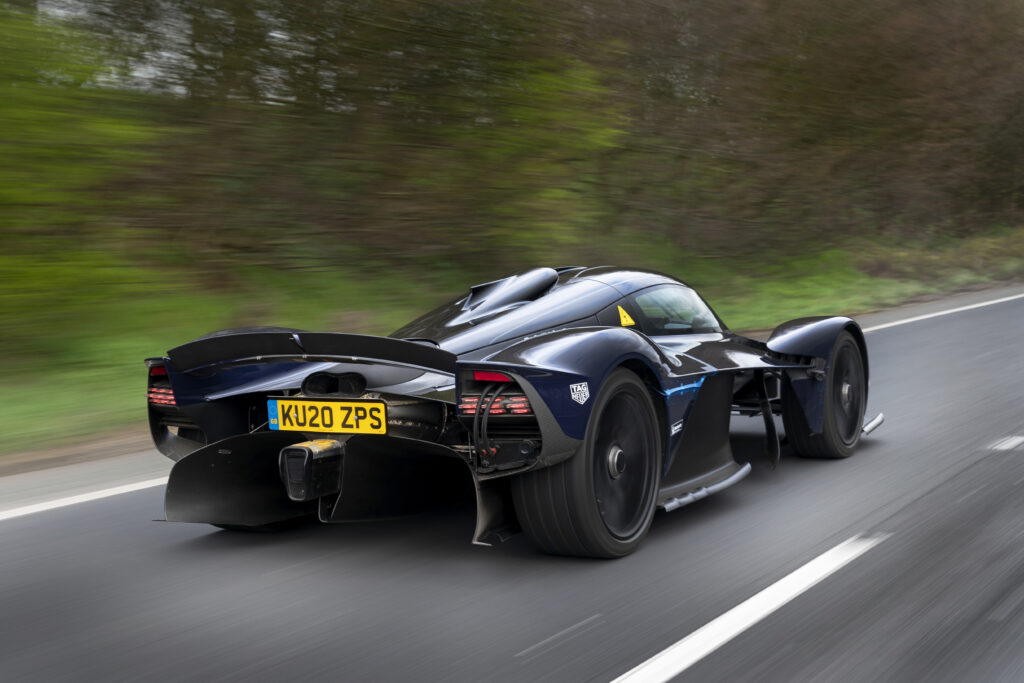
Aston Martin Valkyrie recall due to track fire risk
Several Aston Martin Valkyrie hypercars are being recalled in the US. Owners should not worry that the issue will arise during normal driving on public roads. According to Aston Martin, the fault can manifest only under specific sliding conditions and speeds achievable exclusively on a racetrack.
Of the 51 Valkyries currently in the US, only seven have the optional track suspension, and it is these cars that may be affected. The company reports that a seal in one of the master brake cylinders can deform. When this happens, brake fluid may not return to the reservoir after the driver releases the pedal.
How does the problem occur?
The situation then worsens. Pressure in the brake system can reach saturation point, the brakes begin to drag, and temperature rises sharply. If heated enough, the resin in the carbon rear brake cooling duct can reach its ignition temperature and catch fire.
When can this happen?
Aston Martin notes that the problem can only arise under very specific circumstances. The car must be moving on a track, the ESC system must be set to ESP Sport, ESP Track, or ESP Off mode, and the car must be in a drift exceeding certain yaw rate and body slip angle thresholds. Additionally, the driver must turn the steering wheel in the direction of the drift (countersteering), forcing ESP to apply the brakes to the front inner wheel, and also use the accelerator during or immediately after braking, so that ESP also intervenes on the rear inner wheel, building up pressure.
Incident and solution
A Valkyrie prototype encountered this issue during testing in November 2022, resulting in a small fire on the rear side. The affected models were assembled between December 19, 2023, and December 20, 2024.
Aston Martin will notify owners of the recall this month and inform them of the remedy in November. Dealers have been instructed to replace the master brake cylinders. The new components include a new seal and piston designed to work more effectively during activation of the ESP and traction control system.
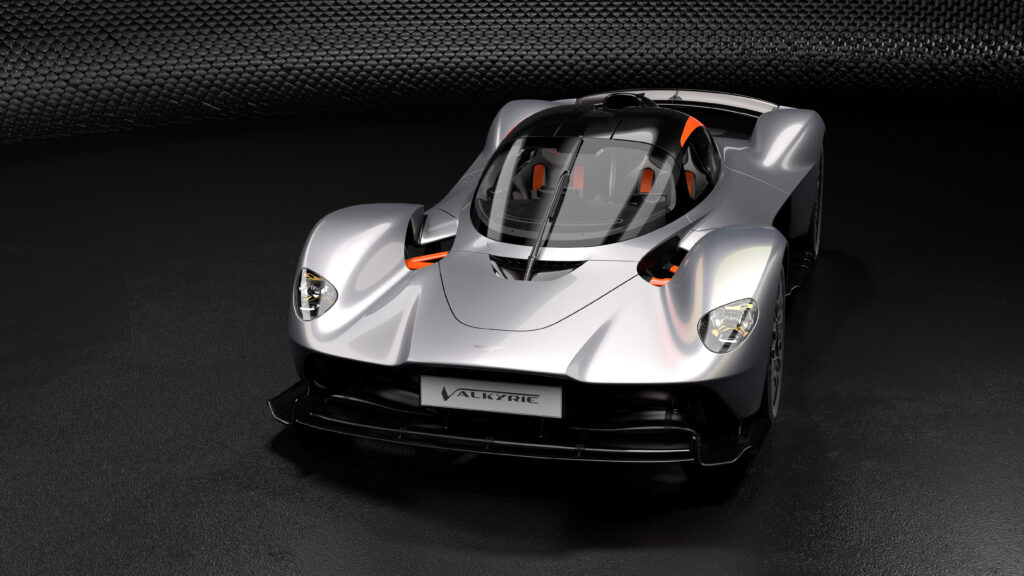

This situation highlights how complex modern hypercars are, especially when it comes to integrating powerful engines, aerodynamics, and electronic safety systems. Although the problem occurs only under extreme conditions, it serves as a reminder that even the most expensive and technologically advanced cars can have unforeseen flaws that emerge only during intensive use. The manufacturer’s prompt response and component replacement demonstrate a responsible approach, yet the very fact that six specific actions must be performed simultaneously for a fire to occur makes this case unique in the world of automotive recalls.