


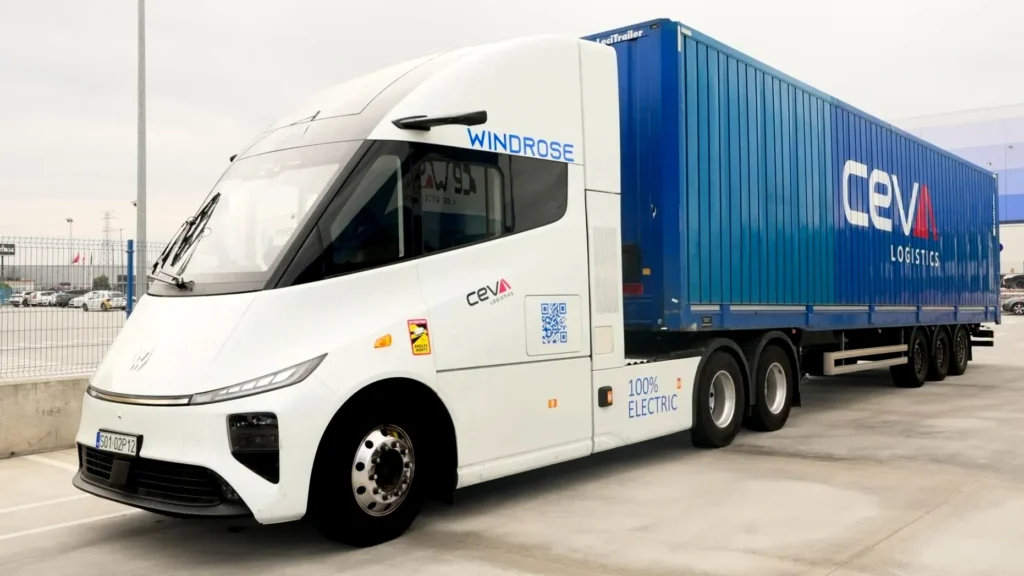
Scandal around Windrose: unpaid salaries and a missing truck
Questions have begun to arise around Windrose, one of many electric truck manufacturing startups, after two former employees claimed that the company’s CEO refused to pay them, and one of the expensive trucks disappeared.
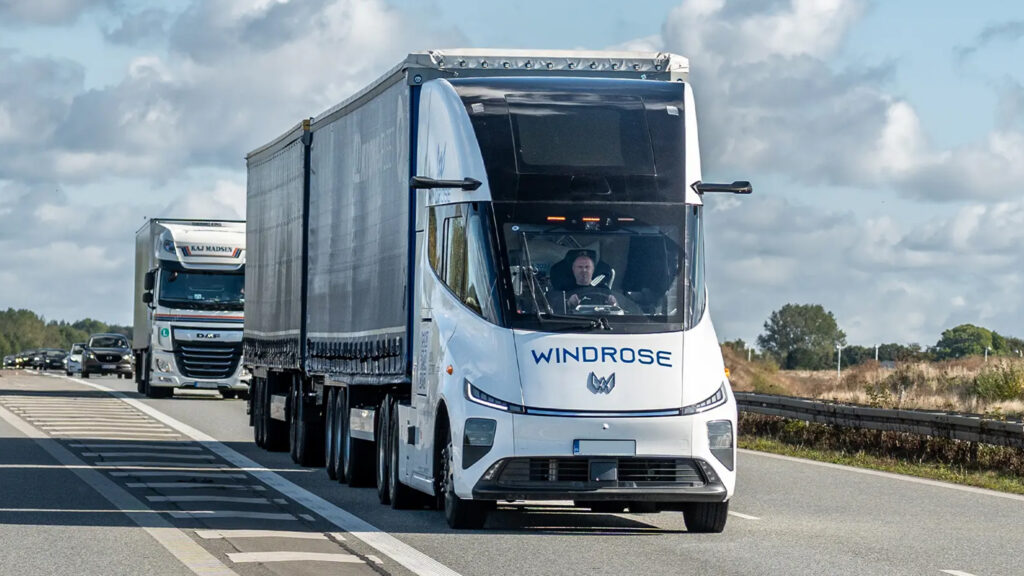
Although the name Windrose Technology may be unfamiliar, the company claims to have raised approximately $400 million and aims to become a major player in the electric truck race, creating a machine that will compete with the Tesla Semi. The firm is Chinese-owned, has its headquarters in Belgium, and in addition to its US launch, it has received orders from customers in Norway, Chile, and Australia.
Payment problems and disappearance of equipment
However, as we have seen many times with new automakers, not everything is going smoothly for Windrose. According to the Wall Street Journal, the company’s founder and CEO, Wen Han, reportedly lost track of one of the company’s trucks earlier this year.
Unpaid wages
Travis Veit and Harold Keller, two former employees laid off in January, reportedly refused to help Han find the truck until they received $91,000 in unpaid salary and benefits, the WSJ reports. They claim that as of July, they still had not received the money, and the truck remains missing. Han considers the amount demanded by Veit and Keller to be “unfounded.”
The company’s CEO admitted to “hiring too quickly and aggressively to help the company expand.” He also confirmed that Windrose had issues with paying salaries but insists the company has funding to support its global expansion ambitions. Later this year, Windrose plans to go public through a merger with a special purpose acquisition company (SPAC).
According to the WSJ, the company delivered its first electric truck at the end of 2024 and currently has 36 such vehicles operating worldwide. Han claims that the company’s trucks provide approximately twice the range of comparable electric trucks from Volvo and Daimler, while costing significantly less. This is partly because the company uses contract manufacturers in China to build the trucks, after which they are sent to regional partners for local assembly.
Sponsorship and lawsuits
Sponsorship money

As the company grew, Han reportedly sponsored a basketball team near his Belgian headquarters, pledged $15 million to Stanford University after Windrose goes public, and claimed the company has facilities in California and Georgia ready to begin local assembly. Over the same period, employee salaries were reportedly often delayed.
Last October, the company’s first head of North American operations, Jason Gies, demanded payment of unpaid wages, the WSJ reports. He was fired a few days later, and after filing a lawsuit in federal court, a judge ordered Windrose to pay him $413,000.
Recently, Windrose drew the attention of the National Highway Traffic Safety Administration (NHTSA) after it was discovered that two of four Windrose trucks in the US had VINs indicating they were manufactured in Georgia, although they were actually built in China. Han blamed the problem on a former employee. The company is apparently experiencing growing pains, and only time will tell if it can resolve all its issues.
The situation surrounding Windrose demonstrates typical challenges for EV startups: rapid scaling often leads to financial and logistical mistakes. Despite significant investments and ambitious plans, the company faces serious allegations of unpaid salaries and regulatory violations, which could undermine investor and partner confidence ahead of its planned stock market listing.