 by
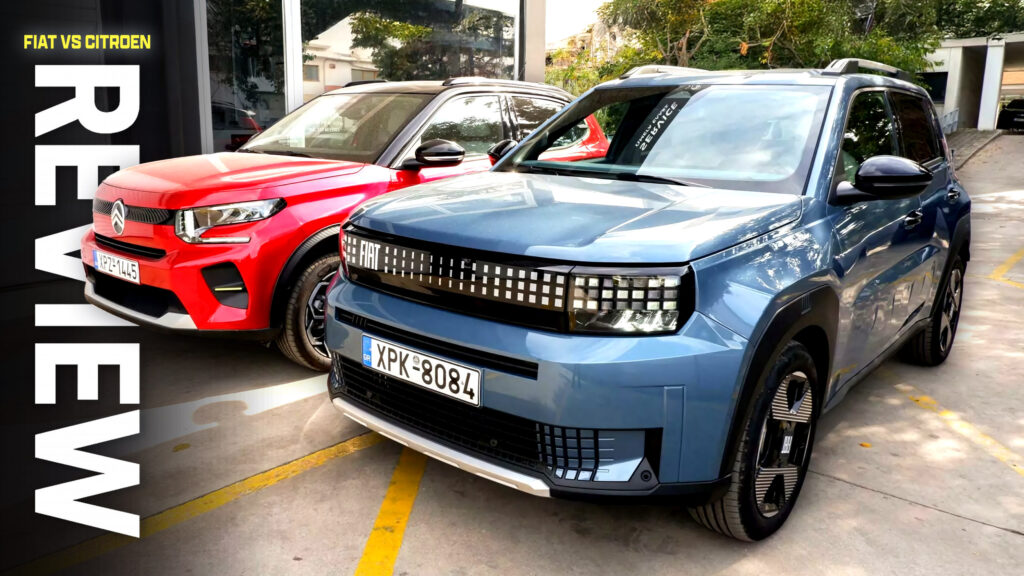
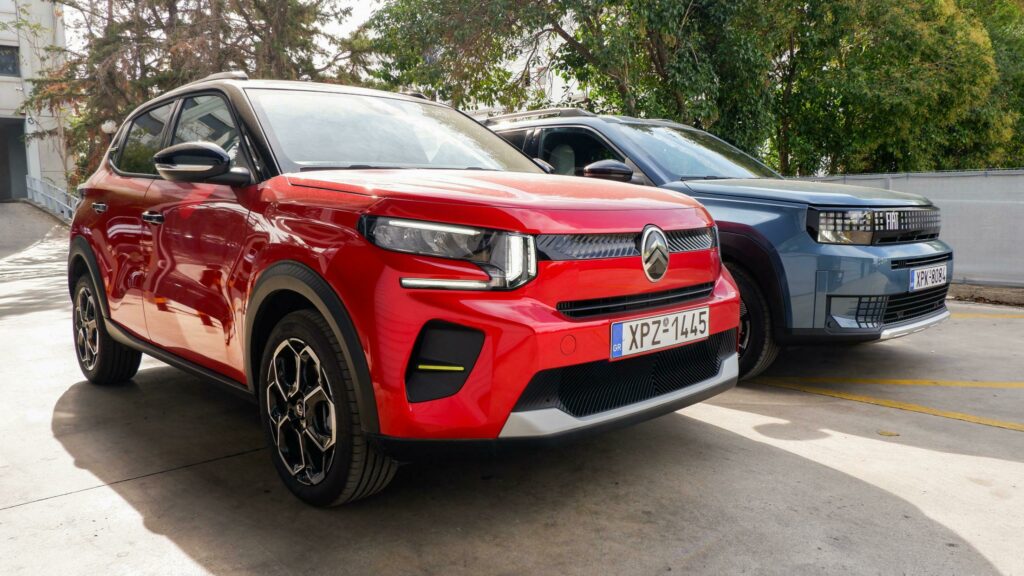
by Although European roads are crowded with SUVs, affordable compact hatchbacks have not yet left the stage. The Stellantis group seems to have realized this, repositioning the Citroen C3 towards an affordable crossover-hatchback and offering Fiat the same platform to create the new Grande Panda. We recently compared both models to understand if there are significant differences between them, apart from design.
A Shared Foundation for Budget Brands
Citroen and Fiat play a special role in the Stellantis portfolio, being brands focused on economical buyers. Their task is to offer the most affordable cars in each segment. This is precisely why the new C3 and Grande Panda are built on the economical Smart Car platform, rather than the more sophisticated CMP architecture used by their ‘relatives’ the Opel Corsa, Peugeot 208, and Lancia Ypsilon.
Despite the more affordable foundation, Stellantis did not skimp on powertrains. Buyers are offered the same choice: gasoline engines, mild-hybrid, and full electric powertrains.
Technical Specifications: Almost Identical
As expected, both hatchbacks share a wheelbase, and their dimensions differ by millimeters. The Citroen is 16 mm longer, and the Fiat is 5 mm wider. On paper, this is a measurement error, but stylistically they are divided much more strongly than it might seem.
Different Shells for Different Characters
Citroen and Fiat designers have managed to create completely different images. Although the models inevitably share main proportions, roof structure, and key points, every body panel is unique. The Citroen looks massive and aggressive, with sculptural details, while the Fiat is more ‘boxy’ and retro-futuristic, with numerous references to Italian heritage. Both cars have increased ground clearance and crossover design elements, but the thicker plastic cladding and higher roof rails of the Grande Panda make it visually more off-road-oriented.
Two Interiors, Two Moods
The unique character of each model is even more vividly manifested inside. The Citroen demonstrates a modern and minimalist approach with horizontal lines on the dashboard. The small two-spoke steering wheel and compact digital instrument cluster, similar to a head-up display, stand out. Fabric trim masks hard plastics.
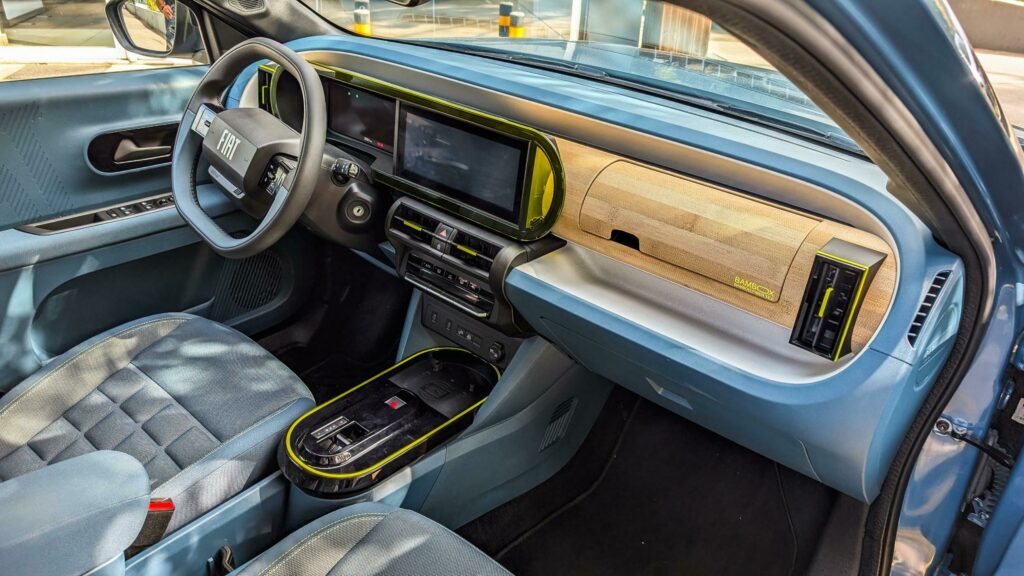
The Fiat’s interior is much more playful and vibrant. It features an oval digital instrument panel with a miniature image of a Panda in a transparent perimeter, a bamboo-like glovebox lid, vintage emblems, and glossy black surfaces.
Of course, many core components are shared: physical climate controls, a 10.25-inch multimedia system screen, and most switches.
Comfort and Practicality
The interior space feels identical; both cars offer enough room for four adult passengers. The seats are soft and stylish each in their own way. The trunk also looks the same to the eye, although on paper the Fiat has an advantage. Overall, the Fiat has the most unique cabin atmosphere, which brings a smile, while the Citroen will likely better withstand the test of time and has a slight advantage in perceived quality due to its darker trim.
Driving Impressions
Behind the wheel, the similarity is obvious. Both models have identical suspension geometry and a soft overall setup. The Citroen has a slight advantage on uneven surfaces thanks to its ‘Progressive Hydraulic Cushions’ system, which softens impacts at full damper travel. Both hatchbacks are very easy to drive and maneuverable on narrow streets. Performance is identical across the model range. The steering in the Grande Panda may resemble the ultra-light City mode of old Fiats, but only when the car is stationary. The Citroen’s steering has a barely perceptible additional resistance.
Conclusions and Market Context
The Citroen C3 and Fiat Grande Panda are two interpretations of one idea, executed in French and Italian. They are aimed at the budget subcompact car segment and use a shared platform to reduce costs, while simultaneously forming distinct personalities through design. They have little direct competition, aside from the Dacia Sandero Stepway. Technically, they are identical, with minor differences in ride smoothness and agility. The C3 is slightly more composed when the suspension reaches its limits, and the Grande Panda seems a bit more lively. These nuances are noticeable only during direct comparison. For most buyers, it is the design that is decisive, and here the ‘twin brothers’ offer enough differences to stand apart. The final verdict is a draw: each car has its own strengths and appeals to different tastes. The Grande Panda is playful energy and quirkiness, while the C3 is restrained, minimalist sophistication.
These cars clearly demonstrate the modern strategy of large auto giants: maximum unification of technical components for savings, combined with design individuality for different target audiences. Their appearance on the market could become a serious challenge for other players in the affordable city car segment, especially considering the availability of an electric powertrain. The success of each model will now depend on how successfully marketers and dealers can convey their unique emotional advantages to buyers, for whom a car remains not just a means of transportation, but also a way of self-expression.