


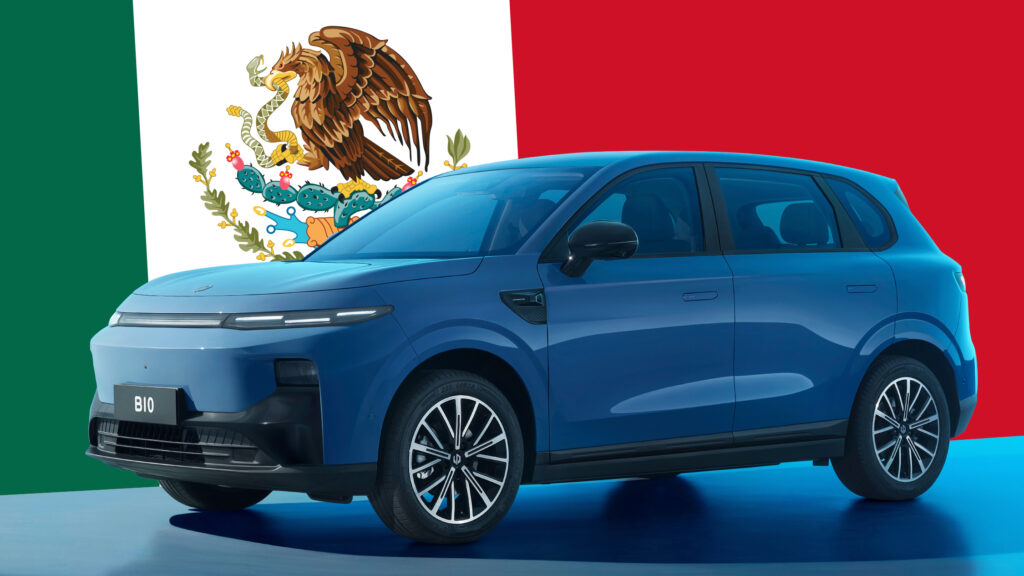
Leapmotor enters the Mexican market with support from Stellantis and Mopar
Chinese automakers have been actively expanding their presence almost everywhere possible over the past few years. Now, Leapmotor has finally reached North America, though not quite in the way some expected. Its first stop was not Canada, but Mexico, where the brand, backed by Stellantis, officially launched the B10 crossover.
Adaptation and price for the local market
The B10 model was adapted to local conditions for over a year before appearing in showrooms at a price of 575,000 Mexican pesos (about 33,000 US dollars). Engineers meticulously tuned the vehicle to handle everything from high-altitude roads to desert heat and tropical humidity, and it underwent the necessary certification for the Mexican market. Other models are expected to arrive later, including the larger C10 and C16 crossovers.
Technical features: Not fully electric
Mexico is not getting the fully electric versions of the B10 sold in Europe. Instead, only a range-extender powertrain is offered here. The 1.5-liter internal combustion engine never directly drives the wheels, but works as a generator for an 18.8 kWh battery, which powers an electric motor producing 215 hp (218 hp / 160 kW). Leapmotor claims a combined range of up to 615 miles (990 km) before needing to refuel and recharge.
Stellantis’ role in expansion
The launch was made possible thanks to Stellantis, which owns approximately 20 percent of Leapmotor and controls the international joint venture responsible for selling the brand outside of China. Instead of starting from scratch, Leapmotor uses Stellantis dealerships — over 40 sales points have already opened in Mexico. Service and parts supply are ensured through the existing nationwide Mopar network.
Mexico first, then Canada
Canada, which recently agreed to accept up to 49,000 Chinese cars annually in exchange for lower tariffs on its canola exports, could be the next step. This is especially relevant as Stellantis considers future production opportunities there. Stellantis CEO Antonio Filosa previously stated that there is room for the brand in Mexico and possibly Canada, but “no room” in the United States at present, reports Automotive World.
Why the US remains out of reach
Between high tariffs on Chinese electric vehicles and restrictions related to connected car technologies, which recently forced Polestar to leave the US market, the American market remains effectively closed. For now, however, Mexico is an important milestone for Leapmotor as the company pursues the ambitious goal of delivering one million vehicles worldwide this year.
Leapmotor/Stellantis/Wikimedia Commons
Leapmotor’s entry into the Mexican market is a strategic move that allows the Chinese brand to establish itself in North America while avoiding the stringent US barriers. Leveraging Stellantis and Mopar infrastructure significantly accelerates the process and reduces risks, and the focus on range-extender hybrid technology may be more appealing to Mexican consumers who may have reservations about fully electric vehicles. Further expansion into Canada seems like a logical continuation, especially against the backdrop of trade agreements between Canada and China, opening new opportunities for Chinese automakers on the North American continent.