


Return of the Hot Hatch
Subaru fans have long awaited the return of a true WRX STI hatchback. The last such model disappeared in 2014 with the end of third-generation production, leaving the lineup without a hot five-door car. Today’s WRX range is limited to sedans and wagons, but Subaru may finally be getting closer to the idea of bringing back a hatchback, even if the first step is happening on the racetrack.
The Strongest Hint
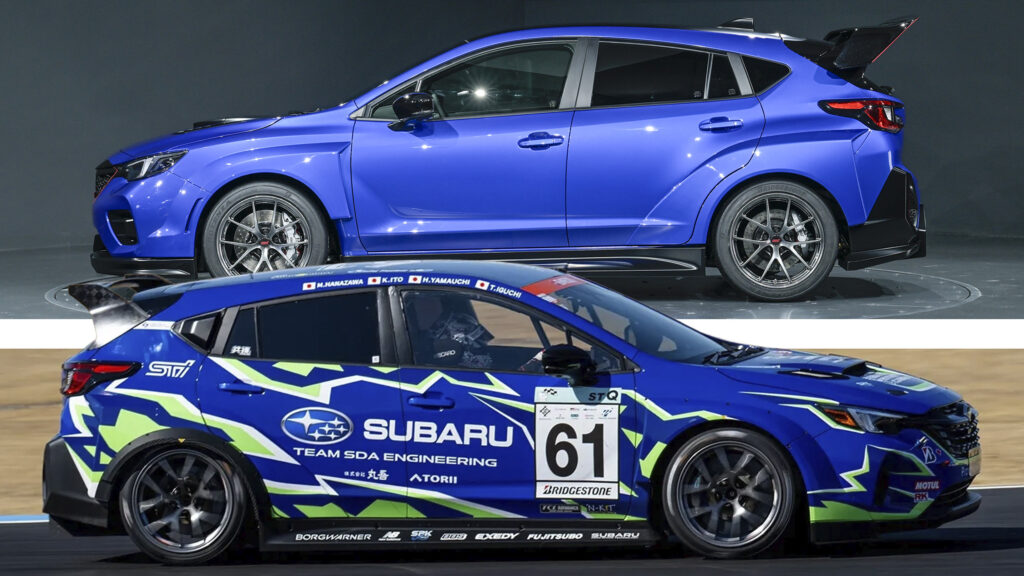
The most obvious hint at this is the appearance of the Subaru High Performance X Version II, or HiPerfX2. It will compete in the ST-Q class of the 2026 Japanese Super Taikyu series, effectively replacing the WRX-based sedan that Subaru used in the 2024 season.
Subaru states that STI “is not dead,” but its boxer engine may be at risk.
This track car made its public debut at the 2026 Tokyo Auto Salon. It develops ideas from the earlier Performance-B STI concept from the 2025 Japan Mobility Show, and the family resemblance is obvious. Both appear to be based on the Impreza, though the similarity ends there. Wide bolt-on fenders, unique front and rear bumpers, a hood with air intakes, and a tall rear wing confirm this.
Visual Dominance
The race car stands out visually thanks to its bolt-on fenders, noticeably reworked aerodynamics, and the bright blue livery of Team SDA Engineering. Its length is 4,514 mm, which is 24 mm longer than a regular Impreza, while the wheelbase of 2,675 mm matches that of the production WRX sedan.
Subaru reports that the car was created by utilizing “existing assets” from its own parts catalog. Most of the hardware was carried over from the earlier HiPerfX sedan, including the engine, suspension, brakes, and differential. Under the body, what appears to be a reinforced version of the familiar Subaru Global Platform is used.
The WRX gets a retro AWD Club Spec Evo Edition, but what you care about hasn’t changed.
Instead of starting with a production model and removing unnecessary components, the SDA Engineering team received a ready-made white body shell from the outset, which significantly simplified the process. To develop the special aerodynamic components and underbody, Subaru involved engineers from both the automotive and aerospace sectors.
Heart and Drivetrain
The race car is powered by a motorsport version of Subaru’s turbocharged 2.4-liter flat-four boxer engine. In this specification, it develops 359 hp and 475 Nm of torque. As with previous program cars, the engine runs on carbon-neutral E20 fuel developed jointly with ENEOS. A six-speed manual transmission sends power to all four wheels via a reworked all-wheel-drive system.
Initial track outings indicate the project has started confidently. During official testing at Mobility Resort Motegi on March 1st, the hatchback completed 54 laps without issue. Subaru has also clearly outlined its intentions for the future campaign, stating that the team will be “more focused on winning than ever” during the 2026 season.
The Path to Production
Subaru officially describes the race car as “an evolving vehicle that will be honed in the field of motorsport to evolve into an even better car.” Subaru’s product roadmap adds an interesting aspect here, as the company will soon stop taking orders for the current WRX sedan in Japan.
Subaru will soon stop taking orders for the current WRX and two wagons in Japan.
If the WRX STI does indeed return around 2027, its form could differ significantly from today’s car. Hints point to a wide five-door hatchback, rather than an even more aggressive version of the existing WRX sedan.
By testing the platform in the harsh conditions of the Super Taikyu series, Subaru can hone the mechanical package for a future road-going hot hatch. If this happens, the Toyota GR Corolla and Honda Civic Type R may soon get another serious rival to watch out for.
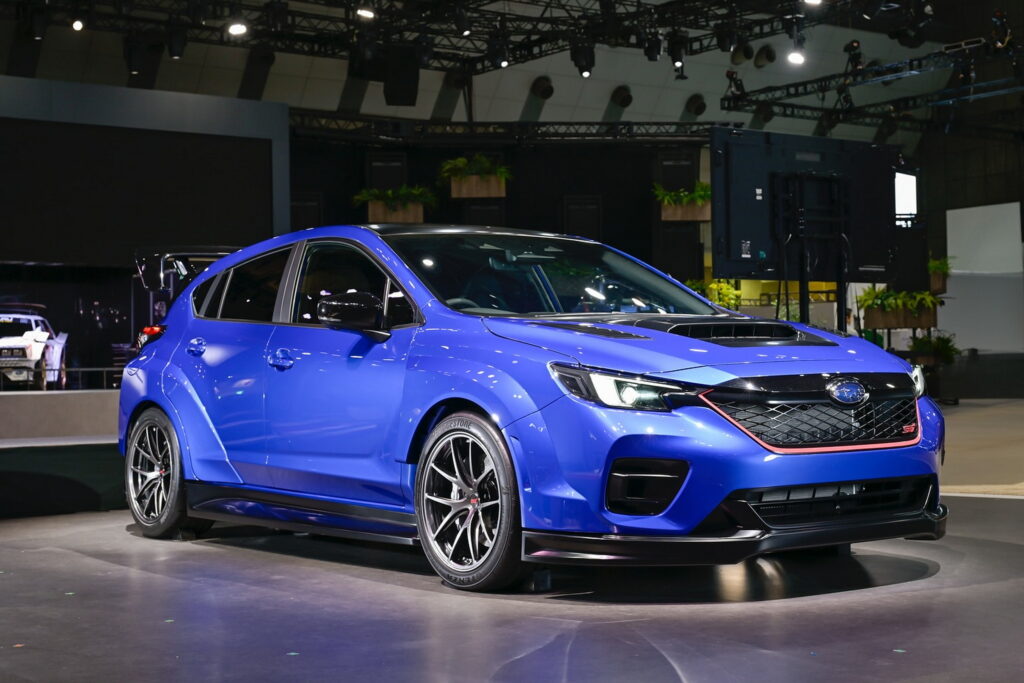

The appearance of the HiPerfX2 in the racing series is not just a marketing move, but part of a deep engineering strategy. The use of carbon-neutral fuel and the involvement of aerospace engineers indicates Subaru’s desire to combine high technology with environmental responsibility. The success of this program on the track could directly influence the decision for mass production, as data collected in real competition conditions is invaluable for refining the design. It also demonstrates that the company is serious about reviving the iconic STI name, trying to find its new place in the modern automotive world where environmental demands and high technology go hand in hand.