


On his last day in office, the Governor of New Jersey signed a sweeping new law aimed at combating dangerous e-bikes, sparking immediate backlash from cycling advocates. They believe the law goes too far, and they might be right.
Once the law takes effect, anyone operating an e-bike must have a motorcycle helmet approved by the Department of Transportation, e-bike insurance, a current vehicle registration, and a driver’s license to operate it.
This means even an elderly person slowly riding an electric cruiser along the boardwalk must now be equipped as if heading for a racetrack. Otherwise, they will be breaking the law.
One of the Strictest Laws in the Country
This is the main point of criticism surrounding the new legislation signed by Governor Phil Murphy. This law is considered one of the strictest regarding e-bikes in the United States.


The bill abolishes the previous three-tier e-bike classification system in New Jersey and replaces it with much broader frameworks that bring nearly all electric bicycles under one regulatory roof. This happens regardless of the power, speed, or everyday use of these vehicles.
Governor Murphy stated that this law was long overdue. The use of e-bikes has surged across the state, especially among teenagers and commuters. Several recent fatal accidents involving electric bicycles, including one that killed a 13-year-old boy, contributed to the bill’s rapid advancement during the last voting session in the legislature.
The Cost of Compliance
The bill’s sponsor, Senate President Nick Scutari, argues that faster and more powerful e-bikes have outpaced existing regulations, creating real safety risks for both the cyclists themselves and those around them. Users will have six months to bring themselves into compliance with the new requirements, with registration fees waived for the first year. After that, annual registration will cost $8. After the grace period ends, $50 fines will take effect.
Age restrictions are also being tightened. Individuals younger than 15 will be prohibited from operating low-speed e-bikes or mopeds, while 17-year-olds must have a basic driver’s license. Sixteen-year-olds can only ride low-speed e-bikes through approved municipal rental programs, such as Citi Bike.
However, there is one huge problem: the term “e-bike” is used too broadly in the law, while the real issue is more likely electric motorcycles and electric mopeds.
A Distinction the Law Ignores
There is a huge difference between e-bikes and electric motorcycles. E-bikes are bicycles with electric assistance. Such machines are produced by Porsche, McLaren, and a host of other legitimate bicycle manufacturers. Power is typically limited to 750 watts, and it engages when the cyclist pedals. They have regular pedals and standard bicycle components. In many cases, they look just like a regular bicycle, and the average person might not even tell it has electric assistance.
On the other hand, electric motorcycles or electric mopeds often offer 1000 watts and more via a throttle. Without using the throttle, they are rarely functional because they are very heavy. Many of them resemble motorcycles or mopeds more than a regular bicycle. Of course, the line between the two types is sometimes very blurred due to how manufacturers design their products.
Seth Alvo from the YouTube channel Berm Peak points out all these issues and offers some solutions in his latest video on the topic.
Throttle Loopholes


He proposes changing the laws to target throttle control. His argument is that a throttle allows designers to ignore pedal design and function, which, in turn, allows them to focus on creating the type of products most associated with the abuse, misuse, and injuries the law aims to address.
“Allowing a throttle created a market for mopeds that look like e-bikes,” he says.
A host of electric motorcycle and electric moped brands attach pedals to what is otherwise, undoubtedly, an electric motorcycle, because it allows them to sell the product as an e-bike rather than something else.
This is how we ended up in a situation where a 65-year-old person simply trying to get a little exercise on a comfortable bike with light assistance now needs a motorcycle helmet, a license to operate it, registration, and insurance that mostly doesn’t even exist yet.
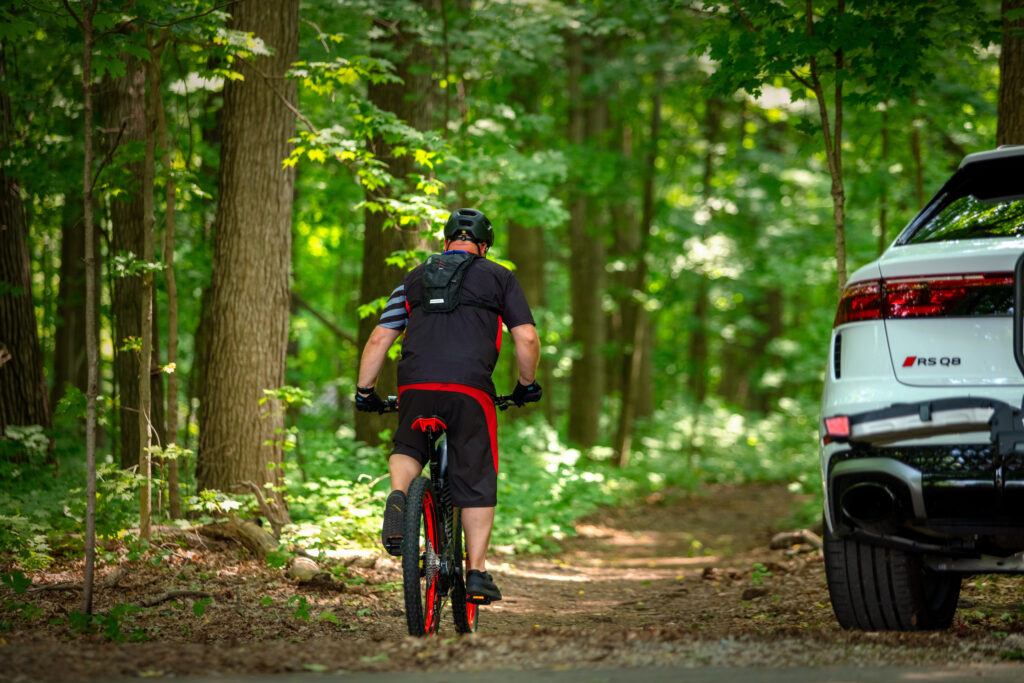

Image Sources: Trek, Audi, Super73
New Jersey’s approach highlights the complex dilemma facing urban planners and legislators worldwide: how to ensure the safety of public spaces without stifling innovation and the benefits of new, eco-friendly transportation. Many cities are watching the outcome of this experiment, as similar safety and regulatory challenges are widespread. The success or failure of this policy could set a precedent, influencing how other jurisdictions classify and control personal electric vehicles in the future. The key remains the question of balance between user responsibility and technology accessibility.