


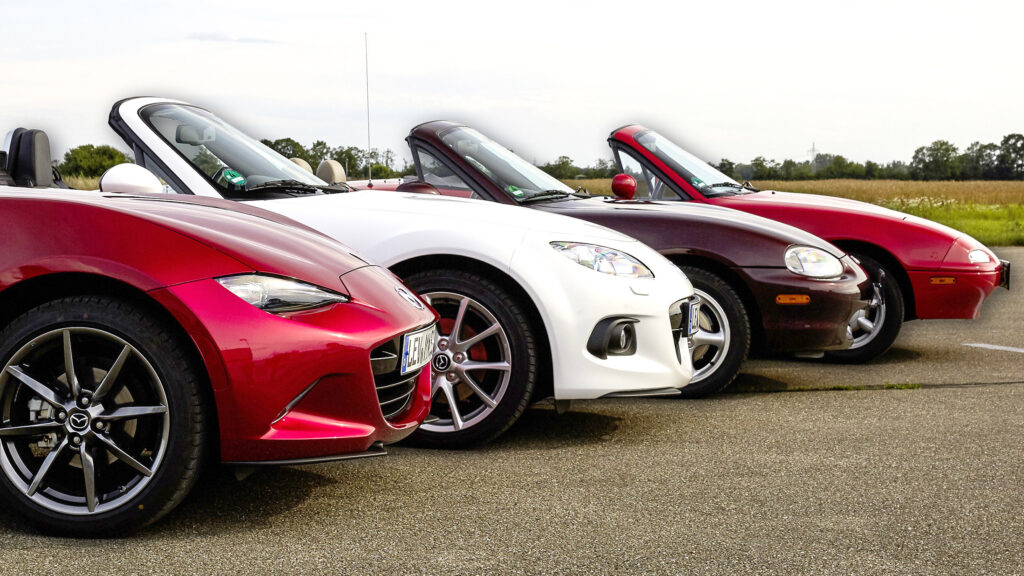
Price Increases and the Hidden Reality
It is widely known that car prices rarely fall, and the Mazda MX-5 Miata is no exception. In 1989, when it debuted as a 1990 model, the Miata started at a price of $13,800. Today, a new model costs at least $29,830.
However, delving into the numbers tells a different story. A recent report shows that when accounting for inflation, the cost of owning a Miata has actually decreased over time.
Over 9,500 people wanted this special Miata, 9,300 did not get it
Historical Price Dynamics
A detailed look at historical prices shows that during the production of the first-generation NA in the USA from 1989 to 1997, the Miata’s price gradually increased from $13,800 to $19,125.
The second-generation NB appeared in 1998 and was produced until the early 2000s, reaching a price of $22,098 before passing the baton to the NC model. The NC generation started with a base price of $20,435 and ended production several years later at $25,595.


Similarly, the current fourth-generation ND started at a price of $25,735 back in 2015, and prices have risen since then. However, when the publication Hagerty adjusted the base price for inflation, it turned out that Miata prices have changed quite differently.
Real Cost Adjusted for Inflation
Adjusted for inflation, NA and NB generation models would cost over $39,000 today in modern money. The NC generation, in comparison, falls into a slightly more modest range—somewhere between $32,000 and $36,000 depending on the model year and inflation rate.


The current ND generation is noticeably more affordable. In fact, since 2022, it has been cheaper than any previous Miata, at least in real terms. This is an unexpected twist, especially considering that many enthusiasts consider the modern ND to be the best Miata ever.
To get a clearer picture beyond Hagerty’s numbers, a list of original MSRPs was compiled and run through the official U.S. Bureau of Labor Statistics inflation calculator.
Comparative Price Table
Using the starting price from the actual year each generation began production (not the model year), all values were adjusted to November 2025 dollars. The resulting table offers a more direct comparative analysis of how the real cost of the base model has changed over time.
Generation (Sales Start Year) | Model Years | Base MSRP (Original) | Adjusted MSRP (2025 Dollars)
NA (1989) | 1990–1997 | $13,800 | $35,956
NB (1998) | 1999–2005 | $19,770 | $39,264
NC (2005) | 2006–2015 | $20,435 | $33,897
ND (2015) | 2016–2021 | $25,735 | $34,951
ND (2021) | 2022–2024 | $26,830 | $31,854
ND (2025) | 2025 | $29,830 | $29,830
The Future of the MX-5
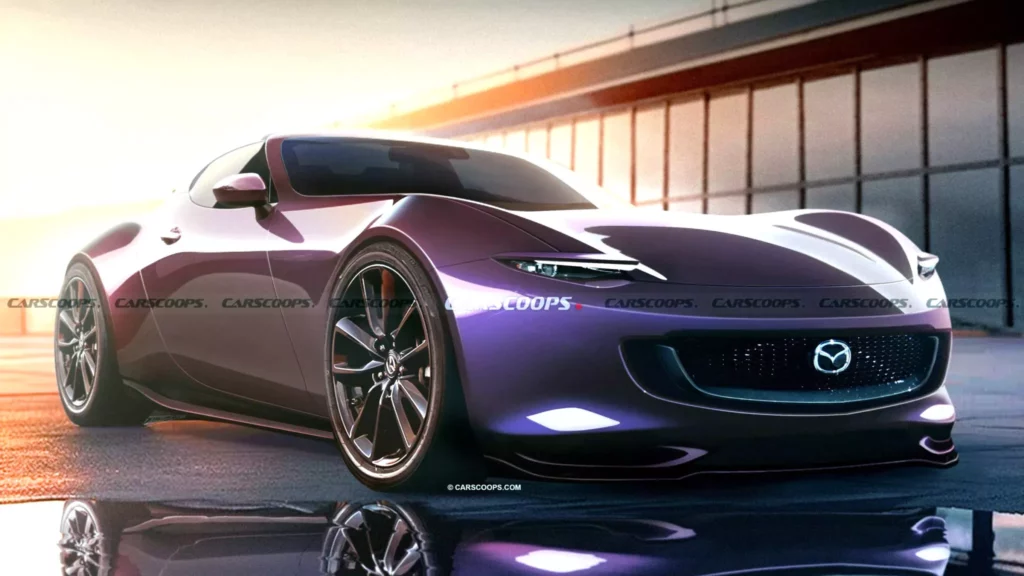

Mazda is working on a new generation of the Miata, reportedly set to appear in 2027. While official details are still scarce, early reports suggest it will receive the company’s 2.5-liter SkyActiv Z engine, likely producing just over 200 horsepower.
Even more interesting is Mazda’s stated weight target. According to the company, engineers aim to keep the weight of the new-generation car below 2,205 pounds (1,000 kg), making it even lighter than the current ND. Whether they can achieve this figure, and do so without raising the price, remains to be seen.
Interestingly, the trend of decreasing real cost for modern roadster-class sports cars may be linked not only to inflation but also to Mazda’s global strategy to maintain the affordability and appeal of this iconic model in a market dominated by crossovers and electric vehicles. Preserving a lightweight body and a small engine, despite stringent modern safety and environmental standards, is a technical challenge that the company seems to be successfully overcoming. The success of the future NE generation will depend precisely on this balance between tradition, technology, and price.