 by
by Authorities vs. Frames: A Strange Controversy Erupts in Florida
Often, it is law enforcement officers themselves who explain to citizens how to comply with the law. However, a curious situation has developed in Florida where the state sheriffs’ association has found itself at the center of a controversy over its own product. A new state law prohibits any items on or around a license plate that may partially cover any part of it. No exceptions.
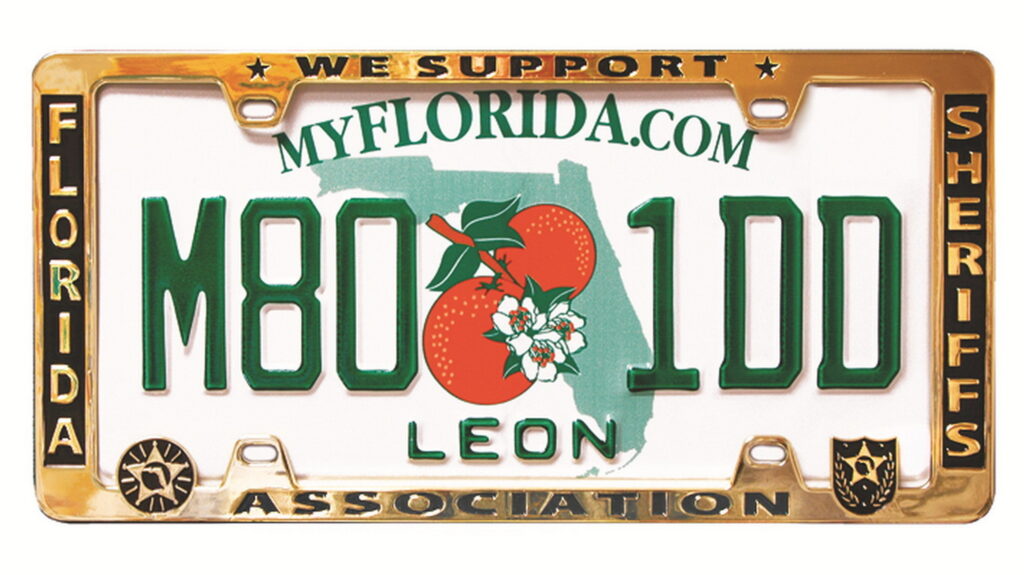
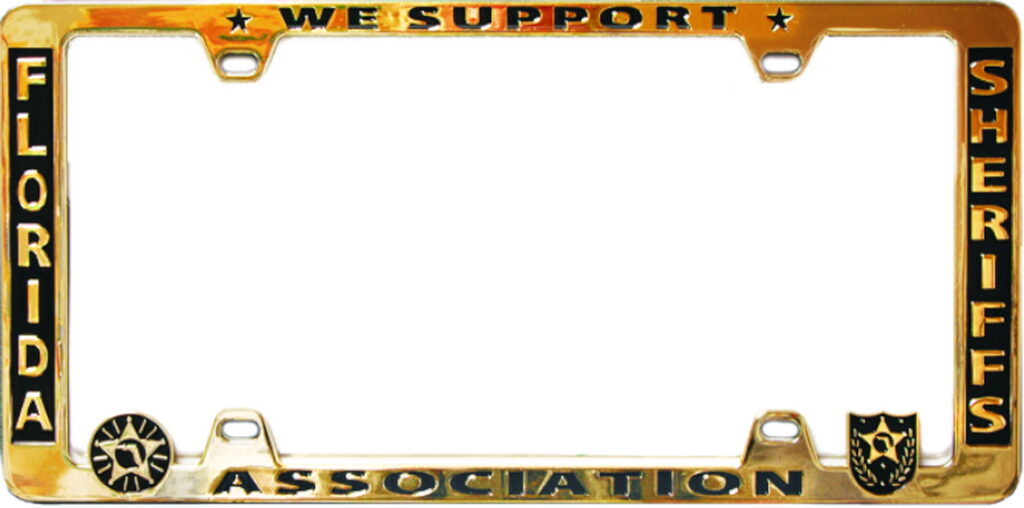
This ban also applies to decorative license plate frames, which can be seen on countless vehicles. The irony is that even the frames sold to citizens by the Florida Sheriffs Association (FSA) through its website fall under the ban. Now the association itself is forced to defend its product, which only adds to the confusion.
What is Considered an Obstruction?
In a recent Facebook post, the FSA stated that its official license plate frame “does not violate Florida Statute 320.061.” The association emphasized that the law is aimed at devices installed with the intent to conceal letters, numbers, stickers, or identification marks.
…the law is aimed at devices installed with the intent to cover up letters, numbers, stickers, or identification features.
According to the association, their frame is not designed for this purpose and is therefore legal if installed correctly. However, this may sound less reassuring than it seems at first glance. Florida Statute 320.061 is categorical: it prohibits attaching any materials “on or around” a license plate if they interfere with reading it, seeing it from an angle, detecting, or recording any details. Not only intent but also the result is important. If even a tiny part of a letter, word, or registration sticker is covered, the driver is technically violating the law.

The Problem of Correct Placement
This is where the situation becomes awkward, as commenters under the FSA’s post quickly pointed out. Some noted that from certain angles, the frame could overlap letters or interfere with the registration sticker depending on placement. Others asked if a screenshot of the post would save them from a fine. The FSA clearly responded that Facebook posts do not replace the law, and the association itself is not a law enforcement agency.
In other words, their original statement has no legal force and will not affect a potential violation. Another layer of irony is added by the fact that the FSA’s sales page for the frame contains a warning: buyers are advised to measure the license plate area and ensure compliance with the statute before installation. This places the responsibility entirely on the driver, even if the product is sold by an organization representing sheriffs across the state.
This story well illustrates how even institutions well-versed in the law can find themselves in a legal gray area due to commercial activity. The situation with the frames shows that the final interpretation of the law and the responsibility for its compliance often falls on the individual citizen, regardless of who sold the product or gave the recommendation. This raises questions about the transparency and consistency of government actions when one part of it can offer a product and another can punish for its use. Such cases can undermine citizens’ trust in the institutions tasked with explaining and enforcing the rules.