 by
by Japanese Automotive Oddity
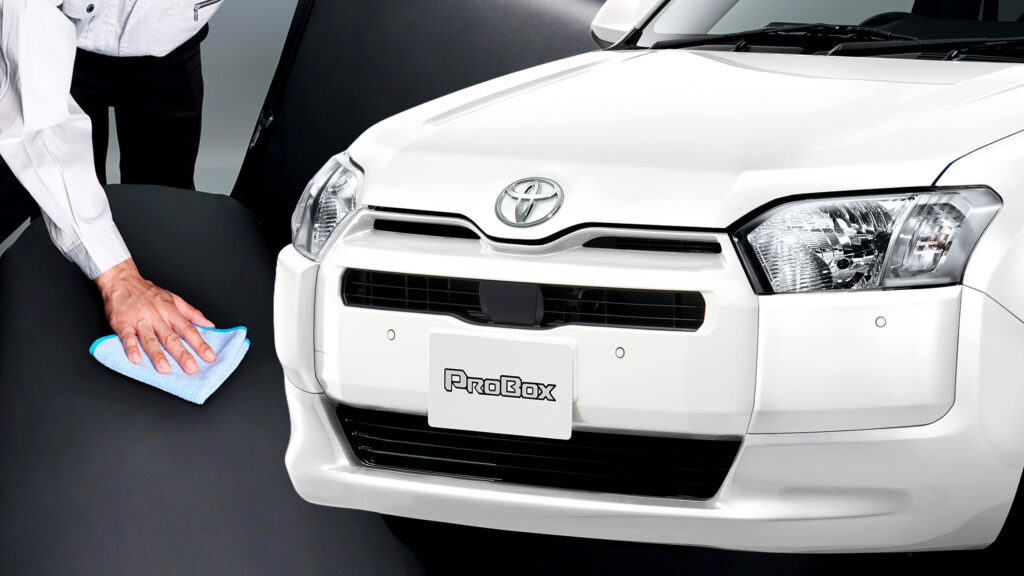
The Toyota Probox is a rather unusual phenomenon on Japanese roads – a utilitarian wagon that, despite its workhorse DNA and a shape somewhere between a van and a designer’s afterthought, has remained on the market for over a decade with minimal changes. Yet, this car continues to attract new buyers who are not influenced by automotive trends.
Updates for the 2026 Model Year
Toyota has introduced several updates for the Probox for the 2026 model year, the main task of which is to comply with Japan’s latest safety requirements and extend the life cycle of a car that already seems indestructible.
The original Probox debuted in 2002, and the current generation appeared in 2014 with changes that resembled a facelift more than a complete redesign. Since then, the car has received regular updates, but the 4,245 mm long wagon still retains the same basic body structure and interior.
Safety Systems and Interior
The most important news for 2026 is the enhanced Toyota Safety Sense system, necessary for compliance with local legislation. It includes an improved collision warning system that can now operate at intersections, along with a proactive driver assist system to help with steering and braking. A parking brake support system complements the list of features, providing assistance when maneuvering in urban conditions.
Inside, the Probox remains minimalist. The analog instrument cluster received a new 4.2-inch display, paired with a redesigned steering wheel from the Corolla with integrated buttons. There still is no infotainment system – in its place is a plastic panel, emphasizing the car’s pragmatic approach.
Optional features include an electric rearview mirror with a compact monitor, as well as removable seat covers for customers who prioritize practicality over comfort.
Platform and Powertrains
Technically, the Probox continues to use the platform of the discontinued Corolla Axio and Fielder, production of which ceased in early 2025. This same platform underpins the JPN Taxi, which is still in production, and shares its origins with earlier versions of the Yaris (Vitz), Prius C (Aqua), and even the Sienna, although all of them have since moved to Toyota’s TNGA-B platform.
For the 2026 model year, Toyota has shortened the powertrain lineup. The base 1.3-liter engine has been removed, leaving the 1.5-liter inline four-cylinder engine as the standard option. It produces 107 horsepower and is paired with a CVT that sends power to the front wheels or all four wheels, depending on the buyer’s choice.
A hybrid version is also available, which uses a less powerful version of the same engine paired with a single electric motor, offering a more economical configuration in the lineup.
Market Availability
The price of the updated Toyota Probox starts from ¥1,918,400 and goes up to ¥2,261,600, which is approximately $12,300-$14,500 depending on the trim level and exchange rate. This makes it about ¥210,000 ($1,350) more expensive than before, but it remains one of the most affordable wagons for both private buyers and corporate clients.
After Nissan discontinued the AD earlier this month, the Probox has only one true competitor left – the Mazda Familia Van, which is essentially a rebadged version of the same platform. In other words, the well-known Toyota wagon still has its place in the market, even if that place hasn’t changed for many years.
The Toyota Probox’s resilience in the market demonstrates that even in an era of constant technological innovation, there is demand for simple, reliable, and functional vehicles. Its long life cycle indicates that Japanese buyers value practicality and durability no less than modern technology. The disappearance of competitors from the market only emphasizes the uniqueness of this model’s positioning, which continues to find its supporters among those looking for an unpretentious and economical vehicle for daily needs.