


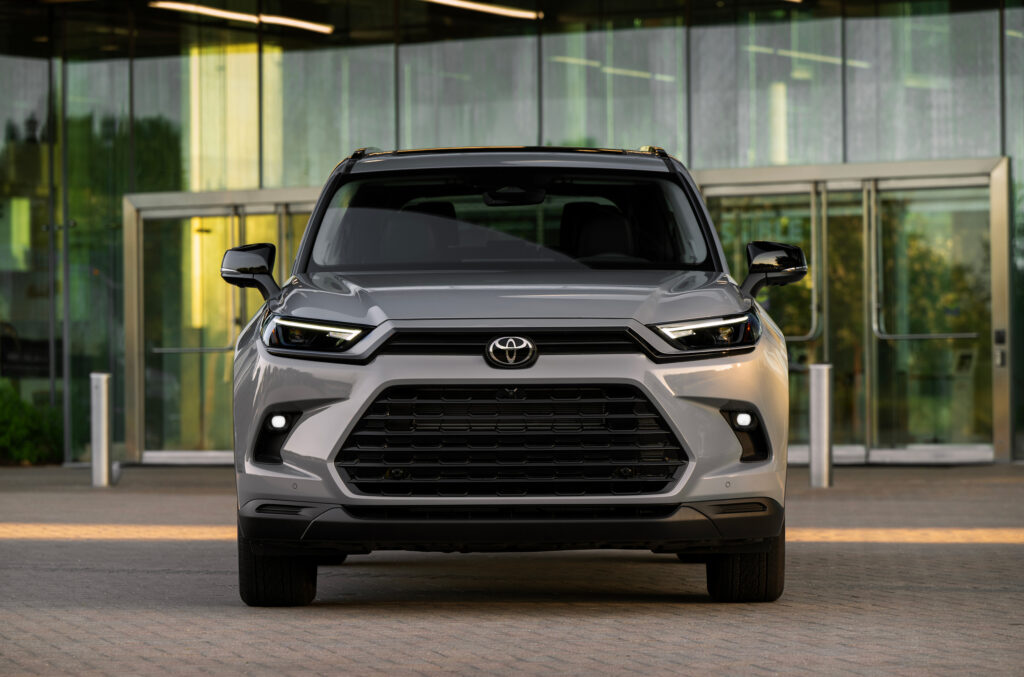
Toyota Grand Highlander and Lexus TX Recall Due to Rear Axle Defect
In the United States, Toyota has announced a recall of the Grand Highlander and Lexus TX models due to serious safety issues related to the rear axle bracket. If this part fails, the driver could lose control of the vehicle, leading to an accident.
The manufacturer reported that the Grand Highlander and TX are equipped with two rear axle brackets made of forged aluminum. While these parts are supposed to be strong, Toyota states that due to a manufacturing error at the supplier, they may have been made from material that does not meet strength requirements.
Read also: Over a million Toyota vehicles recalled after drivers reported seeing absolutely nothing
As a result, the rear axle bracket may break at the attachment point to the toe control arm, affecting the stability of the rear of the vehicle and increasing the risk of an accident. This is unpleasant news for Toyota, as the Grand Highlander and TX are relatively new models that have already been recalled before.
Scope of the Recall and Affected Models
In total, 5,408 vehicles are being recalled in the US. The list includes:
Repairs to Begin This Quarter


It is important to note that Toyota believes only about 5% of the recalled models have a rear axle bracket made from substandard materials. There have been no reports of accidents or warranty claims related to this defect at this time.
Owners of affected Toyota and Lexus vehicles will receive recall notifications between August 23 and September 6. They will be asked to bring their vehicle to the nearest dealership, where the rear axle bracket assembly will be replaced if necessary.


This recall highlights how important quality control is, even at the material supply stage. Although the problem affects only a small number of vehicles, the potential risk of loss of control is extremely serious. For Toyota, which is renowned for its reliability, such incidents could affect consumer trust, especially in new models. Timely notification of owners and free repairs are key steps to minimize the consequences, but the very fact of a repeated recall of relatively new models raises questions about the manufacturing processes and control on the supplier side.