


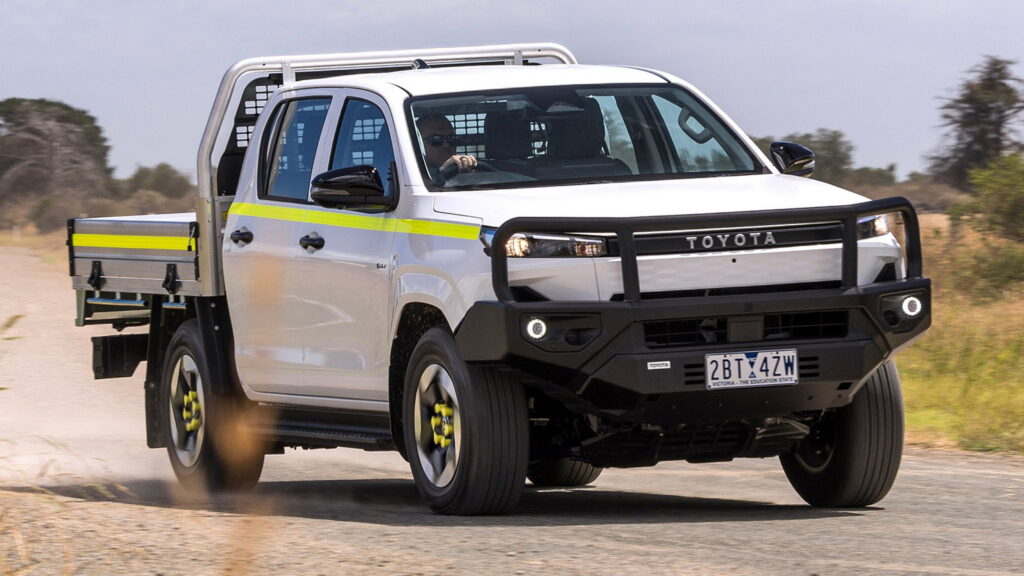
Toyota is in no hurry with a PHEV pickup: why the Hilux remains without a hybrid “plug”
While Chinese automakers are actively conquering the market with plug-in hybrid electric vehicle (PHEV) pickups, Toyota is choosing a different path. The Japanese auto giant believes that PHEV technology is not yet ready for heavy-duty operating conditions in the pickup segment, so the company is relying on more traditional solutions.
New generation Hilux: diesel, mild hybrid, and electric
Last year, Toyota introduced a new generation of the Hilux, which is available with diesel engines, a mild hybrid system (MHEV), and a fully electric version (BEV). By 2028, the model lineup is expected to be supplemented by a hydrogen version (FCEV). Thus, the Hilux differs from its competitor, the Ford Ranger, which is already offered with a PHEV powertrain in markets outside North America, alongside conventional diesel and gasoline variants.
Other mid-size pickups with PHEV include the BYD Shark 6, GWM Cannon Alpha, Nissan Frontier Pro, and the upcoming Chery Stockman from China. Toyota has vast experience in creating hybrids and PHEVs but is unwilling to apply this technology to its most popular pickup, at least at the current stage.
Toyota’s position: technology must meet standards
Ray Munday, Senior Manager of Product Planning and Pricing at Toyota Australia, explained the company’s position regarding a potential Hilux PHEV in an interview with the local publication CarExpert.
We certainly acknowledge that there is serious competition in this area, and we are studying this issue. But until the technology is ready, we will not hastily release something that does not meet our standards. Currently, the main problem with PHEVs or any electrification is the added mass, which reduces payload capacity and towing capability. Modern systems are not necessarily designed to meet our requirements for heavy towing for Hilux customers.
Expectations for the Toyota brand and the Hilux are very high, probably even higher than for other products, — he added. — We respect that very much, and it creates an additional challenge.
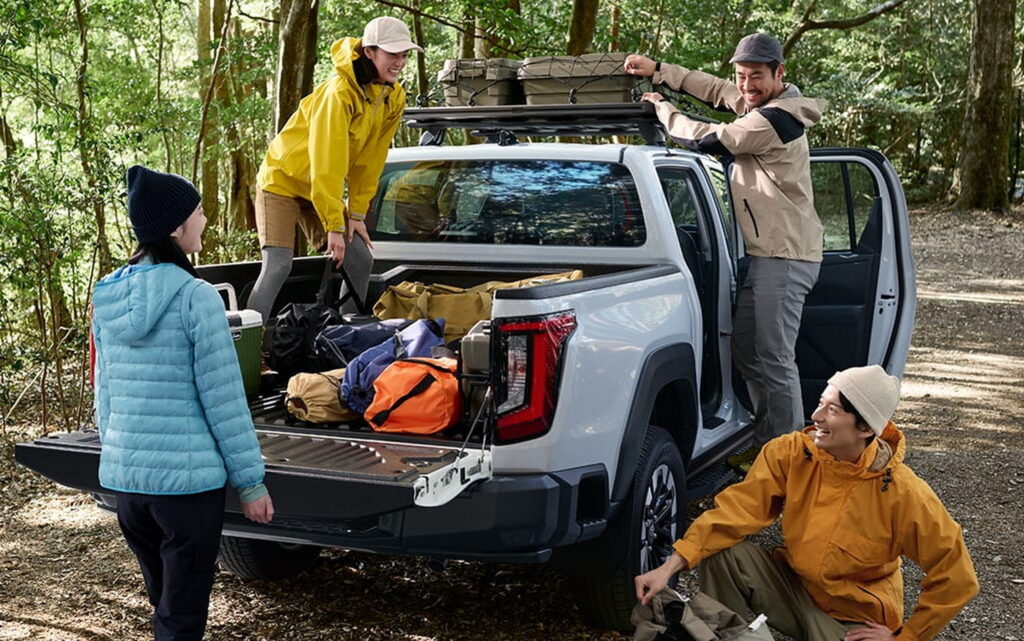

Why PHEV is not suitable for heavy work
In other words, Toyota fears that the Hilux PHEV will not be able to provide the towing capacity of 3,500 kg and payload of 1 ton that the diesel version has, at least in real-world operating conditions. It is worth noting that the dual-motor electric Hilux BEV has a towing capacity of only 2,000 kg, which practically confirms the manufacturer’s concerns.
Therefore, Toyota’s future PHEV plans will focus on passenger cars and SUVs, at least until the technology matures for heavy-duty conditions. In this same context, John Pappas, Vice President of Sales, Marketing, and Franchise Operations at Toyota Australia, noted:
We are always looking at these types of powertrains, we are not sitting idly by, but they must meet customer needs. We already have “lifestyle ute” options in other Hilux trims, but we want to be sure that if we bring such powertrains to market thanks to our huge investment in research and development, they will be right for our market.
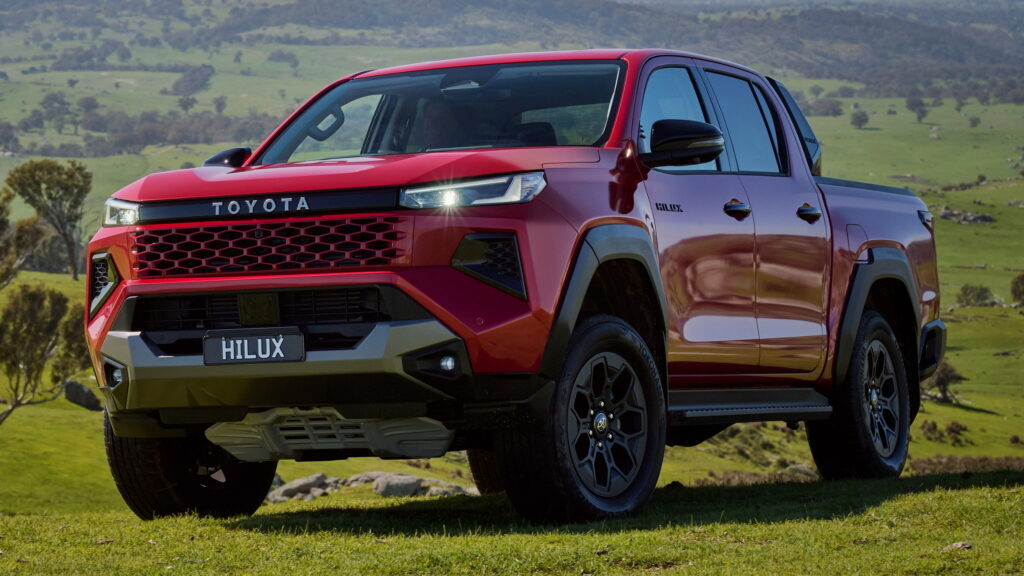

Thus, Toyota is deliberately avoiding the race for PHEV pickups, prioritizing reliability and maintaining the work characteristics that are key for Hilux buyers. While competitors offer compromise solutions, the Japanese manufacturer is waiting for technology that can provide the necessary payload and towing capacity without damaging the model’s reputation. This is a strategic risk, but it is fully in line with Toyota’s conservative approach, which often releases proven solutions rather than the newest but raw technologies. Amidst growing competition from Chinese brands that are actively integrating PHEVs, time will tell whether such caution will be justified or whether Toyota will have to catch up with a rapidly changing market.