 by
by A Defining Icon
It’s hard to describe the 1963 Corvette Stingray with just one word, but “defining” would fit perfectly. It was, and arguably remains, one of the most important American sports cars ever created. This status is independent of which brand you prefer.
Now, Peter Brock, the original designer of the 1963 Stingray and also the creator of the Shelby Daytona Cobra Coupe, has unveiled what he considers the ultimate version of this iconic split-window coupe. And this car, with all its 725 horsepower, is being prepared for sale.
Legacy, Reimagined
Brock first presented a sketch of what would one day become the 1963 Corvette Stingray back in 1957. He was only 21, and budget constraints, production technology, and the reality of mass production altered his initial vision. Now, at 89 years old and a true automotive legend, Brock decided it was time to build the dream that Chevrolet could never realize. The result is simply stunning.
He named this project the “Studio Concept,” referencing General Motors’ tradition of creating unique design studies to show management what could be done when the usual rules don’t apply. In the same spirit, Brock’s version combines purposeful engineering with refined stylistic features.
An Updated Classic
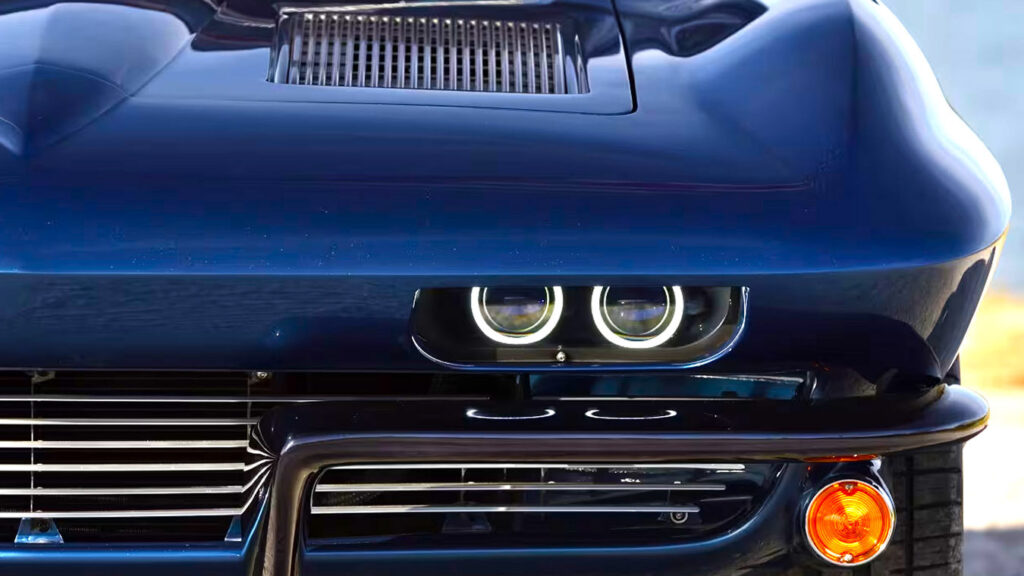
Externally, the car is unmistakably a 1963 Stingray, yet it looks more contemporary. The split rear window remains, but the front headlights are completely changed. Brock chose Ferrari Azzurro California Blue for the paint. Most chrome elements have been replaced with black chrome. The original decorative windows and ventilation ports have also been replaced with functional components. These are key changes due to the car’s technical underpinnings.
“The ability to make these openings fully functional made my version much more honest without changing Mitchell’s basic design,” Brock explained earlier this year.
“The same goes for the car’s new headlights: I was able to smooth out the original front-end design and eliminate the complex pop-up headlights, which constantly created problems for those demanding perfect panel gaps with full functionality,” he wrote.
Unlike many modern restomods that distort proportions or enlarge every detail, Brock’s approach is more refined. He calls it “resto-refinement,” aiming to preserve the original design’s restraint. This means no oversized wheels, aggressive ride height, or flared fenders. Instead, the lines are cleaner, and every change is justified.
From a few steps away, it could be mistaken for a well-preserved original. But the closer you get, the more details are revealed to your eye.
Power and Control
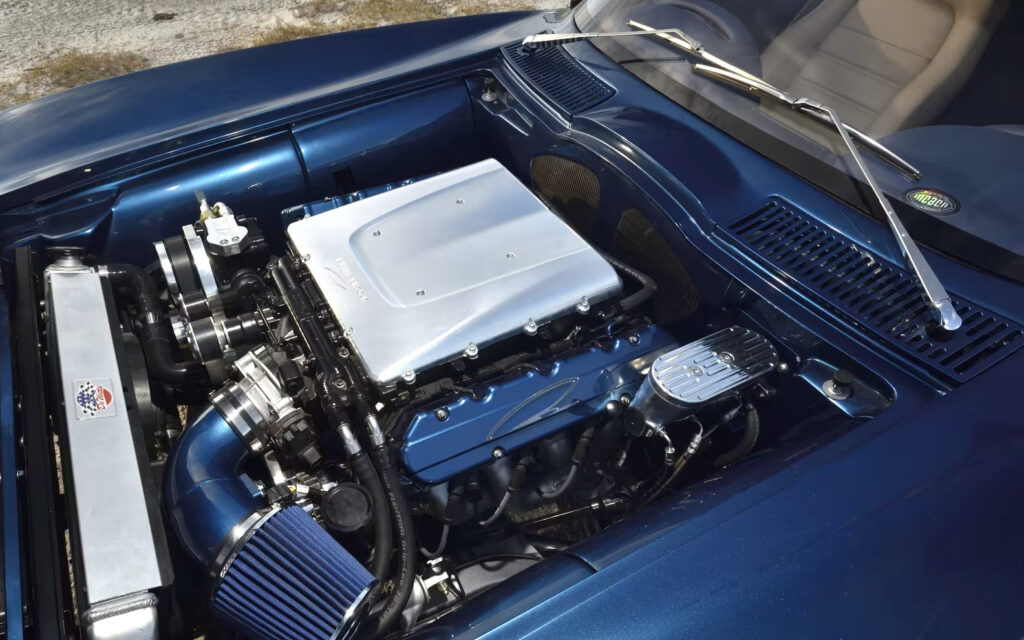
Under the hood sits a 725-horsepower LT4 V8 engine. Thanks to forged internal components, it delivers this power seamlessly through a Tremec five-speed manual transmission to the rear wheels.
The chassis from Art Morrison ensures this Stingray won’t flex under heavy loads. Wilwood brakes and suspension from a Corvette C7 provide control over the car.
“The best, and completely unnoticeable, thing is this car’s performance orientation,” Brock wrote. “All these mechanical updates provide the best performance and handling available today, while preserving all the original lines of the car.”
Built for the Road
Inside, Douglas leather, Sparco seats, Dakota Digital gauges autographed by Brock himself, a Vintage Air conditioning system, and modern sound insulation strike a rare balance between comfort and sporting purpose.
The car debuted at the SEMA show, where it stood out subtly among louder and more extreme projects. Brock sees it as a response to the restomod culture, which often values flash over functionality.
“It confirmed my belief in a restoration direction that prioritizes form and function over such obvious modifications as slammed ride height or oversized wheel and tire combinations that require reshaping the fender,” he said, noting how modern custom cars often stray from the original design language.
A Long-Awaited Realization
The car will be presented for auction at Mecum Kissimmee in 2026. Brock’s split-window concept feels less like a tribute and more like a long-awaited correction. In his own words, it is a “personal interpretation of what it should have been.” Judging by the result, it’s hard to disagree.
This project shows what happens when a design legend finally stops asking for permission. Looking through the photos might lead to the realization that your own project car will likely never look this good.
Peter Brock’s creation of this unique Corvette Stingray is not just another restomod—it’s a time capsule connecting the original design vision with modern technology. While the automotive industry often focuses on the future, this project reminds us of the importance of authenticity and engineering integrity. It also raises the question of what it truly means to “improve” a classic, offering a philosophy focused on preserving the spirit, not just updating the image. The sale at auction in 2026 will likely be not just a commercial transaction but also a recognition of the value of a deep, thoughtful approach to automotive heritage.