


Fast and safe: traffic lights that help
Every driver wants to reach their destination faster, but no one wants to compromise safety. These two desires often conflict. Two U.S. states decided to test an approach that could combine trip speed and safety. If a driver does not exceed the speed limit, traffic lights may turn green for them more often. In other words, the overall trip can be faster even at a lower maximum speed. Collected data indicate that such a system actually works.
What is “rest in red”
Albuquerque in New Mexico and Portland in Oregon use variations of a traffic light management strategy called rest in red. Instead of keeping the light green when no one is around, the system keeps the signal red by default. Sensors detect an approaching vehicle and, most importantly, how fast it is moving. If the driver is within the limit, they get a green light sooner.
If a car is speeding toward the intersection, the driver will have to wait. In effect, this is a speed camera that does not issue fines. The idea is especially useful on roads with heavy traffic during the day that turn into tempting venues for unofficial racing at night. In Portland, the technology is called a “virtual speed bump.”
Portland: results on one of its most dangerous streets
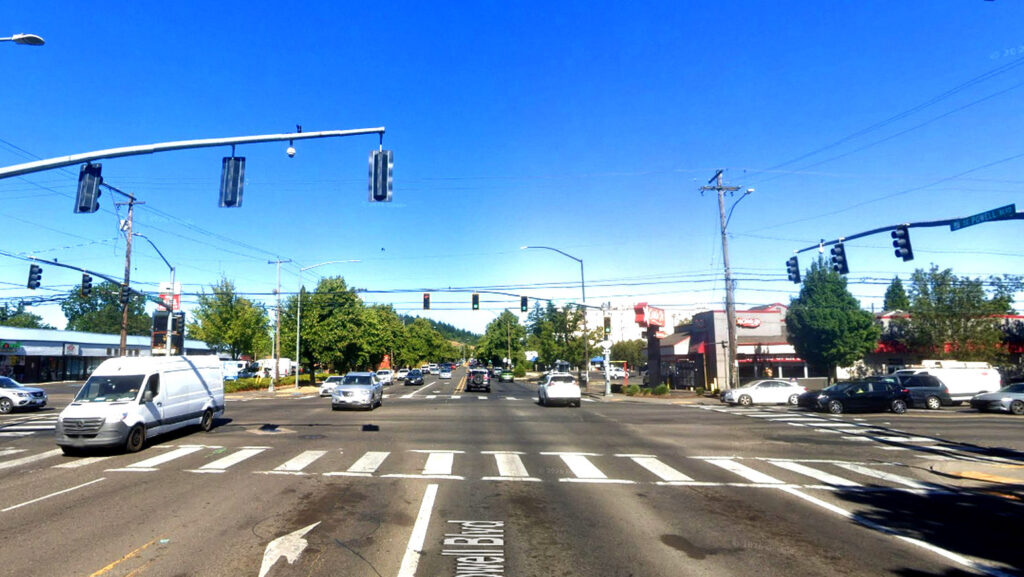
In Portland, the system was launched on sections of Powell Boulevard in the southeastern part of the city. It is one of the corridors with the highest crash rate. The traffic lights operate in a special mode mostly at night: between 10 p.m. and 6–7 a.m., depending on the day of the week. According to city officials, at the first tested intersection the average speed fell from 39 mph (63 km/h) to the allowed 30 mph (48 km/h). Portland then expanded the system to the intersections of Powell Boulevard with 21st, 26th, 28th, and 33rd avenues.
Albuquerque’s experience: a comprehensive approach
Albuquerque installed the technology along Lead and Coal Avenues. Local residents had complained about speed, crashes, and damage to private property. City officials say the combination of rest in red mode, automated speed enforcement, and traffic lights timed for 30 mph (48 km/h) contributed to calmer traffic and improved safety. However, such a comprehensive solution involves many variables, so it is hard to say exactly what effect rest in red mode alone had.
Carrot instead of a fine
This concept stands out from traditional automated speed enforcement. It does not penalize drivers for bad behavior on the road; it makes correct driving less unpleasant. If obeying the speed limit means a series of green lights, while a driver who just sped past ends up stuck at a red light, it is one of those rare cases where safe driving feels like winning.
What this could mean for other cities
Such an approach echoes a newer philosophy in transport planning: relying not only on fear of punishment but also on positive motivation. People naturally want their efforts to be recognized. If a green light becomes a reward for careful driving, following the rules begins to work like a game with a clear bonus. For now, the studies cover only a few corridors, but even the fact that driver behavior changes without any fines may be a signal for other cities to rethink the role of traffic lights in road safety.