


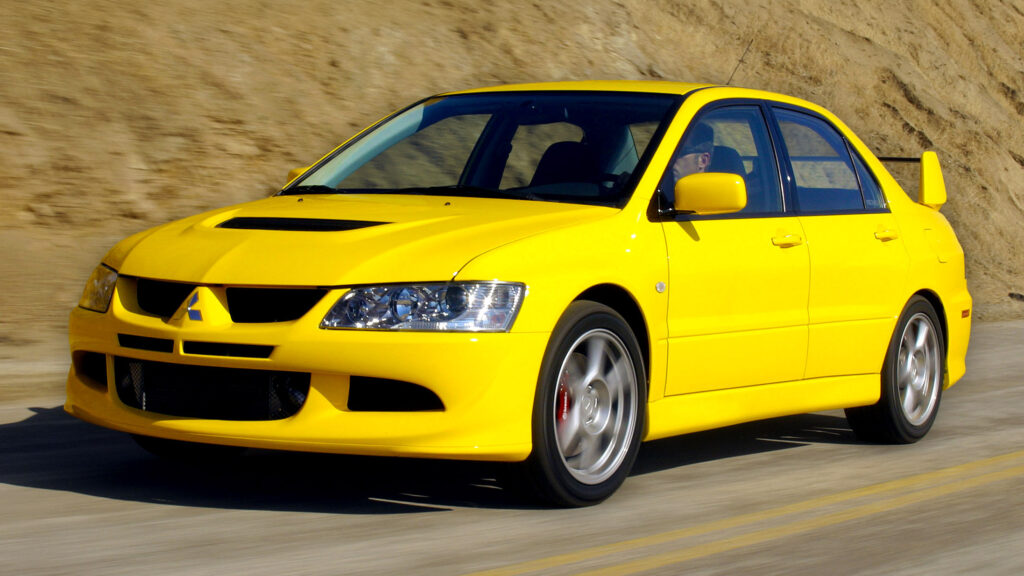
Ford car owners have started checking the NHTSA database as often as other people check the weather forecast. It seems any car with a blue oval and four wheels can now be subject to a recall. This prompted us to look at the other end of the statistics. After we wrote about Mitsubishi’s latest move this week and noticed it was the first recall in several months, we decided to conduct our own investigation.
Mitsubishi’s record ‘silence’ against the giants
If you review four decades of NHTSA documentation, one mass-market brand consistently flies under the radar. Mitsubishi’s recall history in America is remarkably sparse. Starting from its first report in 1987, five years after splitting from Chrysler to operate independently in the US, the total count is just 150 actions covering approximately 7.6 million vehicles. No other mass-market brand that has been sold here throughout this period comes close to this figure. In other words, 150 recalls over four decades compared to the 153 Ford initiated in just the past year.
By the way: Ford recalled more vehicles than the next 9 brands combined in 2025.
Several caveats are worth noting. Suzuki conducted most of its 112 recalls before exiting the US market in 2012, with a few additional ones afterward for vehicles still in operation. Tesla has 90 recalls, though over just over a decade as a recall-initiating entity, which puts its annual rate higher than several traditional luxury brands.
A rare recall history
For Mitsubishi, some years pass without a single recall, the most recent example being 2024, while others barely register on the agency’s radar. Even ‘busy’ years are quiet by industry standards. The peak came in 2000 when just over one million vehicles were affected, although this figure is skewed by a single recall of 567,432 units for a lower ball joint dust cover. Removing that case makes the year look fairly unremarkable.
The brand’s only sustained period of activity was from 2014 to 2018, when Mitsubishi averaged eight recalls per year for five consecutive years. After that came complete silence. Mitsubishi has announced only eight recalls since the start of 2022 and only 16 since January 2020.
Its two most recent actions involve tailgate gas springs (2026 and 2025 models), while the two previous ones, one in 2025 and another in 2023, were related to rearview camera malfunctions. The last recall related to the powertrain occurred in August 2022 due to a software error causing engine stalling. The busiest year of the current decade was 2020 with five recalls covering over 361,000 vehicles.
Top 3 most ‘recall-prone’ automakers in the US (1987-2026)
| Manufacturer | Number of Recalls | Vehicles Affected |
| Ford | 1,285 | 186,836,824 |
| General Motors | 1,238 | 153,490,426 |
| Stellantis (Chrysler/FCA) | 1,046 | 131,903,517 |
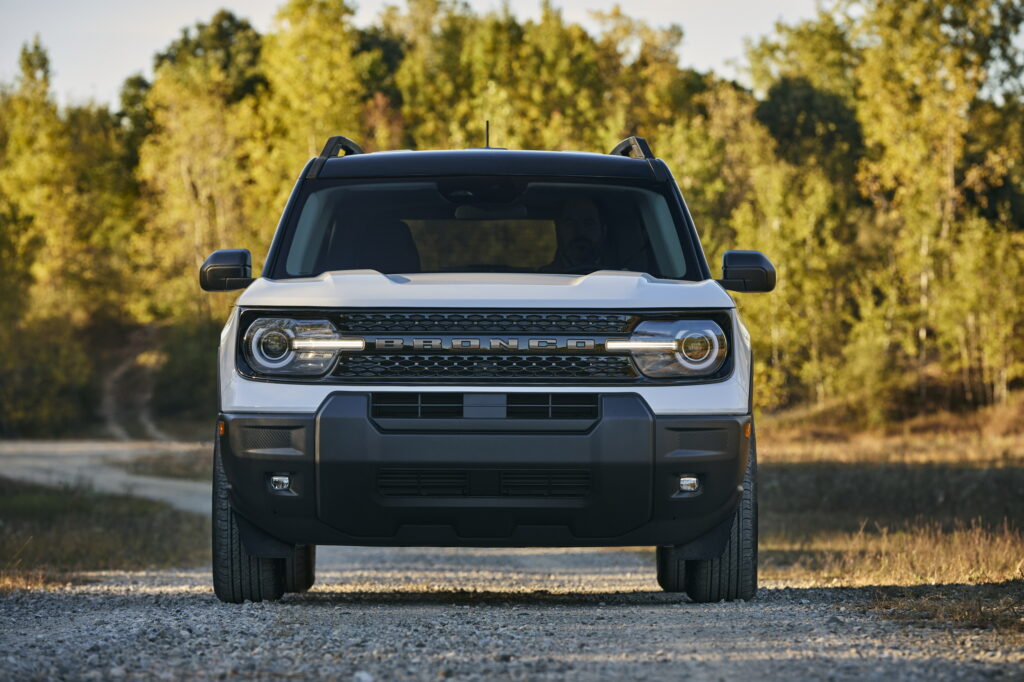

Ford, on the other hand, operates on a completely different scale, recording a record 153 actions in 2025 — the highest number ever initiated by any automaker in a single calendar year. Yes, the Blue Oval currently sells roughly 22 times more vehicles in the US than Mitsubishi, but sales volume explains how many vehicles are affected, not how often recalls are initiated. Ford filed more recall applications in 2025 alone than Mitsubishi has in the last 40 years combined.
Over that same 40-year period, from 1987 to the end of April this year, the leaderboard is entirely expected. Ford tops the table with 1,285 recalls and 186,836,824 affected vehicles. GM follows closely with 1,238 actions and 153,490,426 vehicles. Stellantis, in its various corporate forms of Chrysler and FCA, rounds out the top three with 1,046 recalls covering 131,903,517 vehicles.
Mitsubishi Recalls in the US (1990-2026)
| Year | Number of Recalls | Vehicles Affected |
| 2026 | 1 | 108,046 |
| 2025 | 2 | 320,469 |
| 2024 | 0 | 0 |
| 2023 | 1 | 89,907 |
| 2022 | 4 | 152,069 |
| 2021 | 3 | 19,083 |
| 2020 | 5 | 361,322 |
| 2019 | 2 | 28,124 |
| 2018 | 8 | 626,692 |
| 2017 | 7 | 419,972 |
| 2016 | 9 | 622,482 |
| 2015 | 8 | 719,588 |
| 2014 | 9 | 260,746 |
| 2013 | 7 | 23,627 |
| 2012 | 3 | 16,377 |
| 2011 | 0 | 0 |
| 2010 | 3 | 129,864 |
| 2009 | 4 | 76,498 |
| 2008 | 6 | 269,821 |
| 2007 | 0 | 0 |
| 2006 | 3 | 7,647 |
| 2005 | 5 | 74,427 |
| 2004 | 7 | 190,203 |
| 2003 | 4 | 92,130 |
| 2002 | 3 | 22,263 |
| 2001 | 7 | 379,919 |
| 2000 | 10 | 1,060,116 |
| 1999 | 5 | 436,727 |
| 1998 | 6 | 193,931 |
| 1997 | 4 | 54,503 |
| 1996 | 2 | 98,731 |
| 1995 | 3 | 662,877 |
| 1994 | 3 | 37,283 |
| 1993 | 2 | 3,454 |
| 1992 | 0 | 0 |
| 1991 | 0 | 0 |
| 1990 | 3 | 1,602 |
| 1989 | 0 | 0 |
| 1988 | 0 | 0 |
| 1987 | 1 | 187 |
| TOTAL | 150 | 7,560,687 |
Source: NHTSA
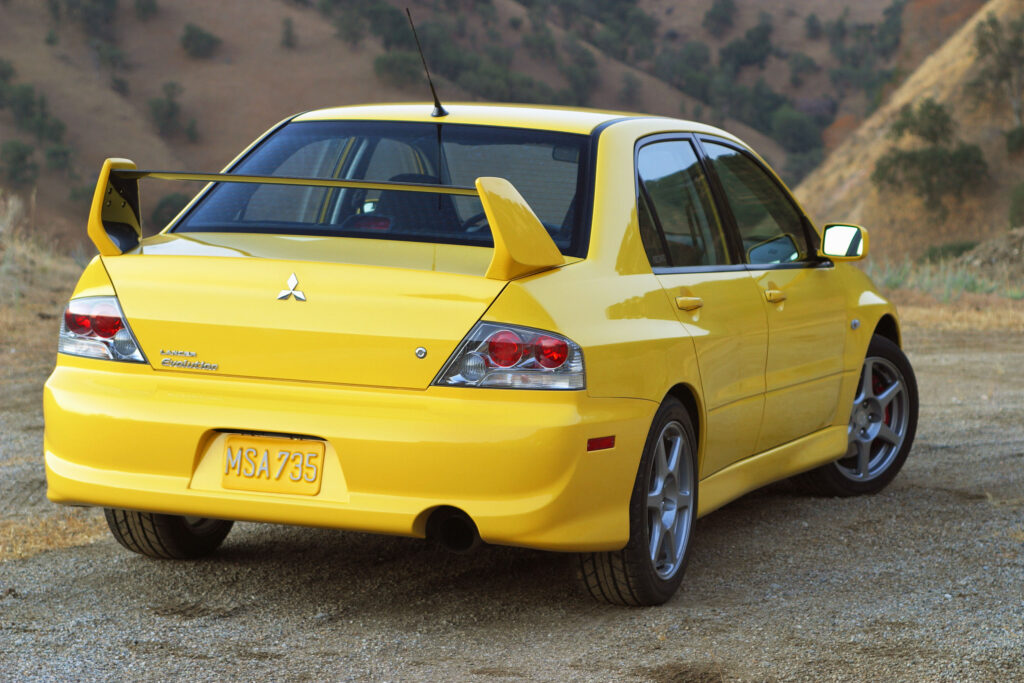

Such a stark difference between Mitsubishi and other manufacturers may indicate not only lower sales volumes but also a different approach to quality control or, perhaps, a less complex vehicle design. It is worth noting that a low number of recalls is not always an unequivocal indicator of reliability, as it could result from less thorough monitoring or a different corporate policy regarding acknowledging defects. Nevertheless, for consumers who value peace of mind and minimal visits to the service center, Mitsubishi’s statistics look very attractive, especially against the backdrop of Ford’s records, which may indicate a more aggressive strategy for identifying and fixing potential problems, which is also a positive point, albeit from a different perspective.