


An Unfilled Niche for Genesis
The Genesis brand has gradually evolved from reworked Hyundais into a full-fledged lineup of luxury sedans and SUVs. However, one significant segment remains unoccupied—pickup trucks. This is a noticeable gap for a brand that has otherwise expanded across categories. The South Korean automaker has acknowledged previously exploring the idea but has shelved it for now as other tasks took priority.
Does this mean the dream of a luxury pickup is completely buried? Not quite. The company recently released a series of concept sketches depicting everything from desert off-roaders and a luxury minivan to, more realistically, a pickup truck model. Genuine interest.
Hyundai knows what America wants, and it’s not another crossover.
Even if in Seoul they may think the time hasn’t come yet, the idea itself carries weight. Genesis could very well utilize the underpinnings of Hyundai’s future North American pickup, transforming it into a more upscale offering aimed at models like the Rivian R1T.
The emphasis would be on private buyers, not commercial users, giving the brand an opportunity to highlight sophistication and exclusivity rather than utility. This also isn’t far-fetched, considering Hyundai has already acknowledged the need to share development costs within its portfolio, making a premium offshoot like this a logical extension, not a leap into the unknown.
Bold Design
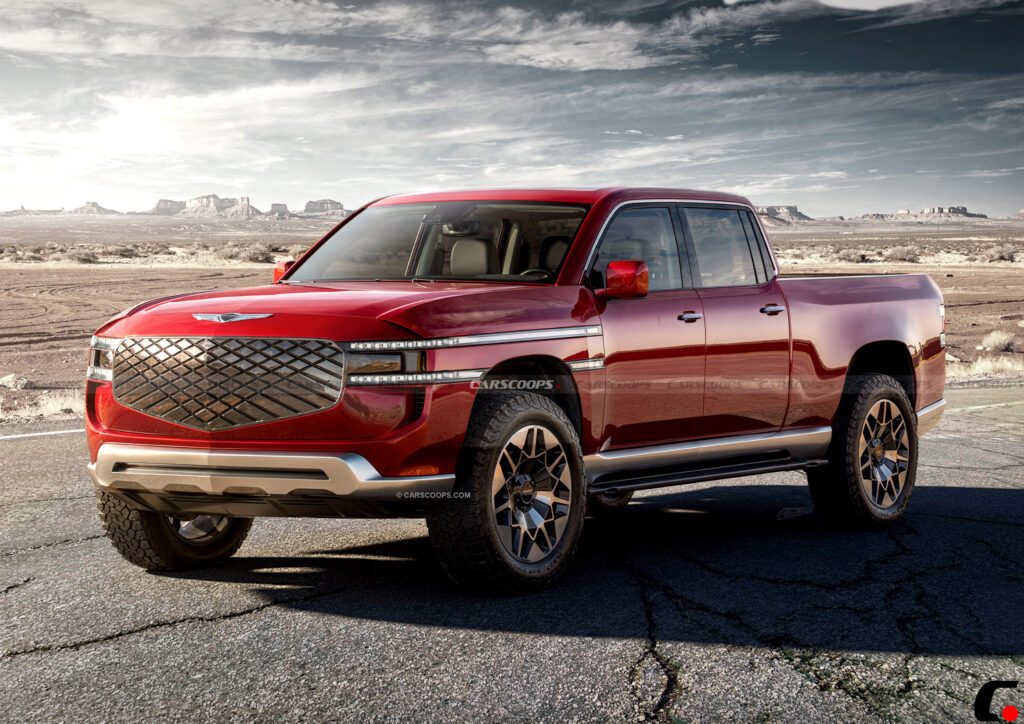

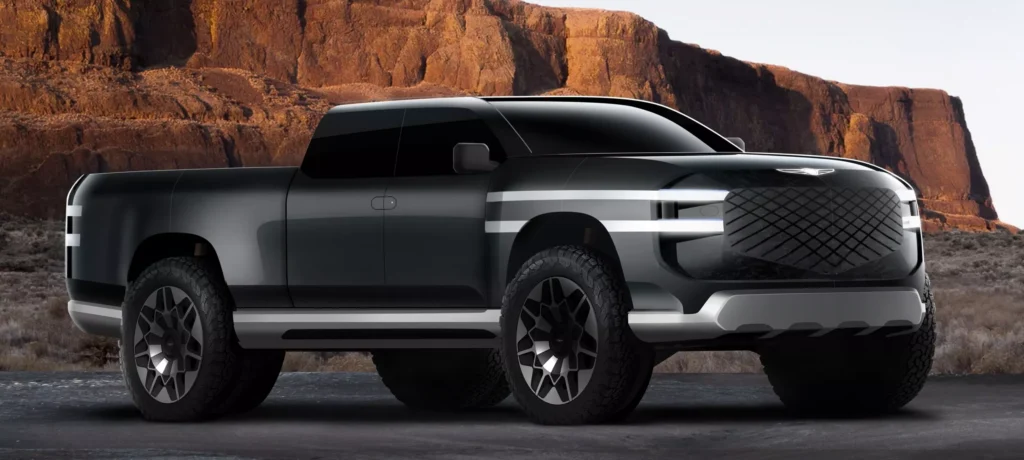
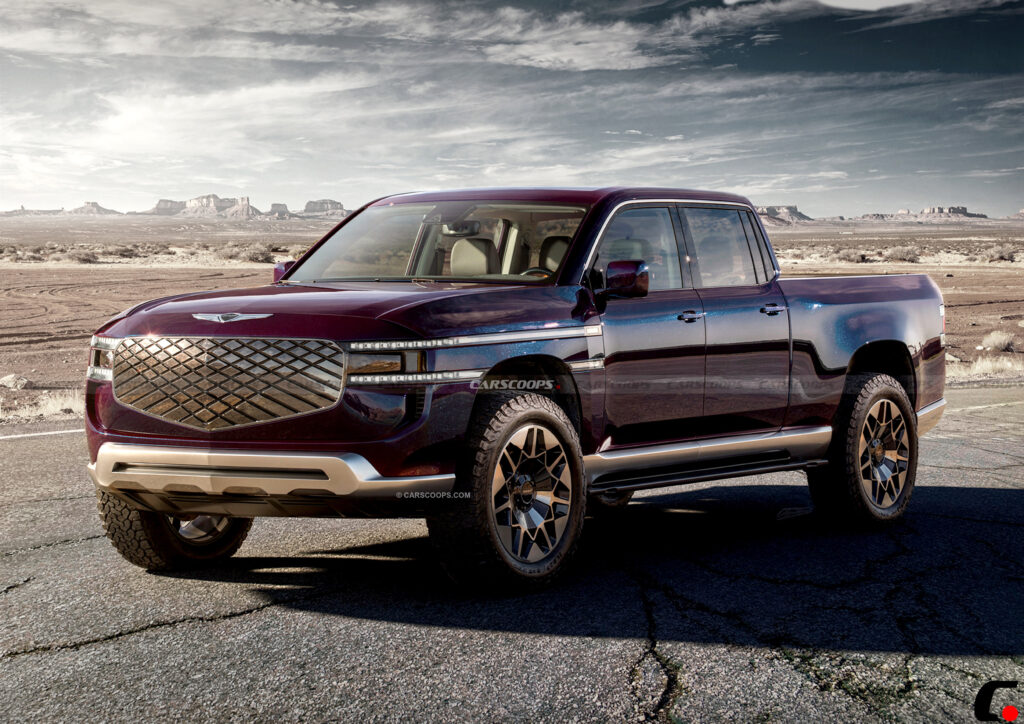
In the official internal concept images released to Carscoops, the sketches show a gray pickup with bold, powerful proportions that make it look more like an F-150 competitor than a mid-size model. Using digital pencils, we illustrated what it might look like in reality, scaling down the dimensions to something more production-ready.
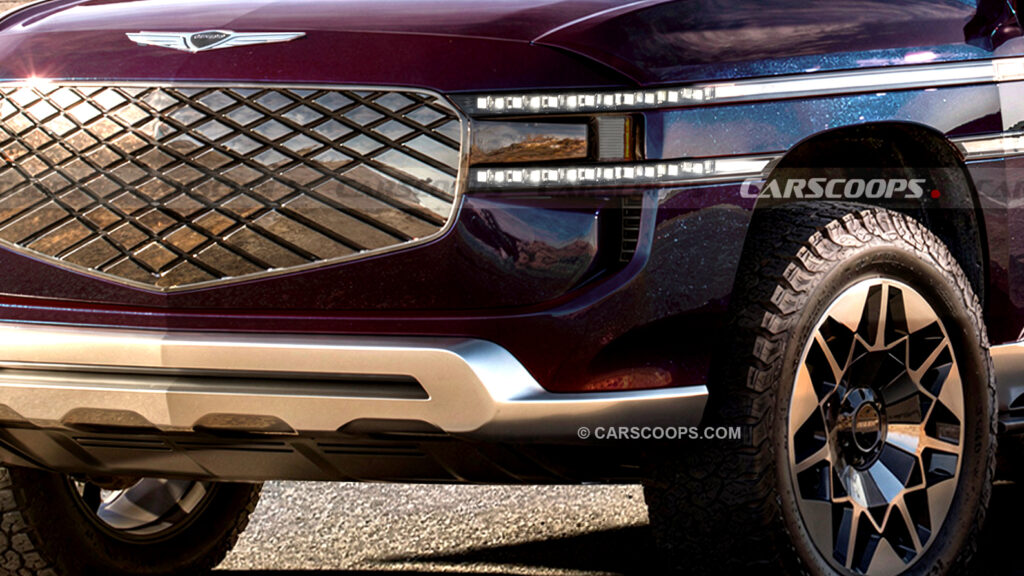
At the front, a vertical nose opening is equipped with dual LED lines framing a large, closed-off grille with the logo. Below, a silver lower beltline wraps around the entire vehicle, adding visual mass and unity.
From the side, it has a typical four-door crew cab and bed layout, with clean surfaces and restrained cladding. Large alloy wheels and subtle rocker panels point to a premium aesthetic but with light off-road capabilities. At the rear, the signature Genesis dual-bar taillights would stretch across the tailgate, complementing a clean, flat design that avoids heavy relief in favor of elegance.
Luxury Interior
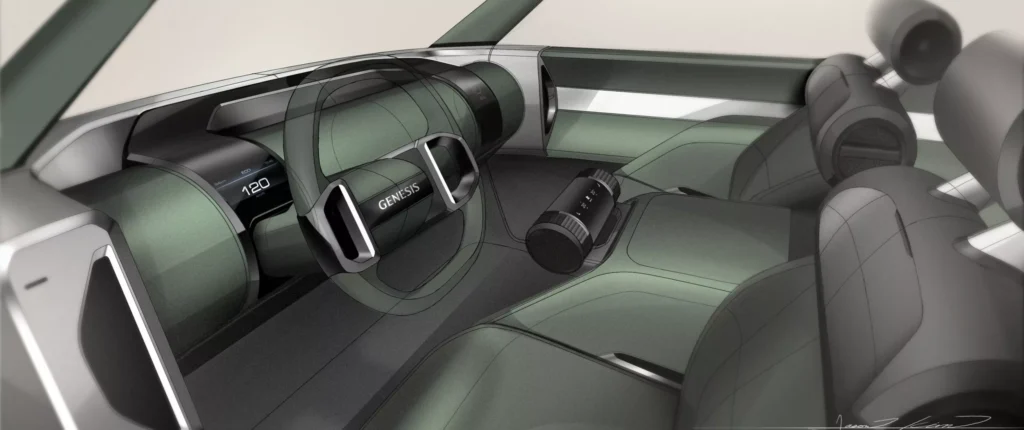

Inside, the pickup could partly reflect the Genesis X Gran Equator concept, not any commercial vehicle. Reducing the number of massive screens means key driver information would be projected onto the windshield, with analog-digital driver instruments complemented by a rotary controller and simplified physical switches.
Materials would be central to the offering: stitched leather, metal inserts, and optional wood trim would replace hard plastics. Rear-seat comfort would be prioritized, supported by generous legroom, enhanced sound insulation, and an active noise-cancellation system to ensure sedan-like comfort levels.
Platform

Genesis has several options for a chassis. There has been speculation that the Hyundai Group might partner with GM to create a body-on-frame platform, but this is unlikely, as Genesis already has access to the one used under the Kia Tasman and the future Hyundai pickup. A third option is a fully integrated unibody construction with the all-electric E-GMP architecture.
More realistically, the bet is on a new platform that Hyundai is currently developing for its North American pickup, which seems the most natural solution here.
Regardless of the chosen direction, any shared architecture would require significant refinement to meet Genesis’s comfort goals, including adaptive dampers, a multi-link rear suspension, and a strong emphasis on noise and vibration control.
EV and ICE Powertrains
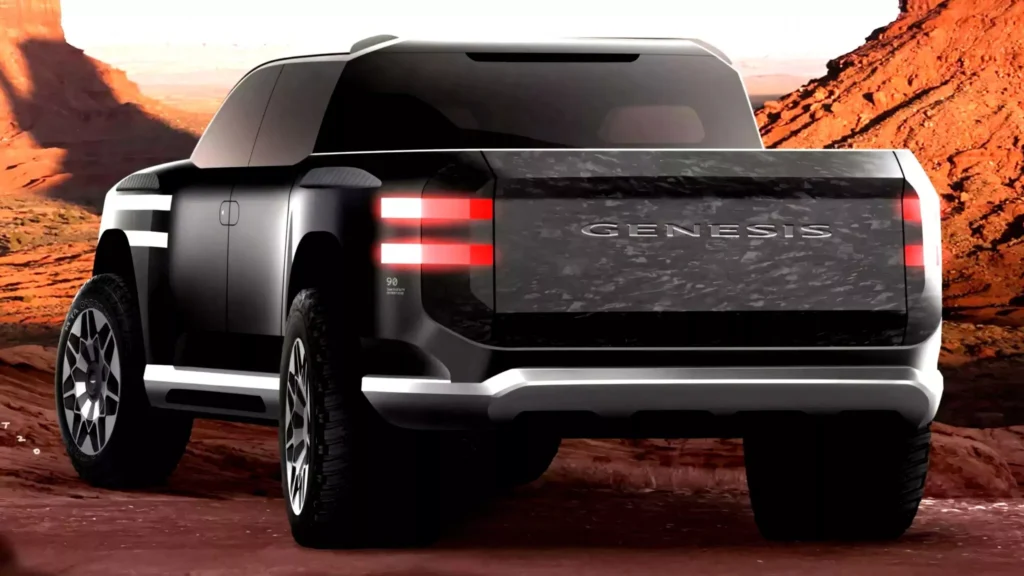

Genesis has access to a range of powertrain options—both internal combustion and electric—though current considerations lean towards more electrified solutions for such a pickup.
One potential path is an Extended-Range Electric Vehicle (EREV) system currently under development by the Hyundai Group. Designed for larger vehicles like the Hyundai Santa Fe and Genesis GV70, it combines a large lithium-ion battery with a small gasoline engine, aiming for a total range of over 900 kilometers.
A fully electric GV Pickup also seems like a realistic long-term solution. In this case, it could receive an all-wheel-drive system with two motors producing around 430 horsepower and 516 lb-ft of torque, with potential for much higher performance in a Magma version.
Competitors and Timeline
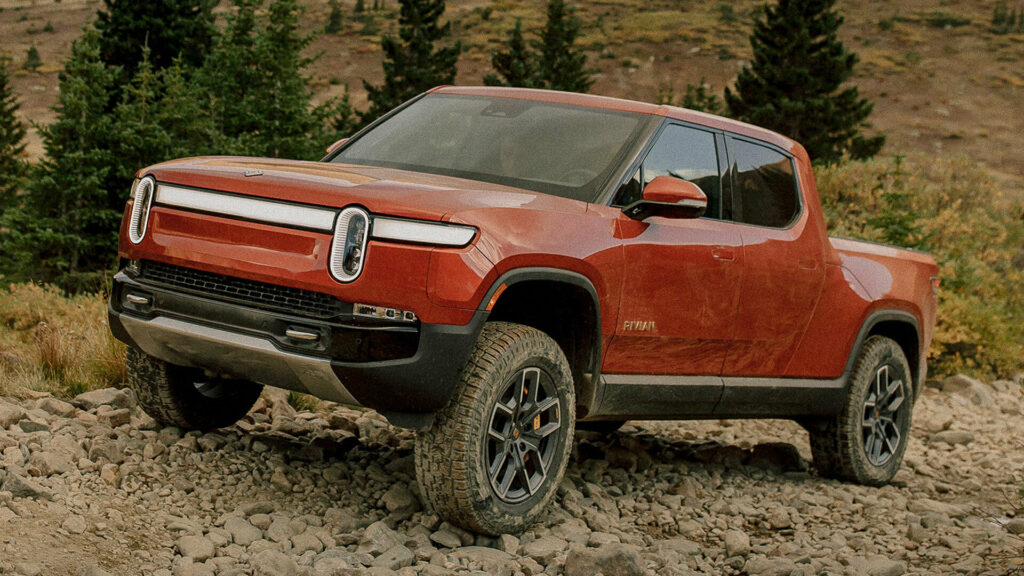

If the project gets the green light, such a move could take Genesis into entirely new territory. The pickup would be aimed at premium “lifestyle” models like the Rivian R1T, Scout Terra, and even larger, traditional options like the GMC Sierra Denali.
Any realistic launch timeline positions it closer to the end of the decade, if it happens at all. Much will depend on how far Genesis is willing to step outside its current comfort zone—polished, traditional luxury.
So, should Genesis step into the luxury pickup sphere? It’s a tempting idea, but not without risks.
The development of this idea from concept sketches to a production model will depend on many factors, including market demand, economic feasibility, and the strategic priorities of the Hyundai Group. The success of Rivian and other new players in the electric pickup market shows that a niche for premium trucks exists, especially among buyers who value a combination of utility, technology, and comfort. For Genesis, this is an opportunity not only to fill a gap in the lineup but also to solidify its status as an innovative luxury brand capable of competing in various segments. However, as noted, the path from sketch to assembly line is long, and even with favorable developments, we wouldn’t see such a car before the late 2020s.