


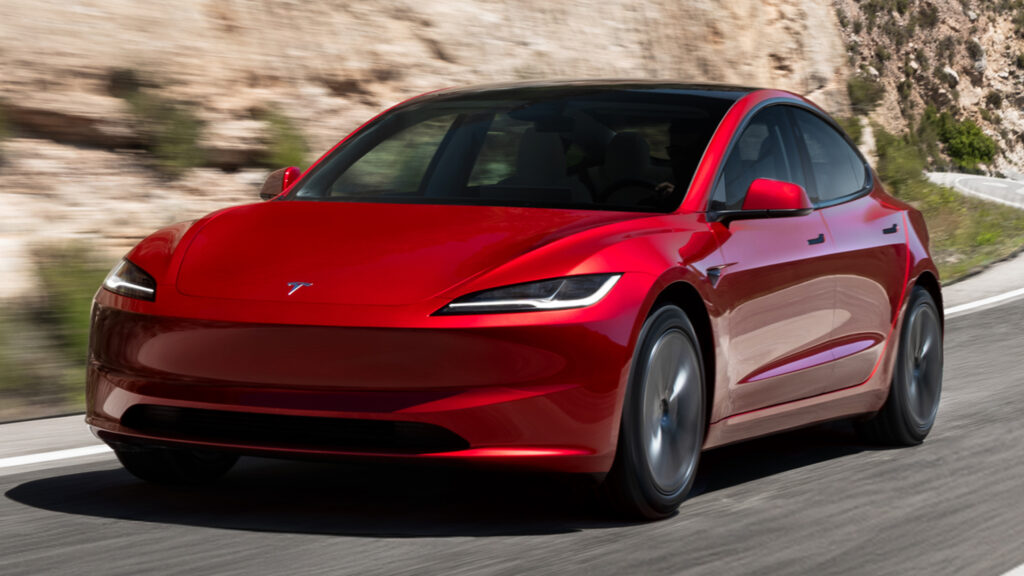
Tesla abandons the Full Self-Driving name in Europe
For many years, Tesla has been criticized for using the name Full Self-Driving for its driver assistance system. Although this system is one of the most complex solutions of its type on the market, it does not guarantee fully autonomous driving in all situations. It also does not allow the driver to fully transfer responsibility to the car or to take their attention off the road. It seems the electric vehicle manufacturer has finally recognized that such a name could be problematic, but it did so not out of a sudden desire to be altruistic, but under pressure from circumstances.
New name on European websites
Over the past week, Tesla has renamed Full Self-Driving to Tesla Assisted Driving on its European websites. The changes appeared in Spain, Germany, Sweden, the Netherlands, and other countries. The company also updated the online owner’s manuals in each of these markets so that the new name matches the official documentation.
The renaming was a notable step, because previously the Full Self-Driving brand was one of Tesla’s main marketing elements. It was meant to emphasize the company’s technological advantage, but at the same time it created inflated expectations. Now in Europe the company uses a more restrained wording that more accurately describes the system’s real capabilities.
Approval in the Netherlands and expansion to other countries
The name change came about six months after the Dutch regulator RDW allowed Tesla to deploy the Full Self-Driving system. This was preceded by months of testing that were not widely reported. After approval in the Netherlands, seven more European Union countries agreed to use driver assistance functions in their vehicle fleets. Among them:
Slovakia is expected to approve the system soon as well. Thus, the geography of permits is gradually expanding, although there is still no final decision at the level of the entire EU.
Regulators’ concerns about the FSD name
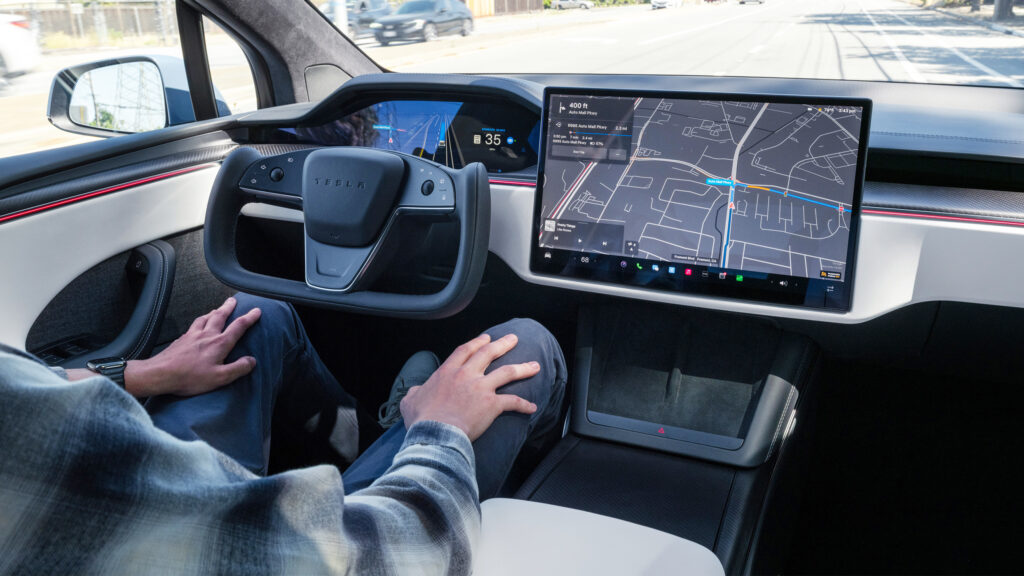

Safety regulators in several countries stated that the name Full Self-Driving is misleading. And there are grounds for this. As with Autopilot, such a name could create a false impression among drivers that the car is capable of driving independently in any conditions and that the person no longer needs to monitor the road. This happened even though Tesla added the label Supervised to the name and repeatedly warned on websites and social media: the technology does not make the car fully autonomous and does not replace the driver.
By changing the system’s name, Tesla was able to quickly and without significant expense remove one of regulators’ main objections. This is important for the company, because its head, Elon Musk, is actively seeking approval of the system at the level of the entire European Union. He has repeatedly emphasized that this technology is critically important for Tesla’s future.
EU-level vote postponed
The vote on introducing the system was supposed to take place this month, but it was postponed to December. For the technology to be permitted in all 27 EU countries, a qualified majority is required — votes from at least 15 member states. This means that even after the renaming, Tesla still has to convince many regulators and national governments.

Implications for the system’s future in Europe
Renaming it to Tesla Assisted Driving does not change the system’s technical capabilities, but it may affect how drivers and regulators perceive it. In Europe, road safety supervisory bodies pay particularly close attention to marketing: if a name promises more than the system can actually do, this is regarded as a potential risk. That is why the wording Assisted Driving looks significantly safer and clearer.
For Tesla, this is also a compromise between maintaining an ambitious image and market requirements. In the United States, the company is not yet abandoning the Full Self-Driving name, whereas in Europe it has effectively acknowledged that this brand creates problems. If the system receives EU-level approval, this will open the way to broader deployment of driver assistance functions and further software improvements. However, even then it will still be a system that requires human supervision, not a full autopilot without a driver.
Separately, it is worth considering that delaying the vote until December gives regulators additional time to study the experience of the Netherlands and other countries where the system is already operating. If there are no serious incidents in these countries, Tesla’s chances of Europe-wide approval will increase. If new safety concerns arise, the renaming alone will not help. Therefore, it is important for the company not only to change the name, but also to prove that the system really works predictably and safely in European conditions.