


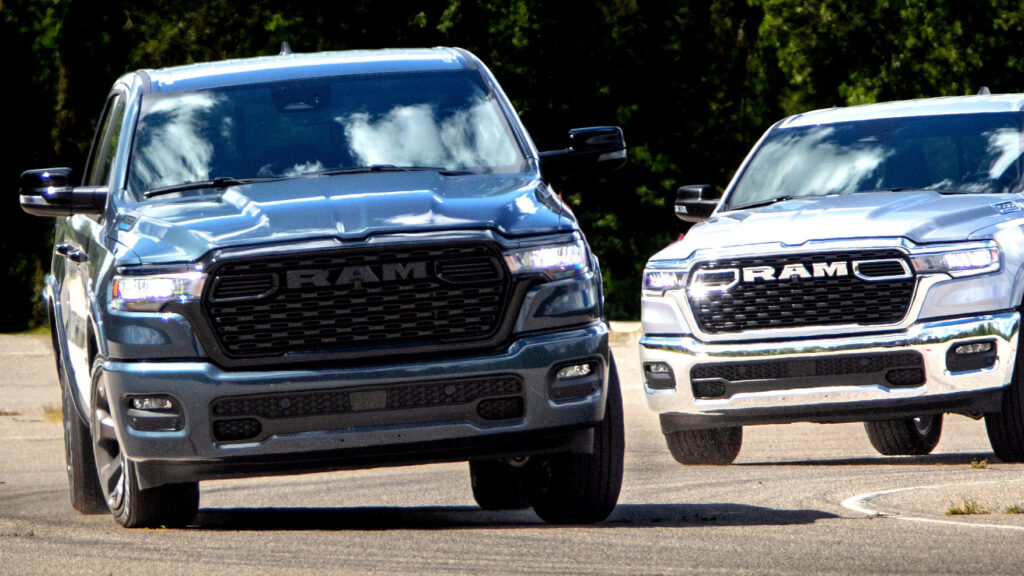
The new Ram Hurricane turbo engine demonstrates superiority over the legendary Hemi V8 in key tests. Here are the main conclusions:
Legend vs. Modernity
The Hemi V8 engine is a true American icon, and its return to the market was met with enthusiasm. However, compared to Ram’s new turbocharged inline-six Hurricane engine, it appears outdated. This is confirmed not only by paper specifications but also by real track tests.
Review: The 2026 Ram 1500 V8 Hemi is worse on paper but better in reality than the six-cylinder engine.
According to tests, the 2026 Ram 1500 pickup with the 395 hp Hemi V8 engine accelerates to 60 mph (97 km/h) in 6.0 seconds. This result looks decent until the Hurricane engines enter the conversation.


Advantage in Power and Speed
The base 3.0-liter twin-turbo version with 420 hp reduces the 0-60 mph time to 4.8 seconds. If you choose the more powerful 540 hp Hurricane version, the same pickup reaches 60 mph in just 4.2 seconds, which is almost two seconds faster than the V8. This result was recorded on an all-wheel-drive Limited model with a long wheelbase, a configuration not even offered with the Hemi engine, further emphasizing the contrast.
All these figures take into account the standard measurement methodology of the American automotive industry, once again demonstrating how advanced and efficient the Hurricane is compared to the old Hemi.


Fuel Economy and Torque
The Hurricane’s advantage is not only in power. The base version develops 469 lb-ft of torque, while the Hemi produces 410 lb-ft, with the Hurricane reaching peak torque at lower RPMs.
For Hemi enthusiasts, the price issue is particularly painful. Choosing the V8 engine, depending on the trim, can cost the buyer almost $3,000 more than the standard Hurricane version. This is despite the fact that the turbo engine itself is already a $1,695 option over the base Pentastar V6. The new engine is not only faster but also, in most configurations, slightly more economical.
According to EPA estimates, the standard all-wheel-drive Hurricane averages 19 miles per gallon. The Hemi lags behind with a rating of 18 mpg.


Hemi’s Strengths
Ultimately, the engine that fans so eagerly requested turned out to be slower, on average more expensive, and often thirstier. However, as noted in the full review of the Ram 1500 Hemi, long-term reliability could become the deciding factor. No one would call the Hurricane engine the winner in terms of sound either. The Hemi possesses a louder character, producing 81 decibels at full throttle, giving it a unique charm.
On the other hand, when properly equipped with the optional 3.92 rear axle ratio, the turbocharged “six” can even surpass the V8 in maximum payload capacity, highlighting where Ram’s priorities now lie.
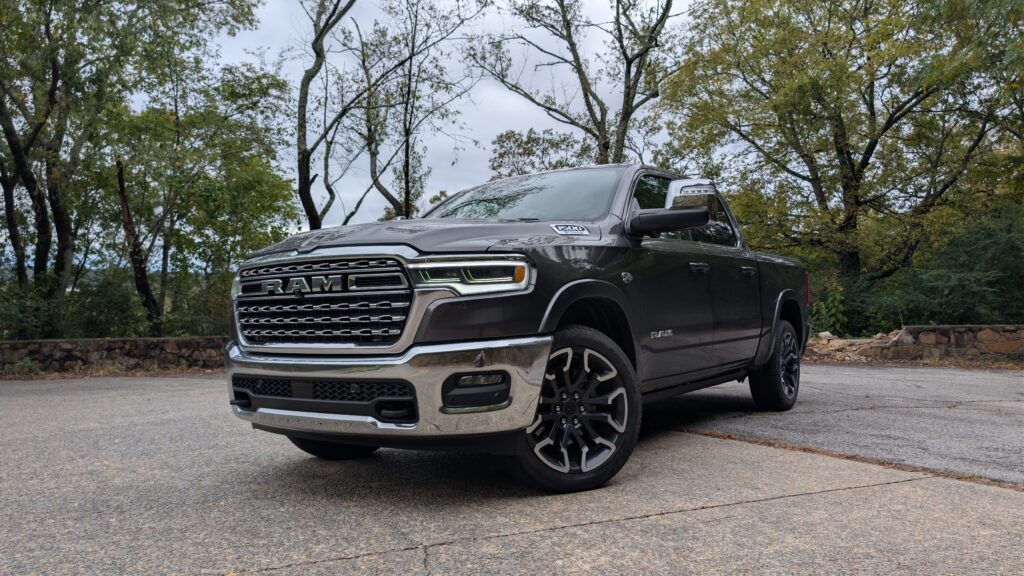

For buyers who value acceleration, pulling power, or upfront cost, the Hurricane is the undisputed winner.
Stephen Rivers for Carscoops
This situation well illustrates the general trend in the automotive industry, where efficiency and technology are increasingly prevailing over traditional solutions. Despite the emotional attachment to large naturally aspirated engines, the market and objective measurements show that the future belongs to compact yet powerful turbocharged units. The choice between nostalgia and progress is becoming increasingly obvious, and manufacturers like Ram are clearly indicating the direction they are moving. The question of the long-term durability of new complex engines remains open, and it may later adjust today’s conclusions.