


Mitsubishi Electric has developed a system for detecting intoxicated drivers
Mitsubishi Electric has introduced a new technology that can determine whether a driver is under the influence of alcohol. Unlike conventional monitoring systems used in semi-autonomous cars, this development is specifically aimed at combating drunk driving.
How does the system work?
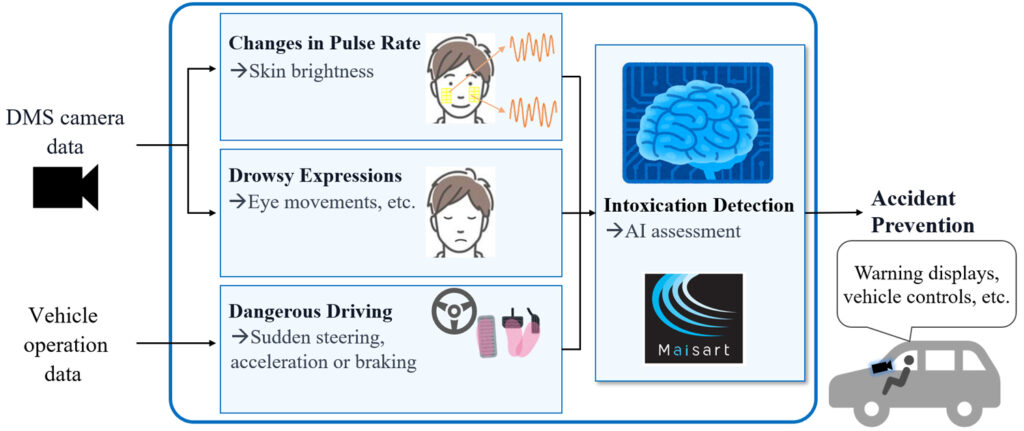
The technology combines data from the driver monitoring camera and information about the vehicle’s behavior. The camera analyzes the pulse of the person behind the wheel and their facial expressions, particularly eye movements, to detect signs of fatigue or intoxication.
Even if facial changes due to alcohol are minor, fluctuations in heart rate caused by alcohol consumption can be used to detect intoxication with high accuracy.
Simultaneously, the system monitors driving patterns: the nature of acceleration, braking, and steering wheel turns. Sharp and unexpected actions can be a signal of impaired concentration or a state of alcohol intoxication.
The role of artificial intelligence and possible vehicle actions
All collected information is processed by the Maisart artificial intelligence, which makes the final conclusion about the driver’s condition. If the system determines that the driver is intoxicated, it can take measures.
Mitsubishi Electric notes that the system can carry out “driver warnings and intervention in vehicle control if necessary, to help prevent alcohol-related accidents.” Specific actions are not disclosed, which raises questions: will the car be able to stop on its own or even notify emergency services about its owner.

The future of the technology
The company reported that the system has already been tested for compliance with regulatory requirements in Europe and the USA. This opens the way for its implementation. According to the developers, the technology could appear in cars as early as next year.
The implementation of such systems could become an important step in improving road safety. However, it will inevitably spark discussions about the balance between safety and privacy, as well as the level of control that can be entrusted to technology. The success of such an initiative will largely depend on the transparency of the algorithms, the reliability of detection, and clear legal frameworks regulating its application. The question of liability in case of a system error also remains one of the key points for future discussions.