 by
by A completely new car, which is simultaneously very old, has appeared on the Philippine market. Mitsubishi has introduced the Versa Van – a 15-seater passenger minibus, which is actually a rebadged Nissan Caravan, a model that first appeared back in 2011. This creates an interesting paradox, as the Versa name also belonged to Nissan for a subcompact sedan, which was discontinued in the US last year, although Mitsubishi has been using this name since the late 1980s.
What the New Old Van Is
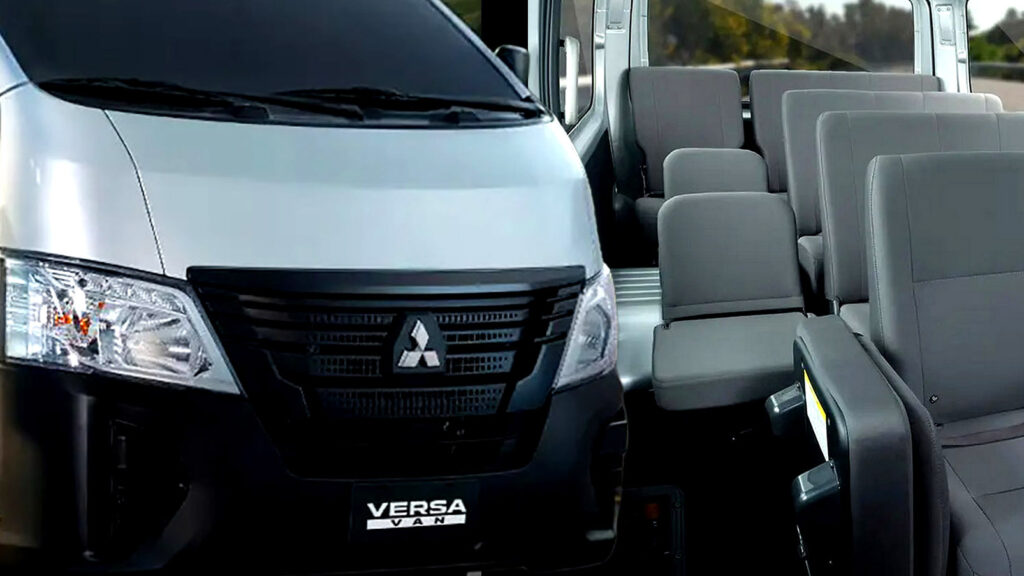
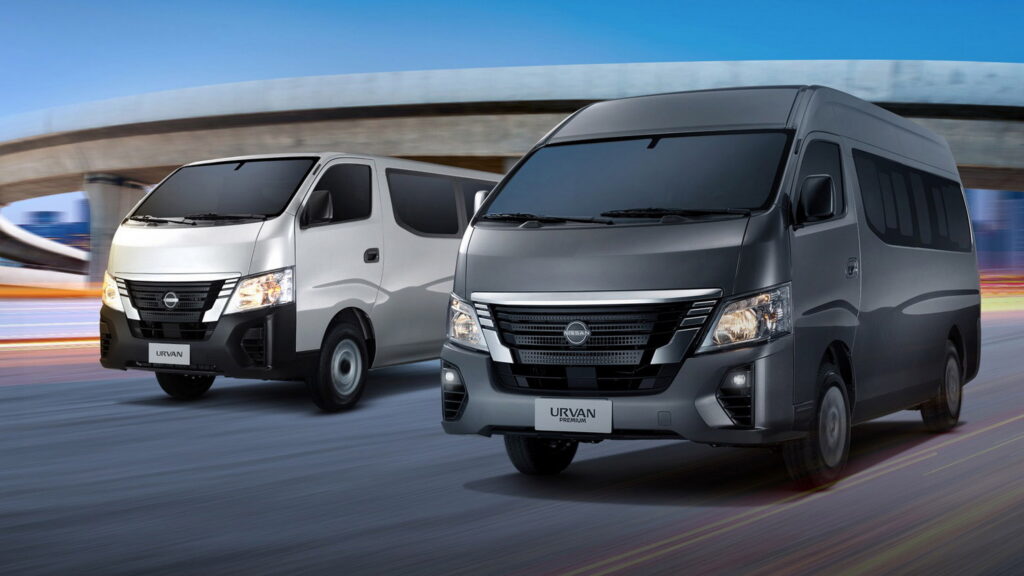
The Mitsubishi Versa Van is a large passenger transport vehicle for the Philippine market. It is built on the basis of the Nissan Caravan, which is locally known as the Urvan. Externally, it is almost an exact copy of the Nissan, differing only in the Mitsubishi emblems on the grille and trunk, as well as the Versa Van lettering on the rear doors. The donor Nissan model debuted 15 years ago and received updates in 2017 and 2021.
Maximum Simplicity and Practicality
Unlike the Nissan Urvan, which is offered in various trims, including high-roof versions, the Mitsubishi Versa Van focuses on the very basics. The car features halogen headlights, unpainted plastic bumpers, and small steel wheels with decorative covers. The emphasis is on functionality, not aesthetics.
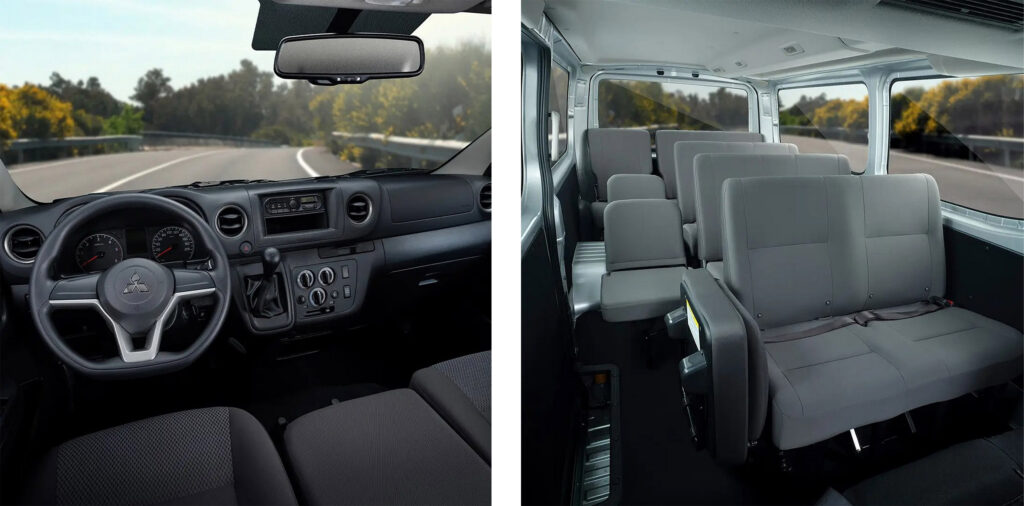
The interior is designed to carry 15 passengers, with seats arranged in five rows. For comfort, each row has a separate air conditioning vent on the ceiling. Only one sliding door is provided for entry and exit, so the seats on the right side can be folded to facilitate access to the rear rows.
Safety and Technical Equipment
The level of safety in the car is minimal. Front airbags are installed only for the driver and the front passenger. The remaining passengers are protected only by seat belts. The interior is created to transport as many people as possible with minimal cost and complexity.
The Heart and Platform of the Vehicle
The van is built on a ladder frame chassis with a cab-over-engine layout. Under the hood (or more precisely, under the cabin floor) works a Mitsubishi 4D56 2.5-liter turbo-diesel engine. It produces 127 horsepower and 356 Nm of torque. The drive is rear-wheel, and the only available transmission is a 5-speed manual gearbox. The fuel tank capacity is 65 liters, which should provide a good range for covering long distances.
Price and Market Competition
The Mitsubishi Versa Van is already available for order in the Philippines. Its starting price is 1,649,000 Philippine pesos (approximately $28,000 USD). This is twice as expensive as the base variant of the Mitsubishi L300 Cab & Chassis (from 813,000 pesos) and 89,000 pesos (about $1,500) more expensive than the mechanically identical Nissan Urvan Standard.
Among competitors in the 15-seater minibus segment on the Philippine market are the Toyota HiAce Commuter, JAC Sunray, Foton Transvan, and Maxus V80. However, none of them can boast such a rich and, at the same time, convoluted rebadging history as the new Versa Van.
The appearance of such a car vividly illustrates the specifics of certain regional markets, where reliability, simplicity of construction, and the ability to transport a large number of passengers often prove more important than modern design or the latest technologies. For the Philippines, an archipelago with a need for affordable mass transport, models like the Versa Van or the eternal L300 continue to remain relevant work tools, despite their age. The success of this model will show whether such a conservative, but time-tested strategy is justified in conditions where other manufacturers are trying to offer more modern solutions.