


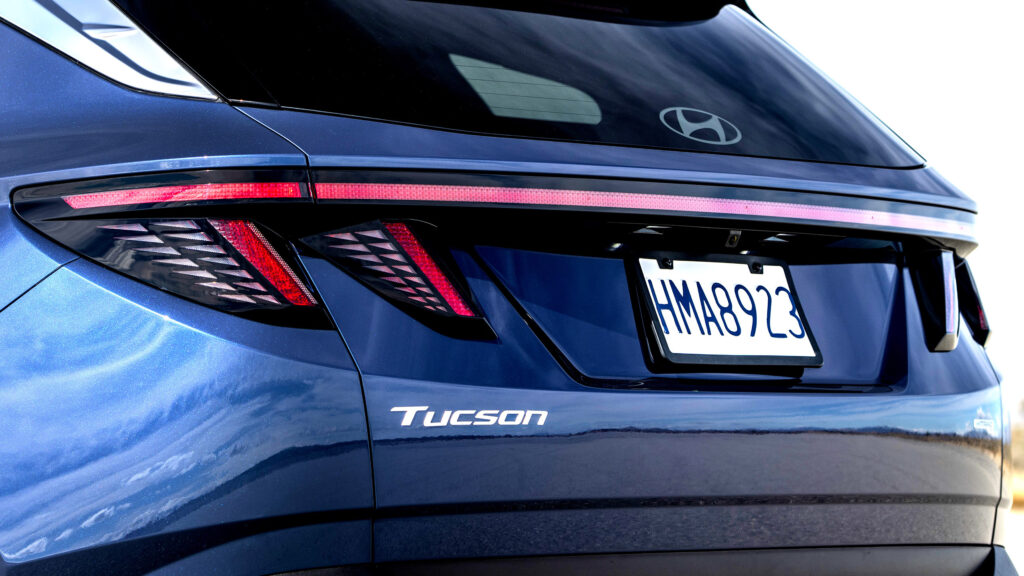
Hyundai Tucson Safety System Questioned in Lawsuit
Forward collision avoidance systems are designed to make modern cars safer. However, according to a new class-action lawsuit in the USA, the system in the Hyundai Tucson may do the opposite, allegedly causing “phantom braking” with no visible obstacle present.
Complaint About Unexpected Emergency Stops
The lawsuit, filed in the U.S. District Court for the Central District of California, focuses on an owner who claims his Tucson repeatedly braked autonomously, even when the road ahead was completely clear. The plaintiff, Dennis Sperling, notes that the sudden stops did not lead to accidents or injuries. However, he claims that Hyundai rushed the system to market, knowing about its defects.
What Does the Owner’s Manual Say?
The lawsuit cites several statements from Hyundai in the owner’s manual for the 2025 Tucson. Hyundai states that the “Forward Collision-Avoidance Assist may turn off, may not operate properly, or may operate unnecessarily depending on road conditions and surroundings.”
Forward Collision-Avoidance Assist may turn off or may not operate properly or may operate unnecessarily depending on the road conditions and surroundings.
Some of the “road conditions and surroundings” mentioned by Hyundai may include light reflected off a wet road surface, if the clearance of the vehicle ahead is low or high, if the temperature around the front radar is high or low, and that the system may activate while driving through a tunnel or over an iron bridge.
Unusual Shape and Terrain as Triggers
The owner’s manual even indicates that the system may activate if “the vehicle ahead has an unusual shape” or “the vehicle ahead is driving uphill or downhill.” The lawsuit presents these statements as evidence that Hyundai has long been aware of problems with the system but still brought it to market.
Downplaying the Severity of the Problem?
It is further alleged that Hyundai’s warning that the system “may not operate properly” serves to “downplay the potential severity and consequences of sudden, unplanned braking when the vehicle is traveling at high speed.”
Case Goes to Court
The case is now before the court, which will determine the next steps. Regardless of how it proceeds, it will be a headache that Hyundai, we are sure, would have liked to avoid.
This case highlights a broader issue in the automotive industry related to balancing the implementation of advanced safety technologies and ensuring their reliability in real-world conditions. Potential malfunctions of automatic braking systems are of particular concern, as they can create dangerous situations on the road, triggering chain reactions. For buyers, it is important not only to be aware of the possible limitations of such systems as stated in the manual but also to understand how the manufacturer responds to identified problems and whether it takes measures to resolve them under warranty service or through recalls.