 by
by BlueCruise Adoption Gains Momentum
Ford has released new data that clearly demonstrates the rapid growth in popularity of their BlueCruise driver-assist system. This technology, which allows for hands-free highway driving, is becoming increasingly significant for drivers. The number of vehicles equipped with it is growing, and users are activating the system more frequently.
According to the company, there are currently 1.22 million Ford and Lincoln vehicles with BlueCruise technology on roads worldwide. This is an 80 percent increase compared to 2024. In the US, the system is available for the Explorer, Expedition, F-150, F-150 Lightning, Mustang Mach-E models, and for all current Lincoln models.
Impressive Usage Metrics
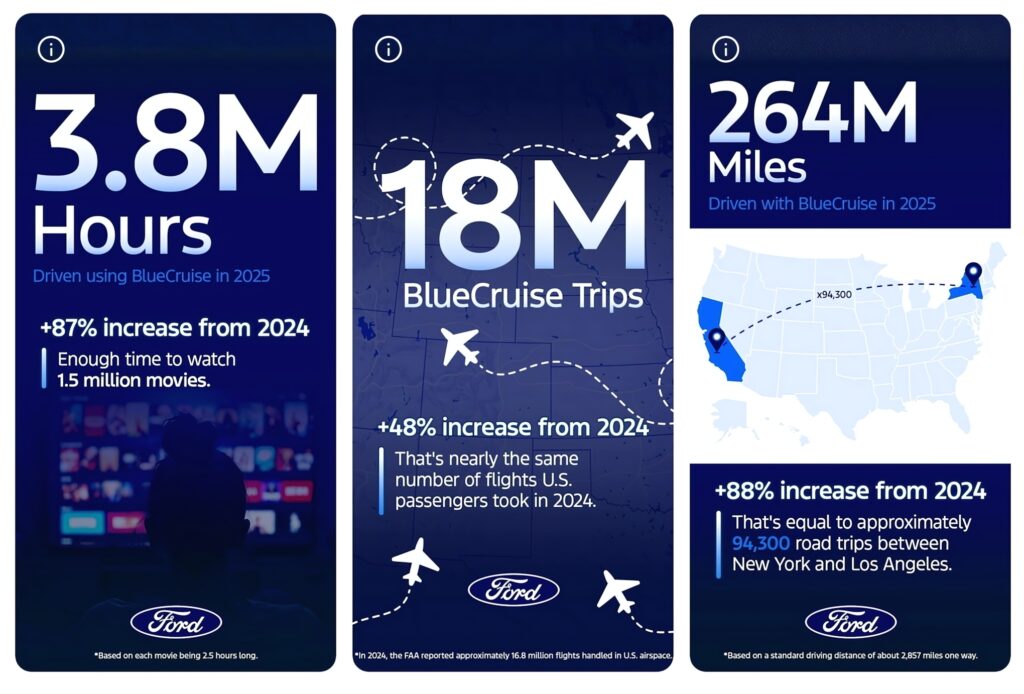
Overall, Ford owners spent 3.8 million hours with the BlueCruise system activated last year, which is 87 percent more than the previous year. During 18 million trips in the US, drivers covered 264 million miles with the active system. For comparison, this is equivalent to over 94,000 transcontinental journeys between New York and Los Angeles.
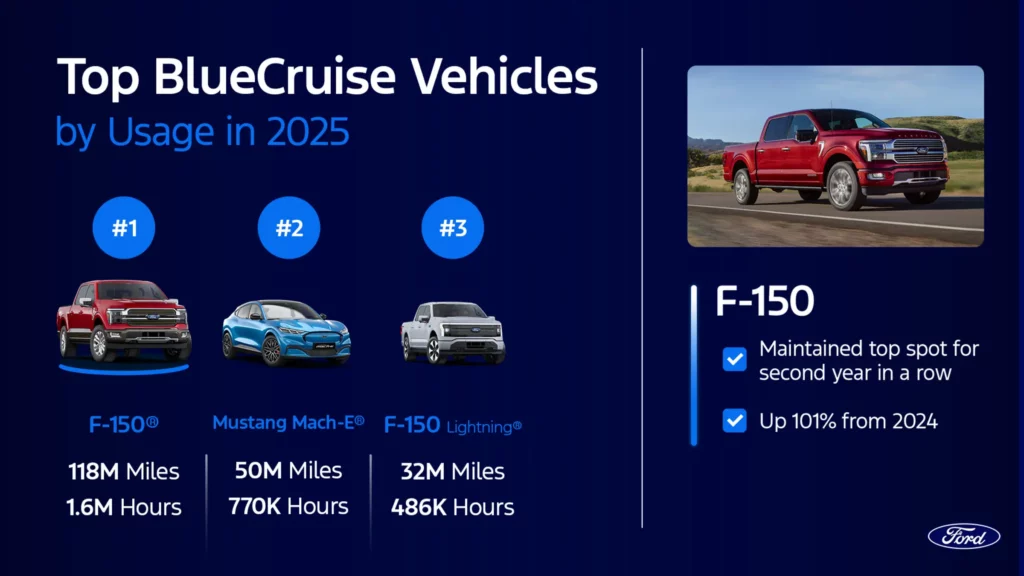
Driver-assist systems have become particularly popular among F-150 pickup owners, who used them for 1.6 million hours last year, covering 118 million miles. In second place for BlueCruise usage intensity was the electric Mustang Mach-E with 50 million miles and 770 thousand hours. Third place was taken by the F-150 Lightning model with 32 million miles and 486 thousand hours.
Geography of Leadership
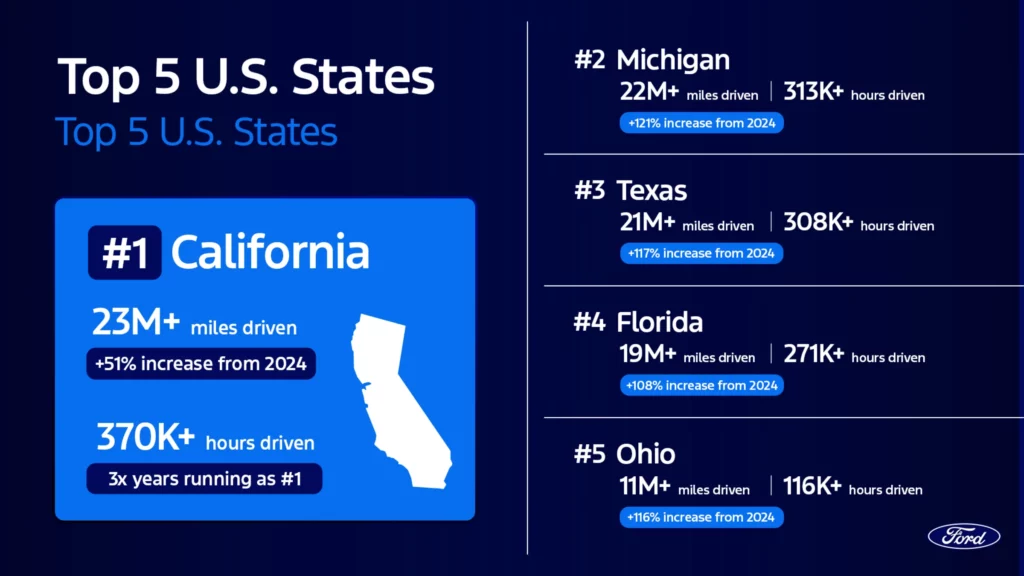
As one might expect, the most active BlueCruise users were drivers from California. There, 23 million miles were accumulated with this system last year, which is 51 percent more than in 2024, and the total system operation time exceeded 370 thousand hours. This puts the state in first place, ahead of Michigan, Texas, Florida, and Ohio. It is worth noting that over 60 percent of all BlueCruise trips across the country lasted less than 20 minutes, indicating its frequent use for short distances, not exclusively for long journeys.
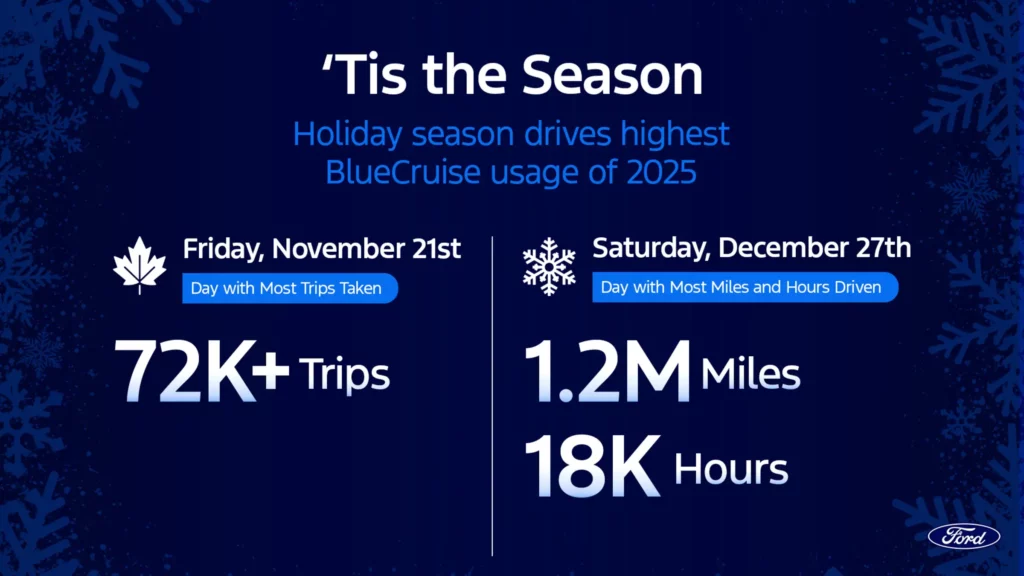
The busiest day for the system last year was December 27th: 18 thousand hours of operation were recorded and 1.2 million miles were covered in a single day.
Updates and Future Plans
Ford plans to further expand the availability of BlueCruise in 2026, not only through wider implementation but also through significant updates to the system itself. Four more models in Europe will gain access to this feature, and the company is also preparing to launch BlueCruise 1.5. This updated version will include an automatic lane change function and will debut on the 2026 model year Ford Explorer, Lincoln Aviator, and Lincoln Nautilus.
The BlueCruise usage metrics clearly illustrate how quickly partial autonomy technologies are transitioning from the category of exotic features to that of ordinary, mass-used functions. Growth of tens of percent per year indicates user trust and their willingness to rely on such systems in everyday driving. Particularly interesting is the fact of active use for short trips, which may change the perception that such developments are intended only for long journeys. Success among owners of commercially popular models, such as the F-150, also indicates that the technology is finding resonance not only among early adopters but also among the mass buyer.