


Pennsylvania Tightens Penalties for Using a Phone While Driving
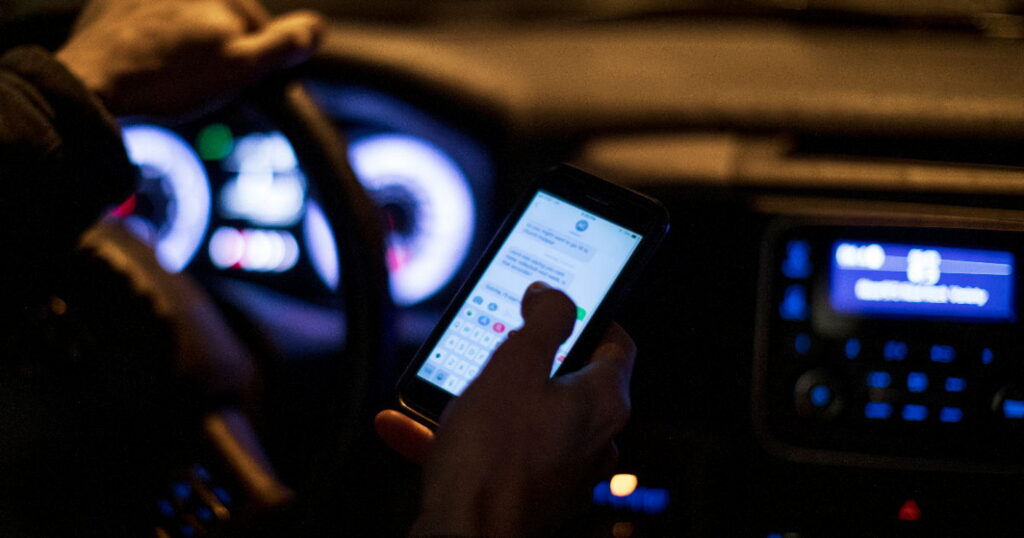
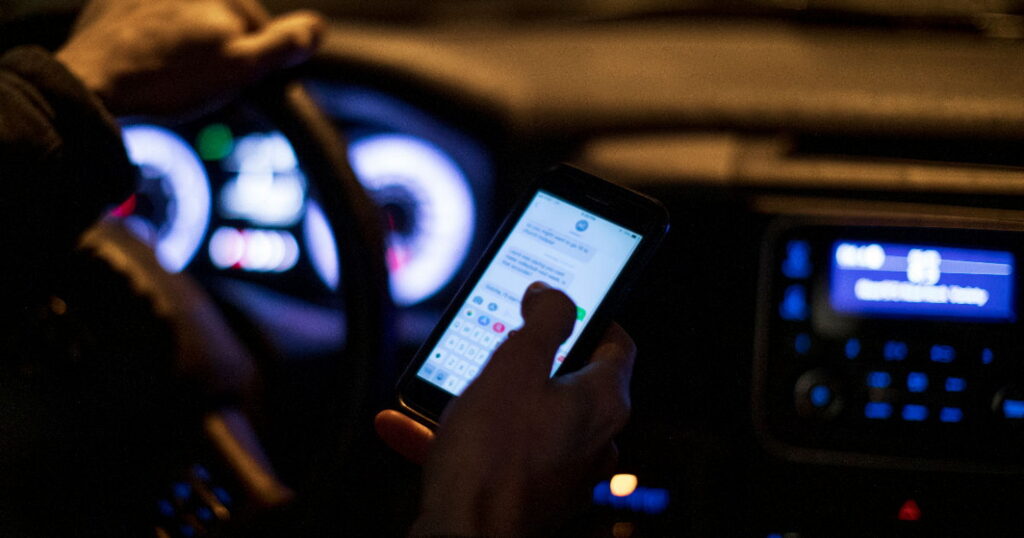
We all want roads to be safer. Now Pennsylvania promises to move in that direction thanks to a new law that allows for more vehicle stops. Starting June 5, 2026, drivers who violate the state’s hands-free driving law could face a $50 fine, plus court costs and fees. It is now a primary offense, meaning an officer can pull someone over simply for holding a phone, even if it’s turned off, while driving. Burgers, lipstick, shaving kits, stress-relief toys, and all sorts of other distractions remain perfectly legal.
What exactly the law covers
Known as “Paul Miller’s Law,” this legislative act took effect in June 2025 and made it illegal for drivers to hold or otherwise support a phone or similar electronic device while operating a vehicle. During the first year, violators received written warnings. However, starting today, those warnings turn into actual fines.
The law takes a broader approach than Pennsylvania’s previous texting ban. Instead of targeting only text messages, it prohibits drivers from holding an “interactive mobile device” while driving. This definition covers smartphones, tablets, portable computers, and other devices capable of sending or receiving electronic data.
Importantly, Pennsylvania defines “driving” very broadly. You are considered to be driving not only when moving along the road, but also when stopped at a red light, stuck in traffic, or temporarily stationary due to other road conditions. That’s right… If you are sitting at a railroad crossing, waiting for a slow freight train to pass, do not dare pick up your phone. The officer behind you, typing on their laptop, might just be entering your license plate number at that very moment.

Fines quickly become serious
Under the law, police can stop a driver solely for holding a phone. The penalties under the law become significantly more severe when distracted driving leads to a fatal accident. A driver convicted of vehicular manslaughter while distracted driving could face up to five additional years in prison. Pennsylvania’s previous ban on texting while driving also remains in effect. This law specifically prohibits reading, writing, or sending text messages while a vehicle is in motion and carries a similar $50 fine.
Here’s where it gets interesting. Drivers can still use a device if they have safely pulled off the traveled portion of the roadway and are completely stopped. There is also an exception for emergency communications with law enforcement or emergency services. Theoretically, this could be a defense for anyone stopped for this violation if they believed they just saw something worth reporting.
Why enforcement is complex
While lawmakers are clearly trying to reduce instances of distracted driving, the law focuses primarily on physically holding the device, rather than on the distraction itself. A driver can legally mount a smartphone (and thus a tablet, or perhaps a laptop) on the dashboard or windshield and interact with it using voice control. In many cases, the huge infotainment screen built into the car can display navigation, messages, music controls, and other information that is statistically just as distracting as a phone in hand.
There is also a practical issue of enforcement. Glancing at a phone lying in a cup holder might be illegal if it requires reaching for the device, but glancing at a large tablet display integrated into the dashboard is perfectly acceptable. Likewise, a driver using a smartwatch, voice assistant, or hands-free system can still be cognitively distracted, even if they are following the letter of the law.
Of course, this is not necessarily a flaw unique to Pennsylvania. Almost every hands-free driving law in America draws a line between holding a device and using technology in general, as it is the easiest behavior for police to observe and enforce. In other words, Pennsylvania and similar laws do not actually ban distraction. They ban one specific form of distraction that is easy for police to spot from outside the vehicle.
Pennsylvania’s new law is undoubtedly a step forward in combating distracted driving, but it raises many questions about its practical effectiveness. By focusing on physically holding the phone, the law creates loopholes for using other technologies that may be no less dangerous. Drivers can legally use voice assistants, built-in displays, and smartwatches, potentially maintaining the same level of cognitive distraction. Furthermore, the broad definition of “driving,” which includes stopping at traffic lights, could lead to ambiguous situations and disputes. Thus, while the law tightens penalties, its real impact on road safety will depend on how effectively law enforcement can apply it in practice and whether it truly forces drivers to change their behavior, rather than just looking for workarounds.