


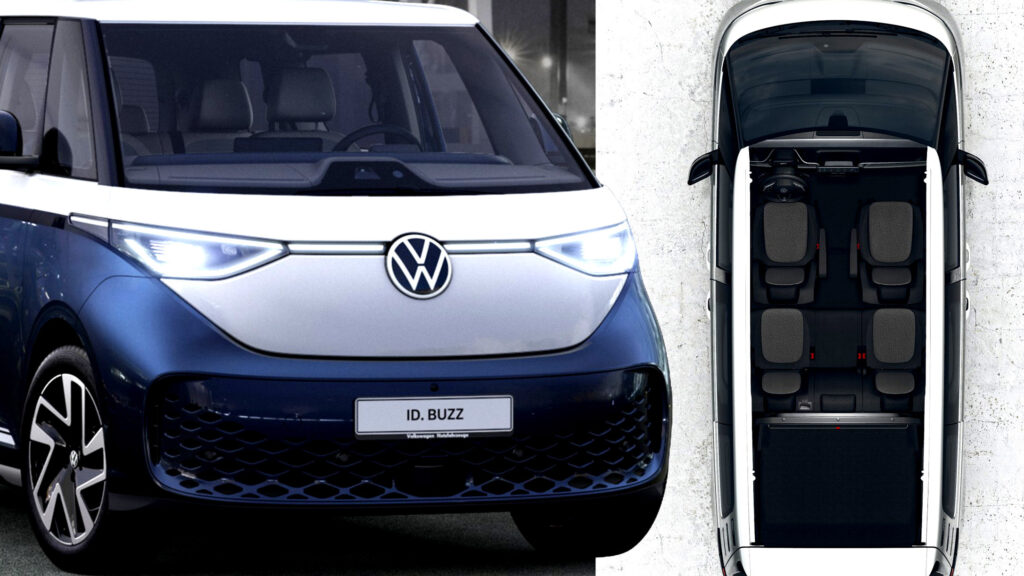
Volkswagen has introduced an official factory partition for the interior of the ID. Buzz electric minivan. This innovation allows transforming the rear section of the five-seat car into a full-fledged cargo compartment without losing its conventional passenger functions.
Collaboration and Purpose
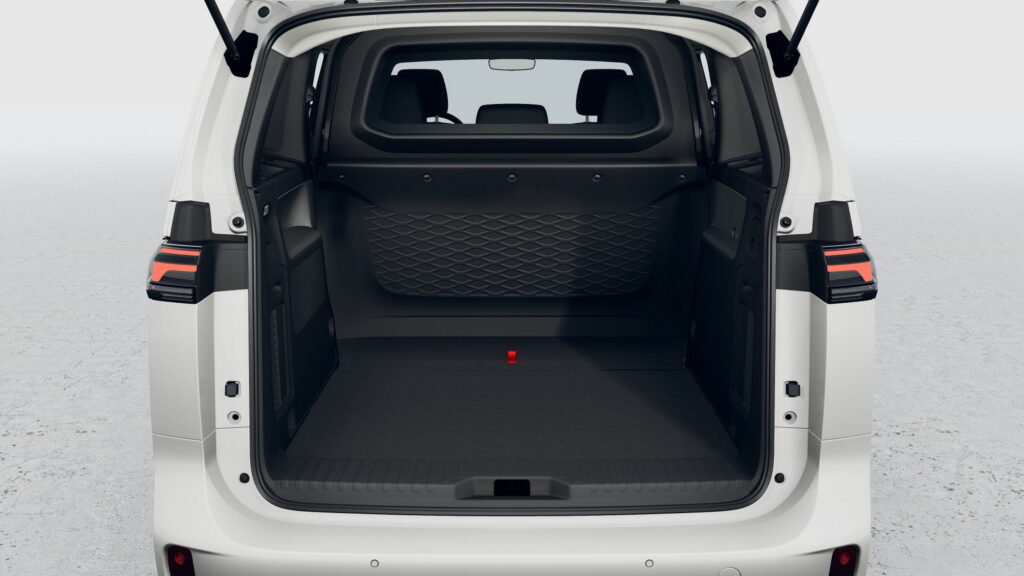
The accessory was developed in collaboration with the Dutch company Snoeks Automotive, a long-term partner of Volkswagen. The fixed partition is installed directly behind the second row of seats. It is equipped with a window, allowing the preservation of the basic five-seat configuration while simultaneously creating an isolated cargo space from floor to ceiling, similar to that offered by the commercial ID. Buzz Cargo version.
Besides safety, the partition effectively separates the cabin from the luggage compartment, preventing the ingress of dirt, unpleasant odors, and noise. It also contributes to more efficient operation of the climate control system, as it reduces the volume of space that needs to be cooled or heated.

Materials and Compatibility
The partition is made from the composite material Compax, known for its lightness and strength. To avoid a purely industrial appearance, Volkswagen has treated it with a high-quality soft coating. A separate storage compartment for the charging cable is integrated under the floor. Importantly, the design does not interfere with the operation of the rear seat belts or side airbags.
This accessory is available for both versions of the ID. Buzz: with the standard and the extended wheelbase. For the short wheelbase, the partition can be ordered for the Freestyle, Pure, Energy, and Pro trim levels. For the extended model, it is available for the Energy and Pro versions. In Germany, the price starts from 1,856.40 euros.
The partition wall adds utility to the ID. Buzz, characteristic of cargo vans, while preserving passenger comfort.
Market Prospects
For now, the ID. Buzz remains part of Volkswagen’s European model lineup. The electric minivan skipped the 2026 model year in the US market due to lower-than-expected demand. However, a return is not ruled out. Volkswagen may introduce an updated version in 2027 with more significant changes aimed at attracting American buyers.
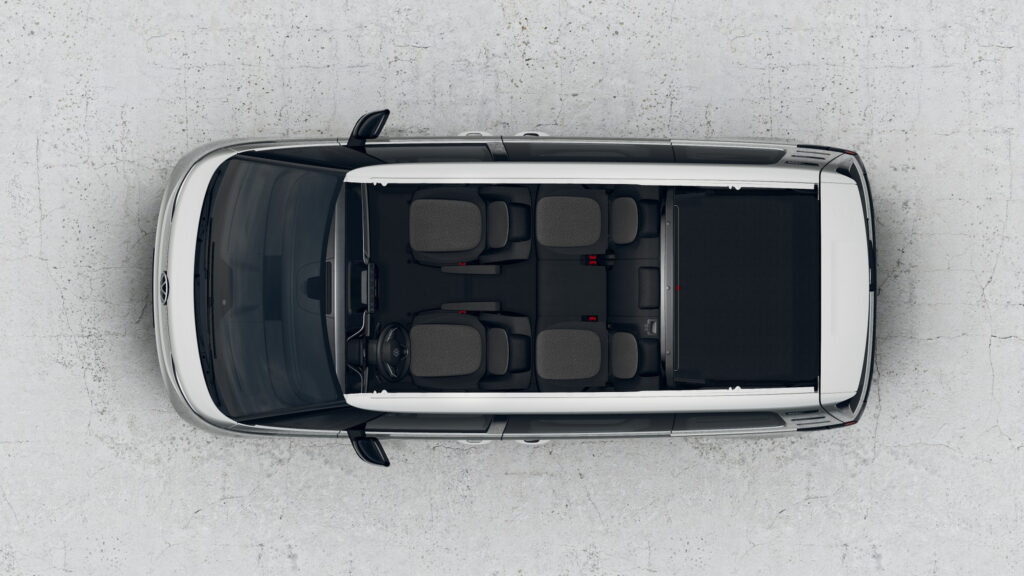
The introduction of such a partition as a factory accessory indicates the flexibility of the ID. Buzz platform and the manufacturer’s desire to meet diverse customer needs. It may be particularly attractive to small businesses or families who occasionally need to transport large or dirty cargo without dedicating a separate vehicle for it. This step also highlights the trend of blurring the clear lines between passenger and commercial vehicles, especially in the electric vehicle segment, where modularity and multifunctionality are becoming key advantages.