 by
by Updates for the Caddy and Multivan
During the annual media conference for 2026, Volkswagen’s commercial vehicles division showed what it is preparing for its van lineup. The company released official sketches showcasing the updated Caddy and Multivan T7. Both models are set to debut this year with exterior and interior updates.
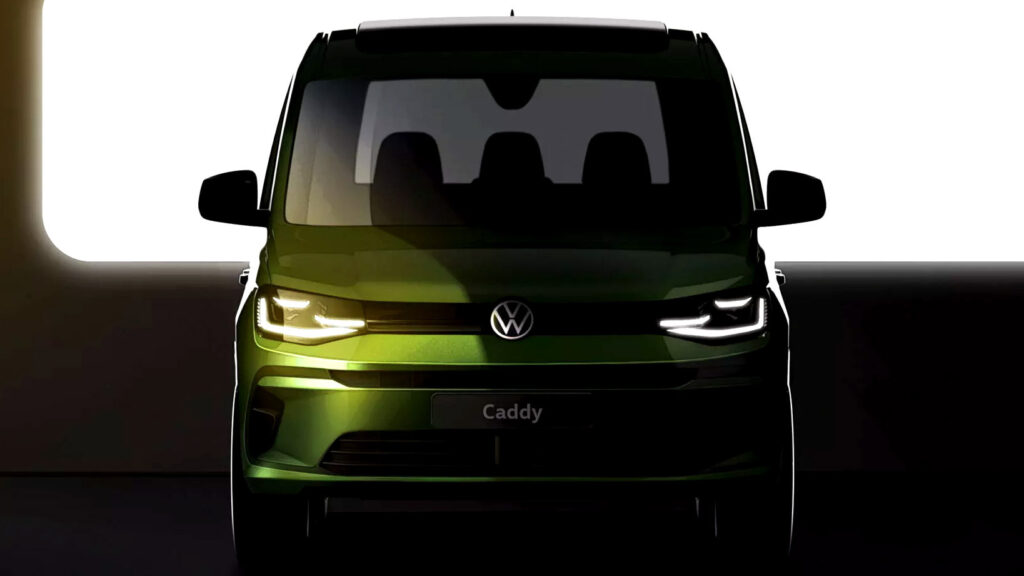
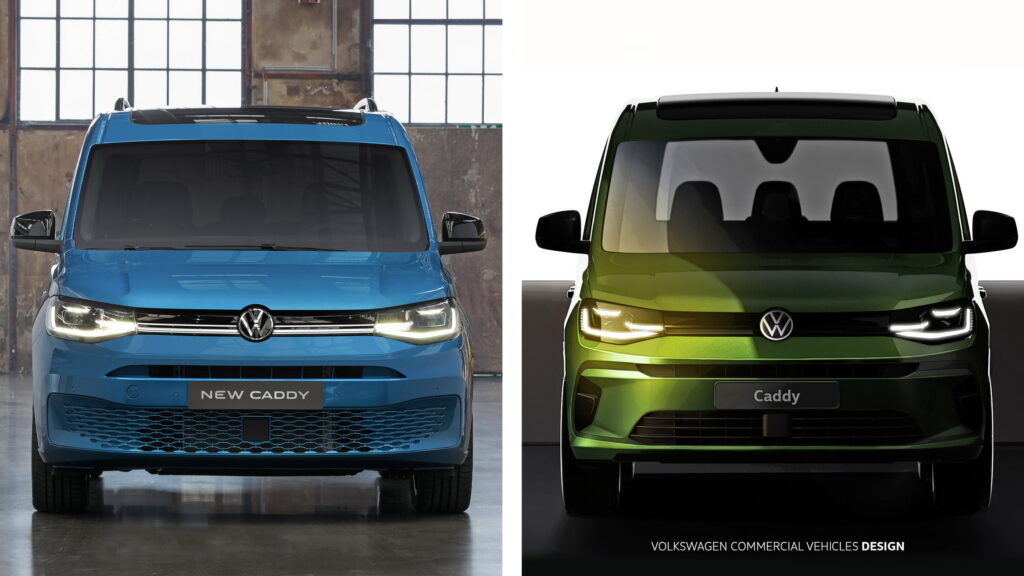
The first teaser is dedicated to the Caddy. At the front, the van received a redesigned bumper, where the previous body-colored mesh was replaced with traditional air intakes. The sketch also shows that the radiator grille appears to be losing its LED lighting, although it is not yet clear if this will apply to all trim levels.
Volkswagen renamed its hatchback to ID.3 Neo, but the real changes happened inside.
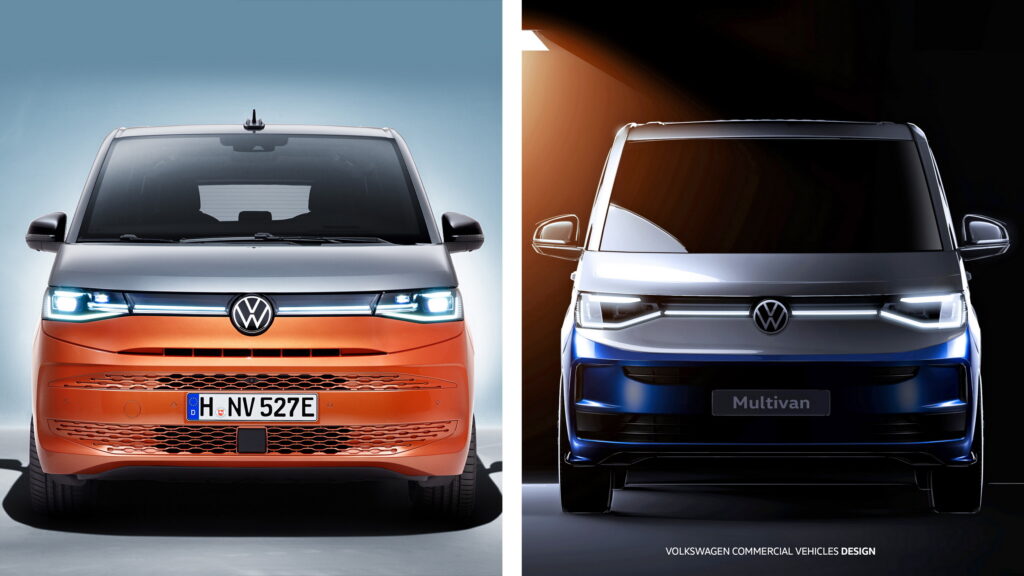
The Multivan T7 is set for a similar facelift, although its front end will retain the LED strip that runs across the grille. The headlights will receive updated graphics, and the teaser presents the van in a new two-tone paint scheme reminiscent of the ID. Buzz style.
Changes inside the cabin
In addition to external modifications, Volkswagen reports that both vans will receive “significantly optimized interior solutions.” The most noticeable change will be larger infotainment displays, combined with a simpler and more intuitive menu. The company claims this update will significantly ease daily use for owners.
Volkswagen is keeping the gasoline Tiguan until 2035, with two major updates planned.
It has also been confirmed that the updates for the 2026 model year will apply to the California version based on the Multivan T7. This model has already been photographed during winter testing. For now, Volkswagen does not indicate any mechanical changes. The powertrains for the Caddy and Multivan are expected to remain virtually unchanged compared to the current lineup.
Updates for other models
The update cycle is not limited to just the Caddy and Multivan. Volkswagen also plans to expand electrified options for the rest of its van lineup in 2026. This includes new hybrid powertrains for the VW Transporter and Caravelle, developed on a Ford base, which will for the first time offer these models a partially electric option.
Volkswagen’s ID. Buzz received a feature that is generally not typical for minivans.
The fully electric ID. Buzz is also expecting innovations. Volkswagen plans to add a Vehicle-to-Load (V2L) function, which will allow owners to power external devices directly from the van’s battery. Also in the works are a “Good Night package” and a special “Camp Mode.”
Finally, the flagship motorhome Grand California will be “comprehensively modernized based on customer feedback,” and the Crafter will become available with a three-way “skip” type body construction.
Financial challenges and a new start
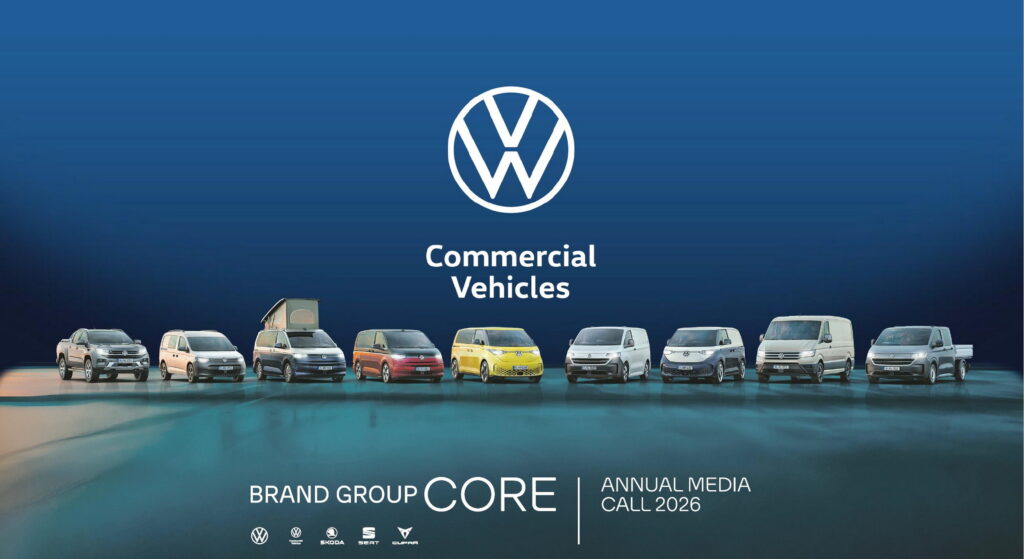
This product push comes against the backdrop of VW Commercial Vehicles’ attempts to recover from a difficult 2025. Sales revenue even increased by 11%, to 16.86 billion euros, but operating profit fell by 67%, to 245 million euros.
Volkswagen to cut 50,000 jobs after sharp profit decline.
A significant part of this decline was related to provisions set aside for paying CO2 emission fines in the European Union, largely due to slower-than-expected scaling up of fully electric light commercial vehicle production. Despite this, the brand maintained a strong net cash flow of 1 billion euros to support future product updates. Deliveries also increased slightly: VW Commercial Vehicles sold 428,000 units in 2025, which is 6% more than in 2024.
The presentation of new models and technologies comes at a pivotal moment for the brand as it balances innovation and financial constraints. The emphasis on improving the user experience, especially through intuitive interfaces, and expanding electrified options indicates a future-oriented strategy. The success of these initiatives could largely determine the company’s ability to overcome current challenges and strengthen its position in the competitive commercial vehicle market, where environmental regulations and customer expectations are constantly rising.