 by
by Empty Space for Creativity
Volkswagen has introduced a new modification of its Multivan, which is viewed not as a finished product but as a foundation for future projects. The Multivan Camper is essentially a blank slate for conversion specialists, a kind of base version of the California without the camping equipment and all the rear accessories.
If you were expecting modular seat layouts or fold-out beds, you won’t find them here. The Multivan Camper comes with a “fully finished, but empty” cabin in the rear. This means the absence of rear seats, a table, floor covering, storage compartments, and any appliances typical of campers.
Intentional Minimalism
Such minimalism is a completely deliberate decision. Volkswagen CV is targeting professional conversion workshops and enthusiasts who want a clean base for a custom build. For many converters, this eliminates the need to dismantle factory-installed furniture, flooring, and fixtures before starting work.
This version is intended for those who want to create something unique, starting almost from scratch.
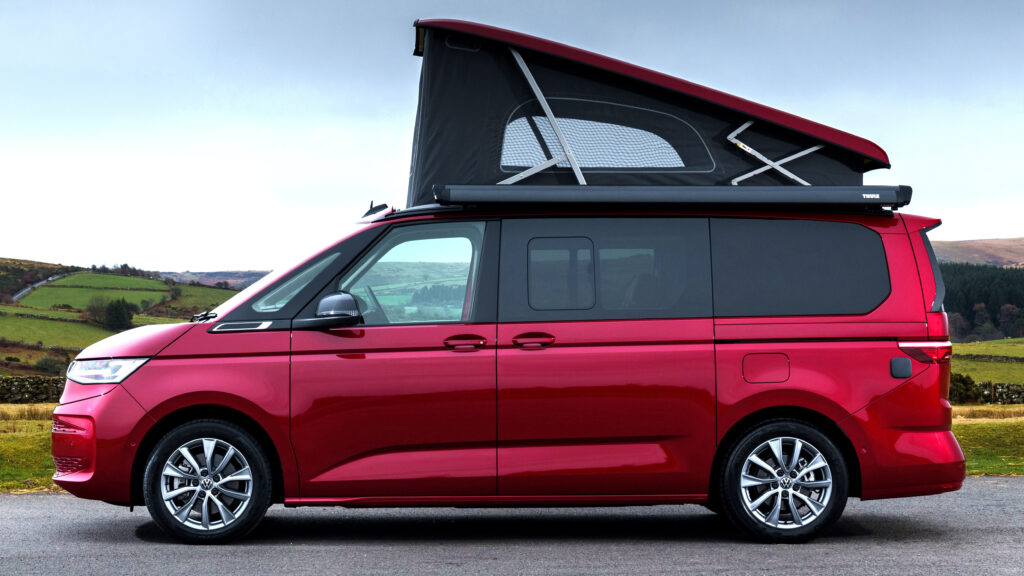
Despite the emptiness, the Multivan Camper comes with standard equipment. The main feature is the manual pop-up roof, which increases headroom and creates space for an additional sleeping area. Also present are two sliding doors, rear doors, interior side paneling, and swivel seats for the driver and front passenger, allowing them to turn to face the temporary void behind.
Space on a Long Wheelbase
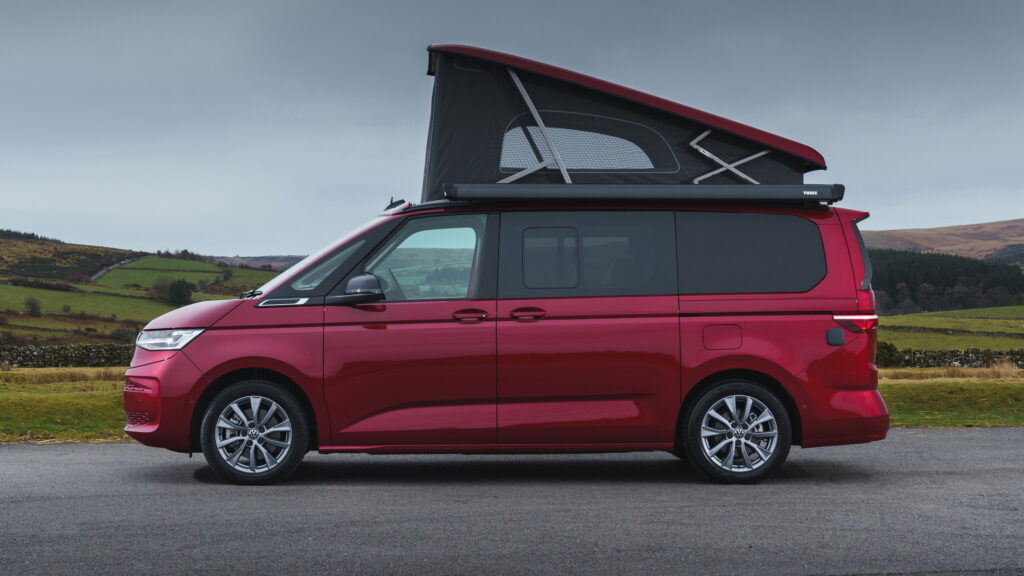
Another key characteristic is the Multivan T7 body on a long wheelbase, which provides 4,053 liters of space in the rear. According to VW, the interior length is 2,625 mm, width is 1,665 mm, and height is 1,312 mm.
Choice of Powertrains
Two powertrain options are available for the Multivan Camper. The familiar 2.0-liter turbo diesel with 148 hp delivers power to the front wheels via a seven-speed DSG gearbox.
There is also an eHybrid 4Motion option with all-wheel drive and a hybrid powertrain. The total output is 237 hp thanks to a turbocharged 1.5-liter gasoline engine and two electric motors. The 19.7 kWh battery provides an electric-only range of up to 95 km.
Question of Availability

This brings us to the question of price, which is likely the main rationale for creating this version. The diesel-powered Multivan Camper starts from £43,900, or £52,680 including VAT. The eHybrid model starts from £50,725, or £60,870 including VAT.
These figures may seem high for a camper without equipment, however, the simplified version is significantly cheaper than the Multivan-based California.
The latter costs from £64,417 to £86,693 excluding additional equipment. It’s also worth noting that the Multivan Camper comes with “incomplete M1 certification.” In practice, this means it requires conversion and re-approval of its type before registration in the UK.
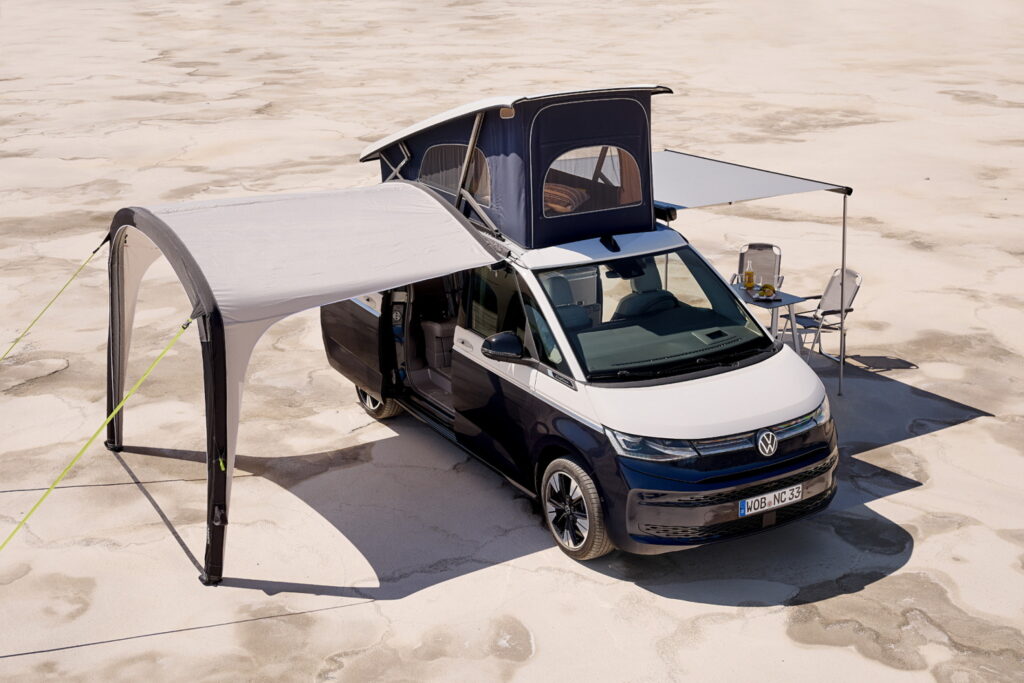
The appearance of such a model clearly indicates the growing demand for custom solutions in the camper segment. By offering an empty platform, Volkswagen not only lowers the initial entry price for the buyer but also opens the way for an entire industry of converters and craftsmen who can fill this space according to the boldest ideas. It also allows the company to reach a new category of customers for whom the serial California may be too expensive or not flexible enough. In the future, we are likely to see many unique projects created on the basis of this “blank sheet,” making the market more diverse and interesting.