


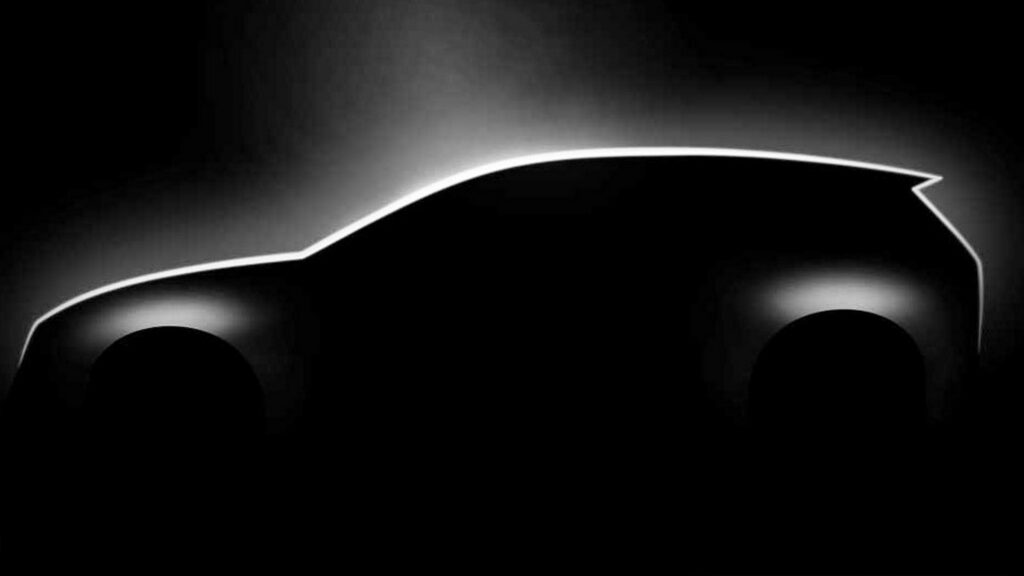
The future of Volkswagen is beginning to take concrete shape in Wolfsburg, and it still looks like a Golf. During a works council meeting on March 4, 2026, the IG Metall union showed the first official teaser of the next-generation VW Golf, a model that will transition the iconic car into the electric era.
The file name contains the designation ID. Golf, confirming rumors about Volkswagen’s plans to combine traditional model names with the ID prefix for future electric cars. This approach began with the smaller ID. Polo and is expected to spread across a wide range of models.
Return of a Legend
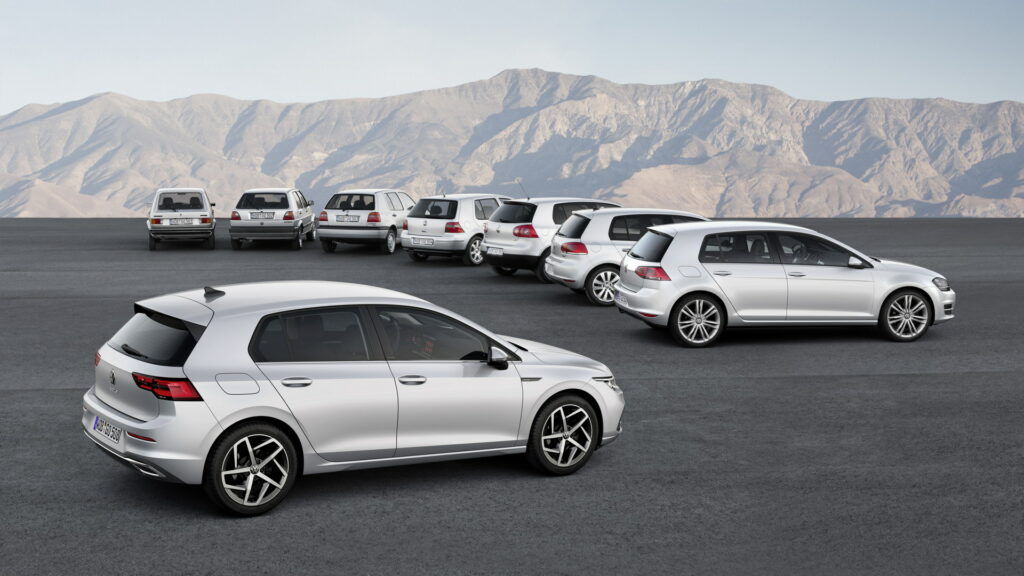
It’s well known that Volkswagen prefers to play it safe, especially when it comes to one of its most important models. The Golf has gradually evolved over decades, effectively becoming the Porsche 911 of mass-market hatchbacks.
The first teaser shows a familiar silhouette with clear references to previous Golf generations. The front end looks more angular than the current model, reminiscent of the Golf III and the Corrado coupe from the 90s.
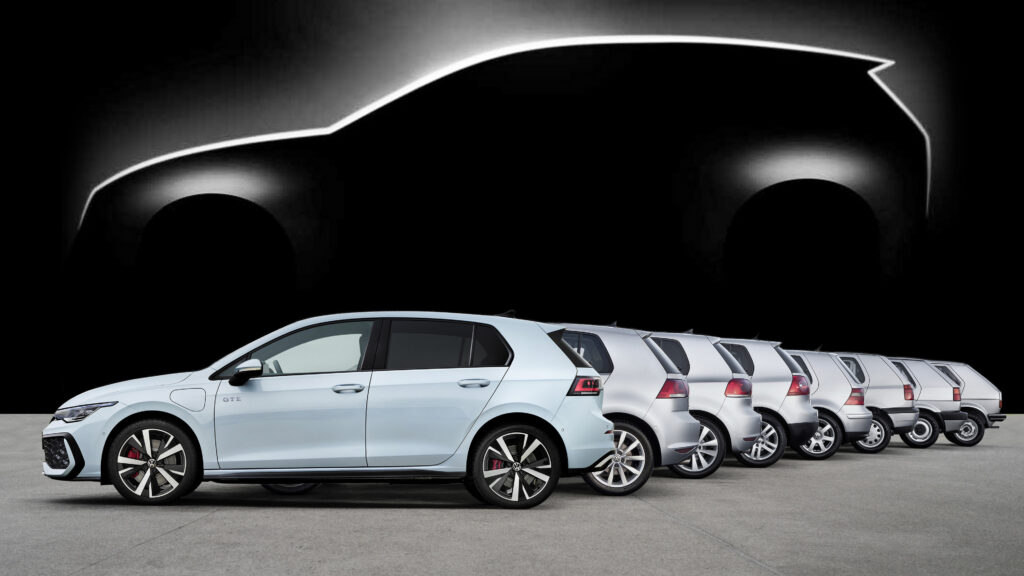

The profile shows pronounced wheel arches, reminiscent of the Golf VII, and the model is expected to retain the signature upright C-pillar that has defined this model from the very beginning. At the rear, the design combines features of the Golf II and Golf VIII, crowned by a large rear spoiler that continues the aerodynamic roofline.
Overall, the ID. Golf looks much more like a traditional hatchback than the ID.3 it is set to replace. The current Golf VIII is also not going away. It will continue to exist in parallel with the electric car as an internal combustion engine alternative.
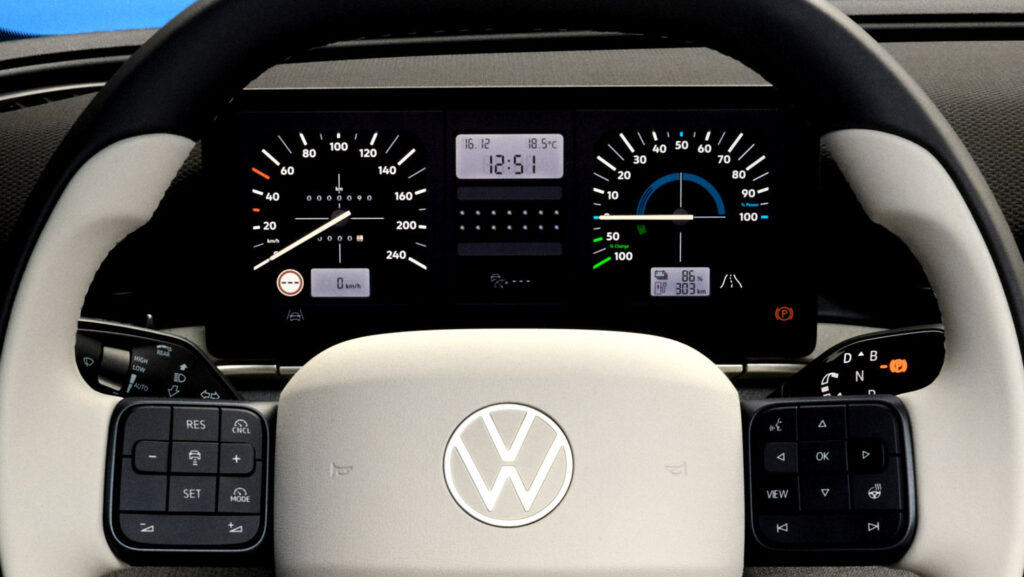

The Golf’s interior is expected to place greater emphasis on physical controls, combined with vintage-style graphics for the digital instrument panel and durable upholstery materials. It is also likely to be more spacious and practical than its predecessors.
New Platform
The ninth-generation Golf will be built on the Scalable Systems Platform (SSP), which uses a zonal architecture and software developed in partnership with Rivian. It will get an 800-volt system and cell-to-pack battery technology, most likely with single- and dual-motor configurations. Alongside the standard ID. Golf, hot hatchbacks with GTI and R badges are expected.
Other Volkswagen Group models that will use the same platform include the future ID. Roc, ID. Tiguan, and ID. Touareg SUVs, as well as the next Skoda Octavia.
When Will It Appear?
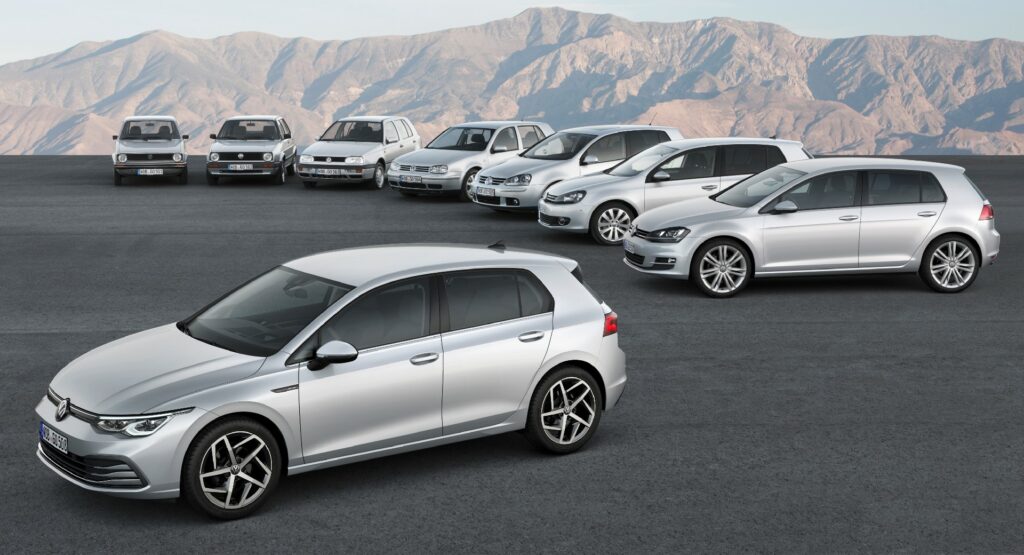

According to the Volkswagen works council newspaper, the fully electric hatchback is set to continue the Golf’s long success story into the next decade as the company moves towards 2030.
Volkswagen has not confirmed an exact sales start date. Earlier reports pointed to possible delays until as late as 2030, explained by production difficulties, fluctuating demand for electric vehicles, and the ever-present issue of cost. However, some sources claim the new Golf will appear sooner, debuting in 2028, while other reports give it another year—2029.
One thing is confirmed for sure—a production reshuffle. Assembly of the current combustion-engine Golf VIII will move to Puebla, Mexico, in 2027. This change will free up the Volkswagen plant in Wolfsburg, Germany, to produce the electric ID. Golf, which was the main takeaway from the recent IG Metall statement. To prepare for this, the plant’s facilities are undergoing, according to VW, a comprehensive overhaul to implement advanced production processes.

The Golf’s transition to electric power is a symbolic step for the entire European auto industry, as this model has been one of the continent’s best-selling cars for decades. The decision to keep production in Wolfsburg, along with the familiar design that combines features of different generations, indicates Volkswagen’s desire to maintain the loyalty of millions of Golf owners by offering them an evolutionary, not revolutionary, transition to electromobility. The success of this strategy could become a benchmark for other manufacturers facing the need to electrify their iconic models.