


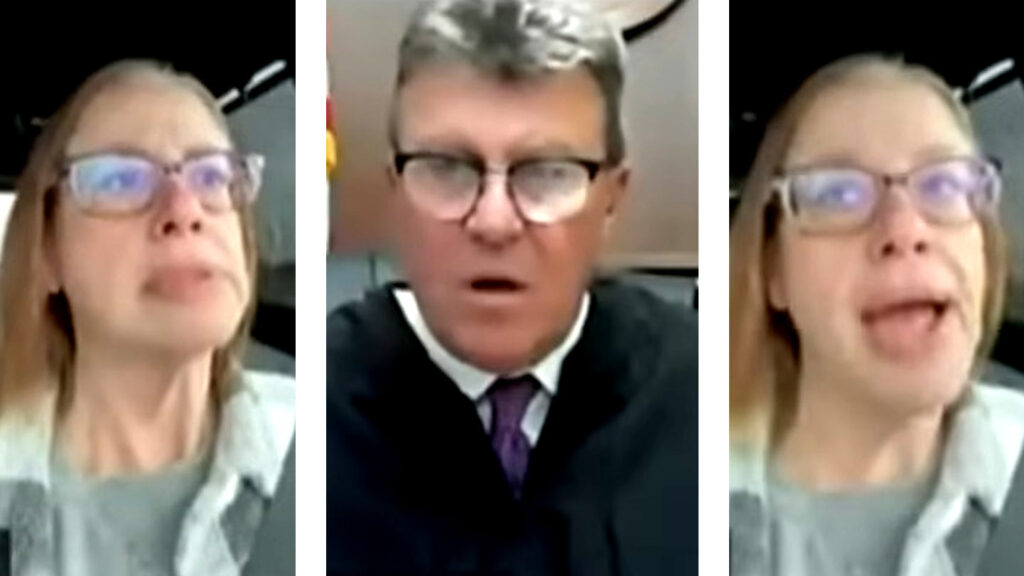
Detroit woman joins court Zoom hearing while behind the wheel
A Detroit woman learned the hard way that joining a court hearing via Zoom while driving a car is an extremely bad idea. Upon seeing her on screen, the judge immediately ruled in favor of the plaintiff, the company that filed the lawsuit.
The judge immediately noticed the violation
In a video circulating online, Kimberly Carroll appears on a Zoom call, sitting behind the wheel of a car moving along a highway. Judge Michael C. McNally immediately draws attention to this, stating that one cannot operate a vehicle during hearings. Carroll objects, claiming:
I am not behind the wheel, I am a passenger in the car!
The judge, clearly unconvinced, notes that defendants typically do not participate in hearings from moving vehicles. Carroll insists, citing an emergency and an out-of-town trip due to a relative, and promises to tell the driver to stop. The astonished judge asks:
Am I crazy, or does it look like you are driving this car?
Contradictory testimony and consequences
Despite the obvious evidence, the woman continued to insist that she was a passenger. When asked by the judge which side of the car she was sitting on, she first said the left side, which corresponds to the driver’s seat, and then hastily corrected herself to the right.
Soon the car stopped, but the judge asked to see the driver. Carroll stated that she needed the driver’s permission, got out of the car, and walked around it from the passenger side, never showing the person who, she claimed, was behind the wheel.
In the end, the judge ruled in favor of the company LVNV Funding, which was seeking about $1,800 from Carroll. Fortunately for her, she was not facing a driver’s license suspension at that moment, which could have significantly complicated the situation.
This case vividly illustrates how modern technologies, such as video conferencing, require participants to adhere to basic safety and ethical rules, even in non-standard circumstances. The judge’s reaction shows zero tolerance for potentially dangerous behavior that could pose a threat both to the woman herself and to other road users. Such incidents also raise questions about verifying and confirming the environment from which people join virtual hearings to ensure their legitimacy and safety.