


The European car market demonstrated a significant shift in 2025, where electric vehicles of various types ceased to be secondary players. Sales of vehicles with electrified powertrains surged sharply, while demand for gasoline and diesel models continued to decline.
Key Trends of the Year
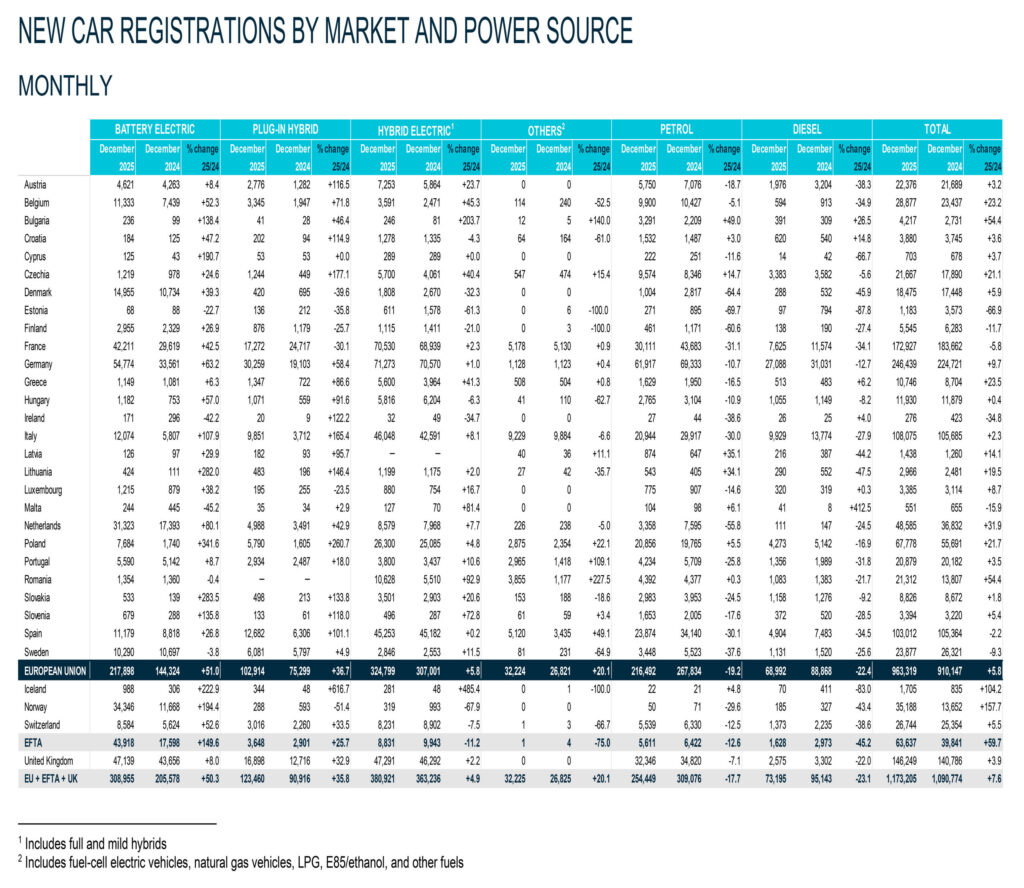
This change gained particular momentum precisely in December, when sales of fully electric cars for the first time surpassed sales of gasoline cars, despite regulators’ plans to soften emission requirements. In that month, BEVs captured 22.6% of the market, slightly ahead of gasoline cars at 22.5%. Hybrids held the largest overall share at 33.7%, followed by plug-in hybrids at 10.7%. The share of diesels fell to 7.2%.
The Overall Picture for 2025
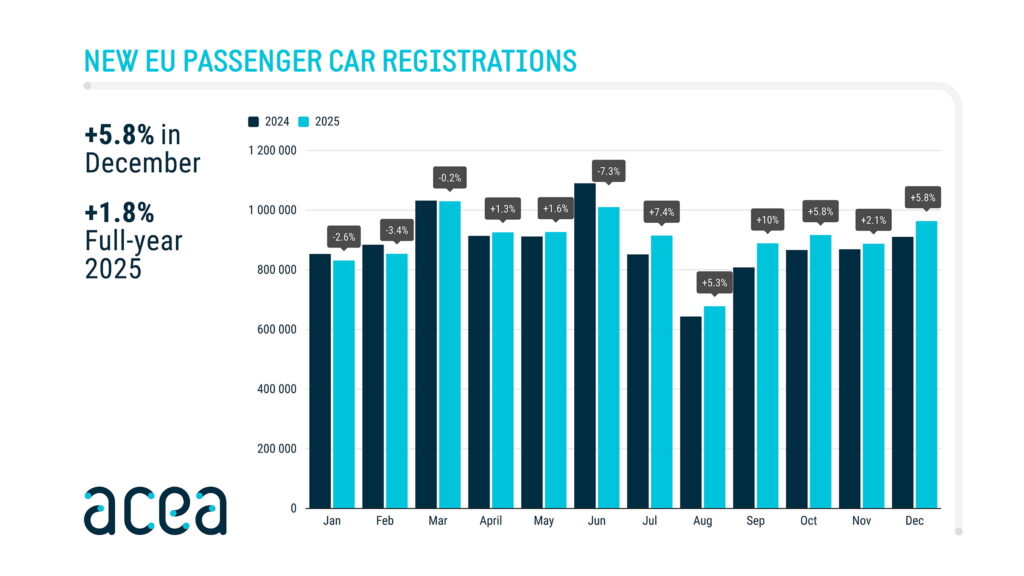
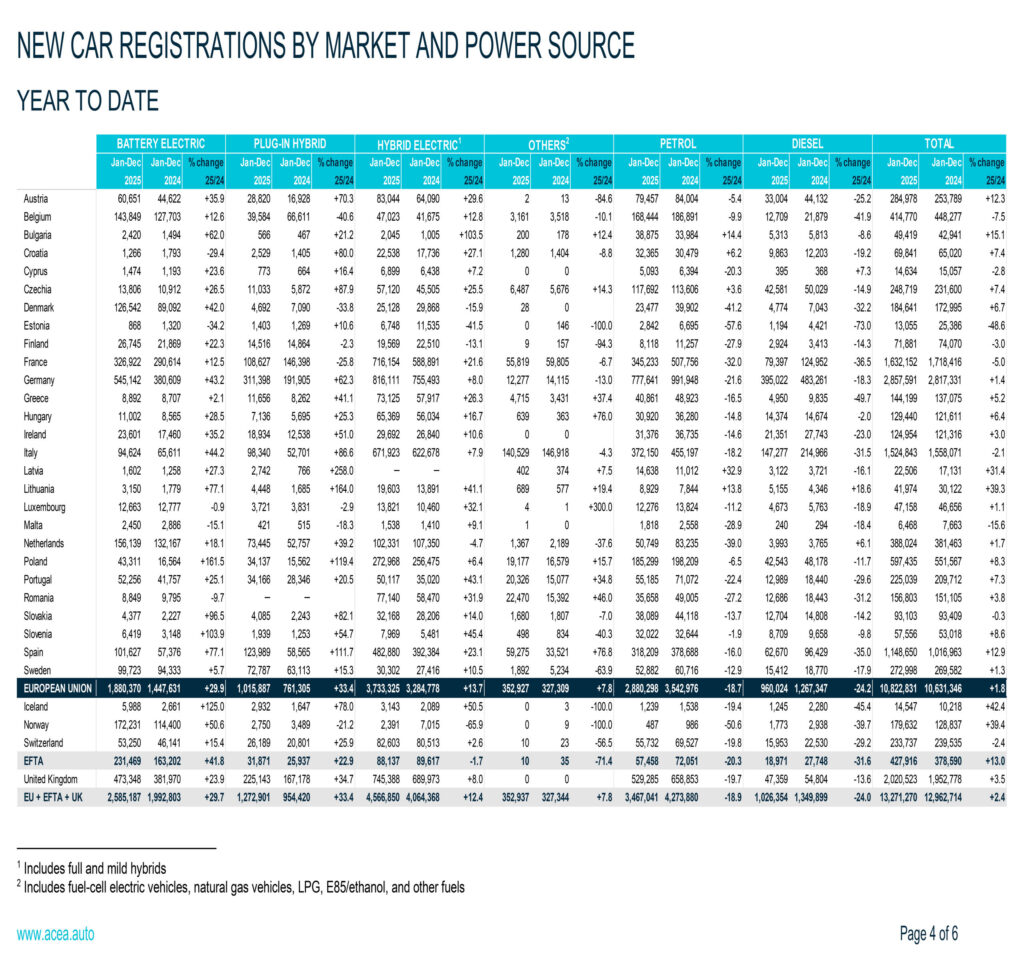
Overall, in 2025, 13,271,270 new cars were sold in the European Union, the United Kingdom, and the European Free Trade Association countries (Iceland, Norway, Switzerland). This represents a moderate but noticeable growth of 2.4% compared to the previous year. Of this total, fully electric cars accounted for 2,585,187 sales, which is a significant increase of 29.7% compared to 1.9 million in 2024.

Sales Leaders Among Powertrains
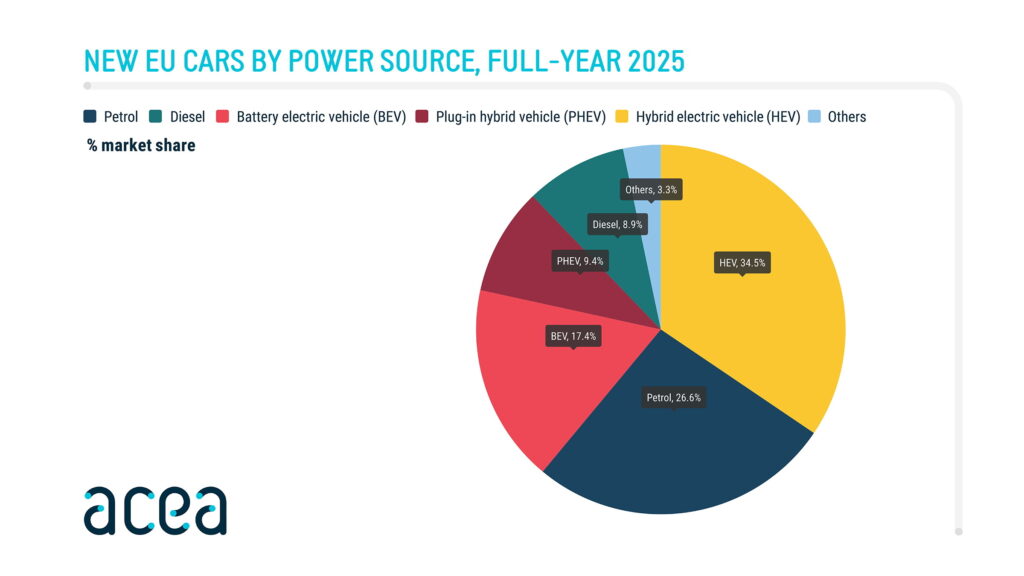
Despite the rapid growth of BEVs, traditional hybrids became the most popular powertrain on the continent last year. A total of 4,566,850 hybrids were sold, which is 12.4% more, and for the first time allowed them to overtake gasoline cars. In 2024, gasoline models led with 4,273,880 units sold, but in 2025 this figure sharply fell by 18.9% to 3,467,041.
Similarly, demand for diesel cars fell by 24%, allowing plug-in hybrids to overtake them with a total sales volume of 1,272,901 units, which is 33.4% more than in 2024.
December Dynamics
Registrations of fully electric cars in December soared to 308,955, which is 50.3% more than in the same month a year earlier. This proved sufficient to surpass sales of gasoline cars, which fell by 17.7% to 254,449. Sales of diesel models also decreased by 23.1% to 73,195. As for the whole year, hybrids remained the most popular choice in December with sales of 380,921 units, and demand for plug-in hybrids grew by 35.8%.
Nuances of Data Interpretation
While it is easy to conclude that electric cars completely overtook gasoline ones in December, this is not entirely accurate. The figures from the European Automobile Manufacturers’ Association include full and mild hybrids in the “hybrid electric vehicles” category, which led in sales. Most such hybrids use gasoline internal combustion engines to drive the wheels or charge the battery. Therefore, if hybrid and conventional gasoline cars were combined into one category, they would significantly outpace fully electric models.
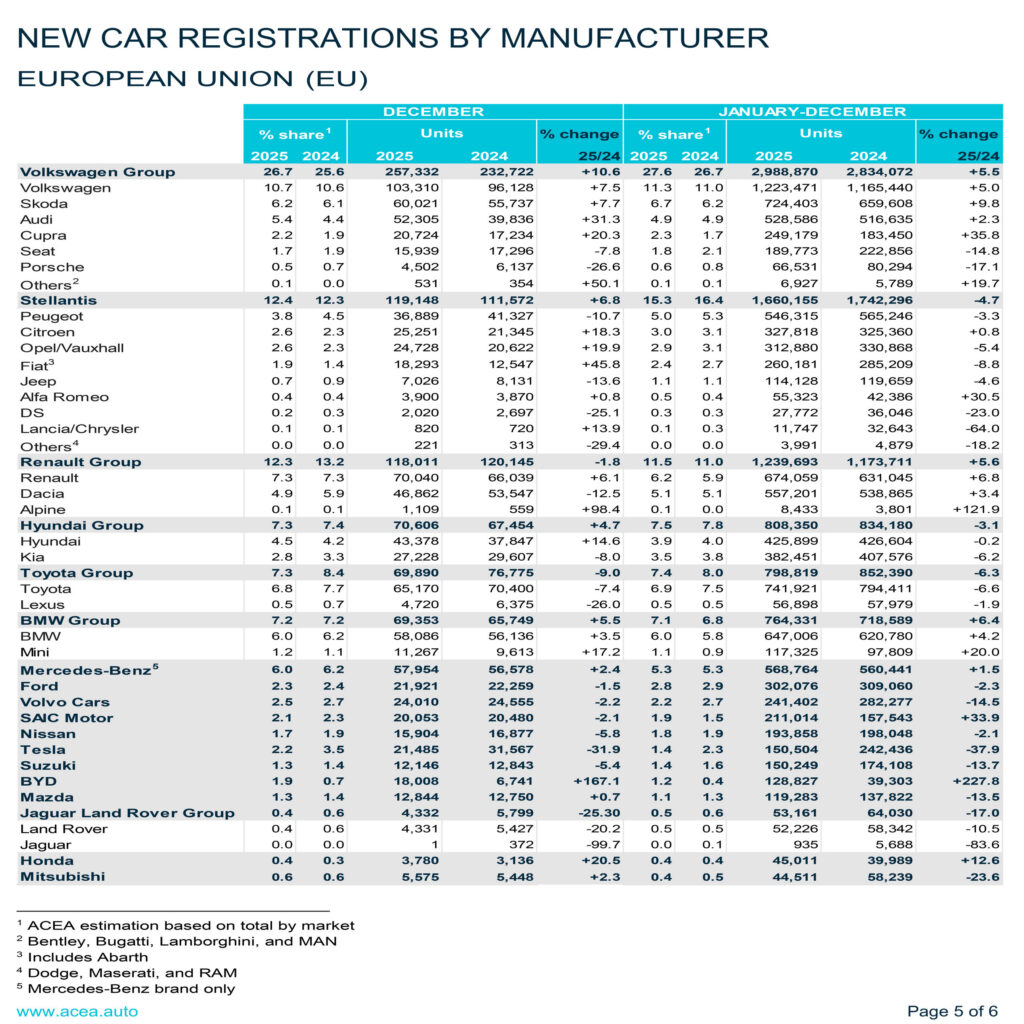
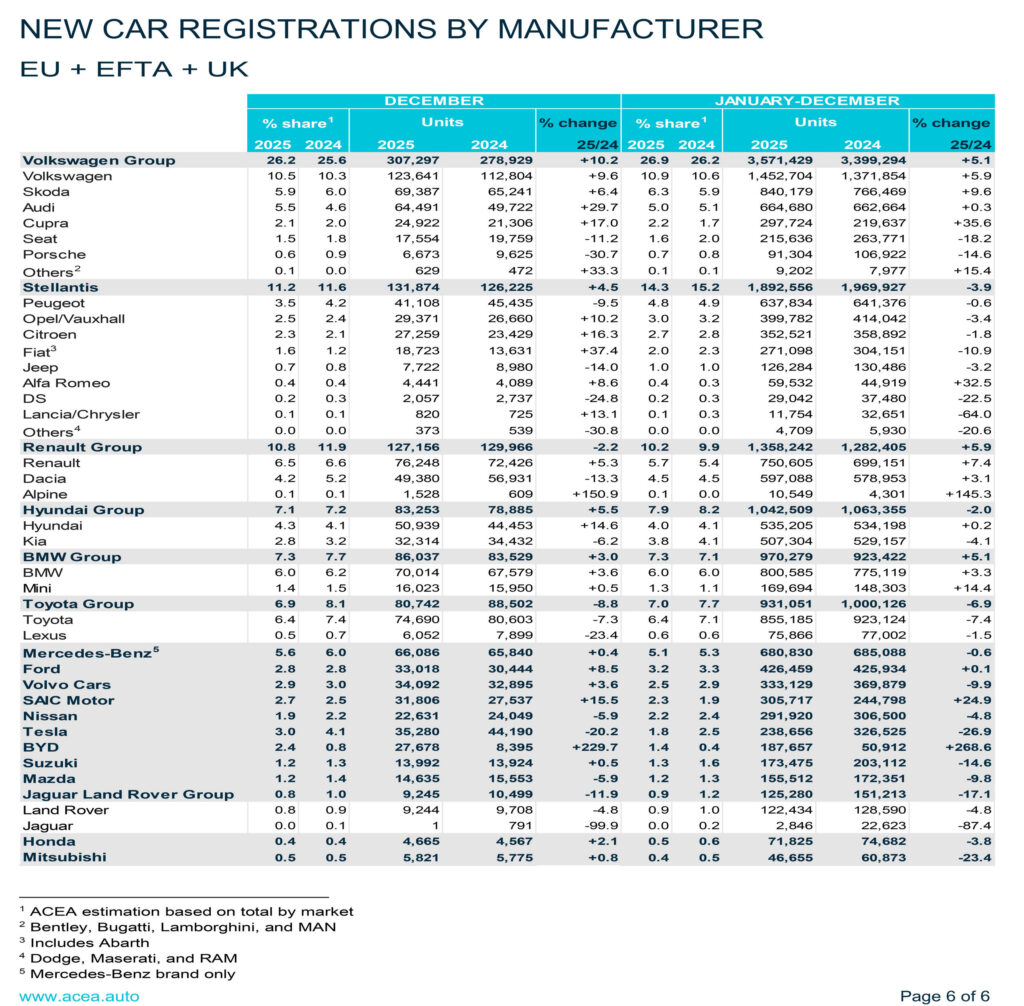


This data clearly indicates that the transition to alternative fuels in Europe is gaining momentum, but it is more complex and multi-layered than it may seem at first glance. The success of hybrid technologies, especially traditional hybrids, suggests that a significant portion of buyers prefer an intermediate solution that combines elements of electrification with familiar fuel refueling. This may be due to infrastructure limitations for BEVs, cost, or simply consumer conservatism. However, the rapid growth in sales of fully electric cars, especially in the last month of the year, shows that the technological barrier has been overcome, and the future undoubtedly belongs to them. The only question is how quickly the market will finally reorient itself.