by
by AI Takes Control of Traffic
Artificial intelligence is no longer just for chatbots or search. It is increasingly being integrated into public infrastructure. One unexpected front has become road safety. In Europe, this process is gaining momentum in Greece, where AI is radically changing traffic monitoring and compliance.
Greek authorities seem to have struck a nerve with a new generation of AI cameras, which have shown how many drivers ignore the rules when no one is watching. In early January, preliminary data showed that just one such camera in Athens issued over a thousand fines in four days.
Now officials have shared broader results from the pilot program, and the numbers are staggering. From December 15 to January 8, just eight cameras registered 28,973 violations.
What else can these cameras detect?
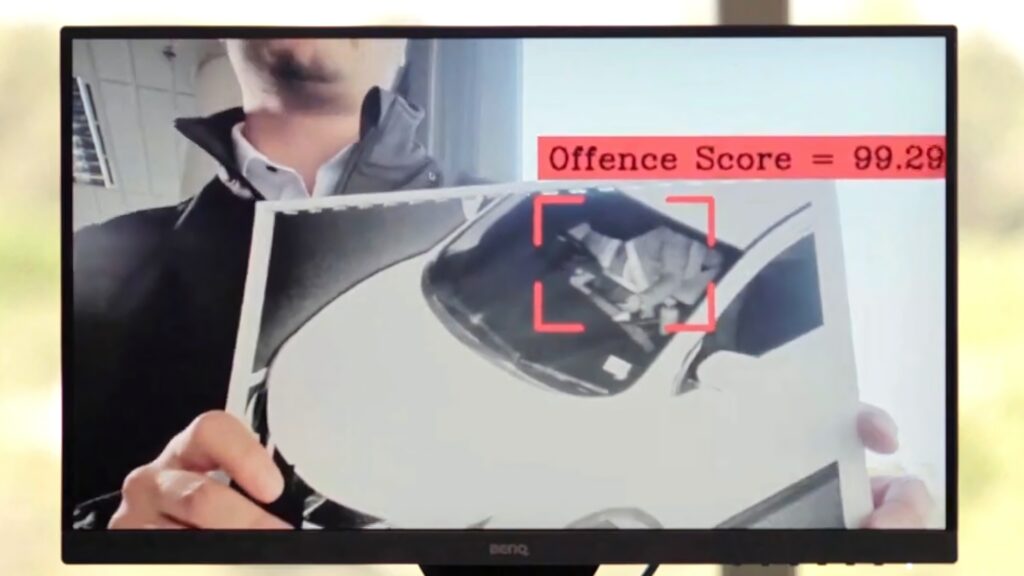
Unlike standard radars, which focus only on speed, the new AI-based systems have a much broader scope. They constantly analyze traffic situations and driver behavior, adding a more detailed, yet more intrusive, level of control. This is both a breakthrough and a minefield for privacy.
These cameras appear to be supplied by the Australian company Acusensus, whose systems are already operating in the UK, Greece, Australia, and other countries. They were even recently spotted in Arkansas as part of a new control program.
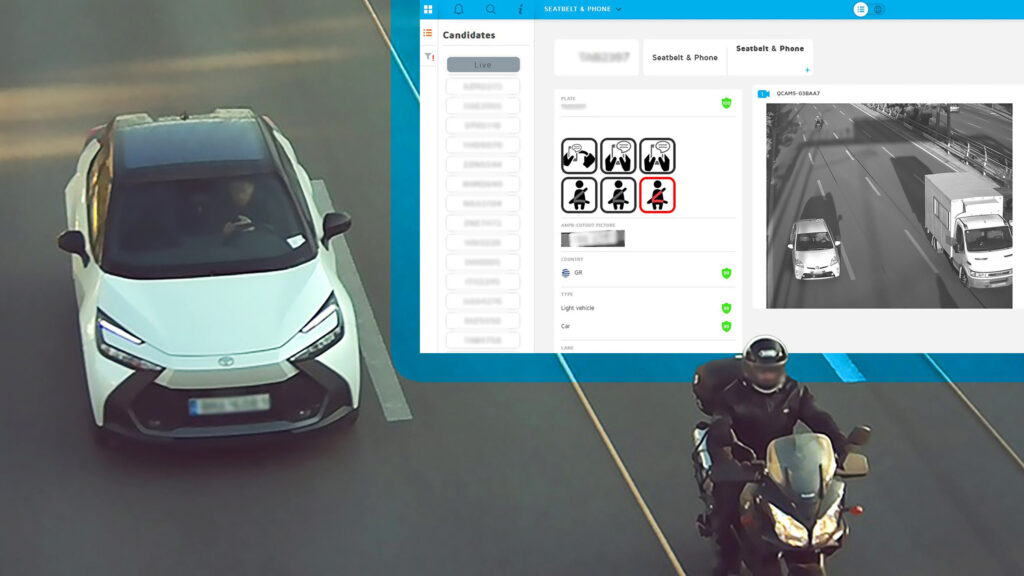
They are capable of automatically, without physical supervision, identifying drivers using mobile phones, not wearing seat belts, speeding, running red lights, or driving in bus lanes.
The results paint a much more candid picture of daily driver habits than traditional patrols could show. Despite the camera locations being publicly known, thousands of drivers still fall into the field of view as if no one is watching them.
How serious is the situation?
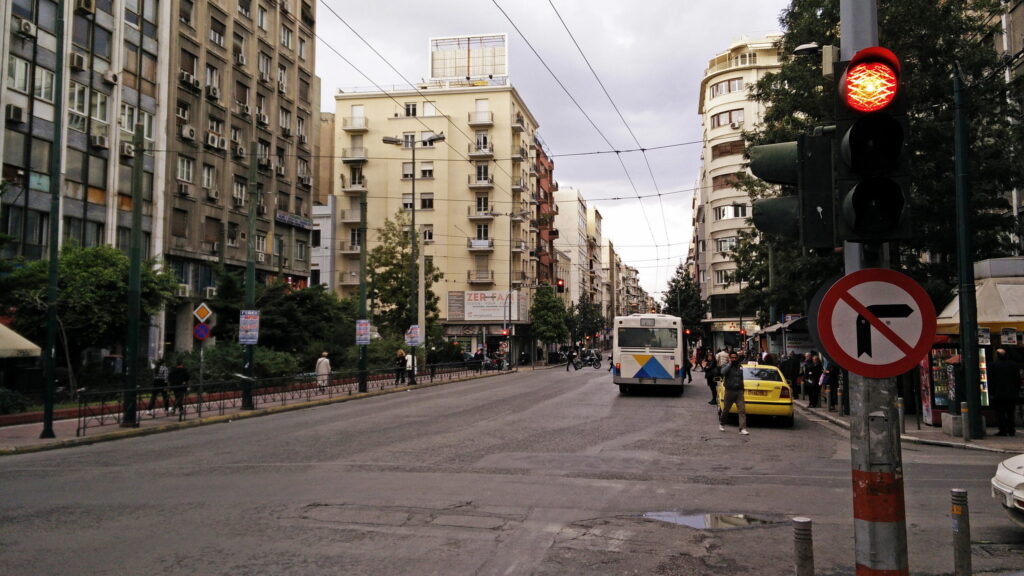
The first cameras were placed at seven key points in Athens and its southern suburbs, mainly along highways and intersections. Even with such limited deployment, the systems proved relentless, recording over 1100 violations per day. No traditional control method could achieve such scale.
Data from the Greek Ministry of Digital Governance shows the activity of individual cameras. One device on Syngrou Avenue detected over 8000 drivers who were either not wearing seat belts or using phones. It also recorded 1028 speeding violations in a 90 km/h zone.
At other major intersections, the situation with red-light running looks catastrophic. On Vouliagmenis Avenue, one camera recorded 13,722 such violations in less than a month. Mesogeion Avenue in Chalandri was not far behind, with 5872 drivers running a red light during the same period.
Automatic Fines Straight to the Phone
Currently, the AI cameras are in a calibration and evaluation phase, meaning violations are recorded but fines are not yet issued automatically. This is set to change later this month after full integration is complete. Violators will start receiving automatic fines directly in their digital mailboxes, with embedded photographs leaving little room for dispute.
The Price of a Mistake
Fines in Greece are substantial, even compared to the US. Driving without a seat belt or using a mobile phone is punishable by a 350 euro fine. Speeding fines range from 150 to 750 euros depending on severity.
Penalties for running a red light are also significant: a 700 euro fine and a 60-day license suspension for the first offense. A second offense increases the fine to 1000 euros and entails a 180-day license suspension. For a third offense, the fine is 2000 euros, and the license is revoked for a full year.
For comparison, the average monthly salary in Greece is about 1200 euros.
Privacy Laws Under Threat
However, the discussion is not only about punishment. The expanded use of these AI cameras raises legitimate questions about privacy, specifically how long video footage is stored, who has access to it, and how the data is used.
A source speaking on condition of anonymity expressed concern that the system may conflict with Greek and EU data protection legislation. They also suggested that the legality of the AI program could ultimately be challenged in court. This is not the first time Greece has found itself in a legal bind after implementing new technologies.
It is well known that the number of recorded violations is expected to increase significantly as more cameras are installed. The program includes 2000 cameras in fixed locations and another 500 mobile devices, with a budget of about 93.8 million euros before taxes for procurement, installation, integration, operation, and maintenance.
Who else is doing this?
AI-powered traffic control is becoming a common part of daily life in many countries worldwide. Countries like the UK, Germany, France, and Spain have been using intelligent camera systems for years to detect speeding, red-light running, and distracted driving, while Australia actively promotes camera technology for detecting mobile phone use.
Similar approaches have been integrated into road safety policies in the USA, India, China, Japan, and several Middle Eastern countries. Like it or not, “smart” control is becoming a global norm.
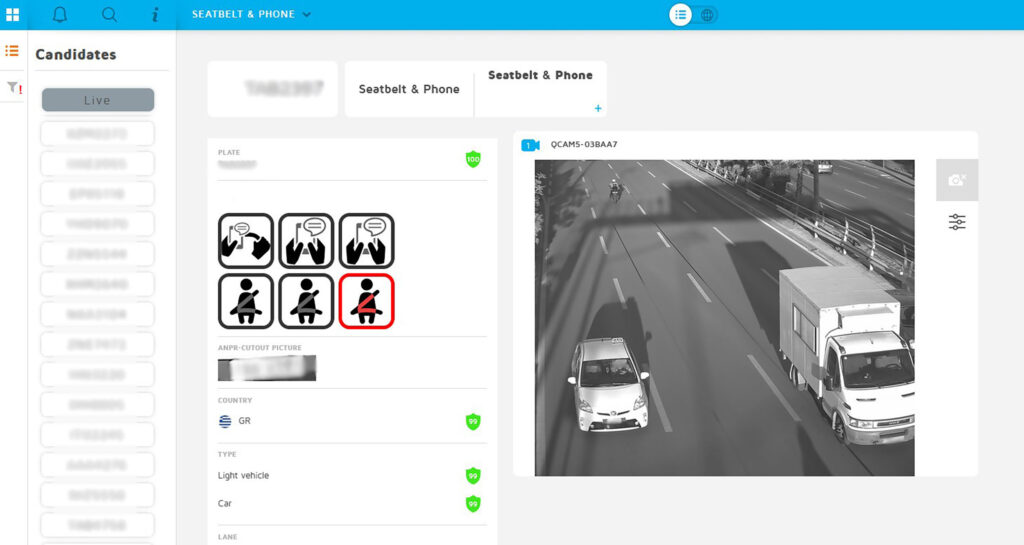
Ministry of Digital Governance
The scale of violations detected by even a small number of cameras points to a systemic problem with rule compliance. On one hand, implementing AI technologies can significantly improve road safety by forcing drivers to be more attentive. On the other hand, it inevitably leads to a public debate about the balance between safety and freedom, between collective protection and private life. The long-term effectiveness of such systems will depend not only on their technical perfection but also on public trust, transparency in data use, and clear legal frameworks that prevent arbitrariness. Greece’s experience will become an important test for many other countries considering similar measures.