


The city of Hoboken, New Jersey, has not recorded a single fatal car crash on its roads in over nine years. This achievement raises questions for other municipalities, which often justify their own inaction by a lack of funds or technology.
How did the city achieve zero fatalities?
Most of the safety improvements in Hoboken were relatively inexpensive and simple. The city’s success refutes many of the excuses put forward by other municipalities. Every politician says safety comes first. Police departments claim the same. Every transportation agency promises to work on reducing accidents. Yet pedestrian fatalities in the US remain at near-record levels over the last decades.
Hoboken, a city of about 60,000 people, has not reported a single fatal accident since January 2017. That is not a mistake. For over nine years, no one has died in traffic accidents on the streets of Hoboken. And this makes every other municipality in the US somewhat hypocritical.
What is unpleasant for the rest of the country is that Hoboken achieved this not through a revolutionary technological breakthrough. It did not ban cars. It did not spend billions on rebuilding the city from scratch. And it did not discover some secret recipe unavailable to others. Instead, it used a set of relatively simple infrastructure changes that transportation experts have been recommending for years.
The $20 solution that changed everything
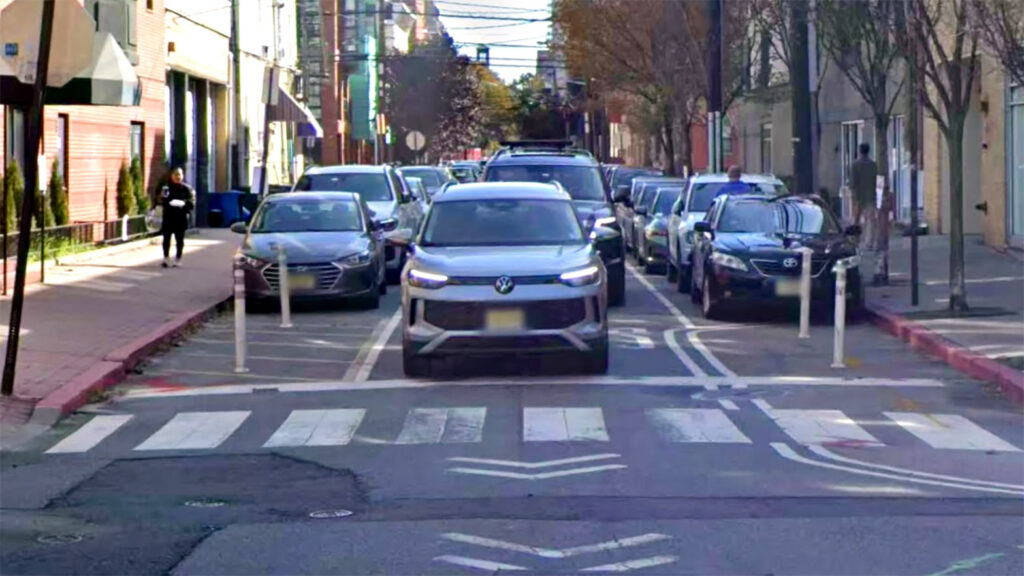
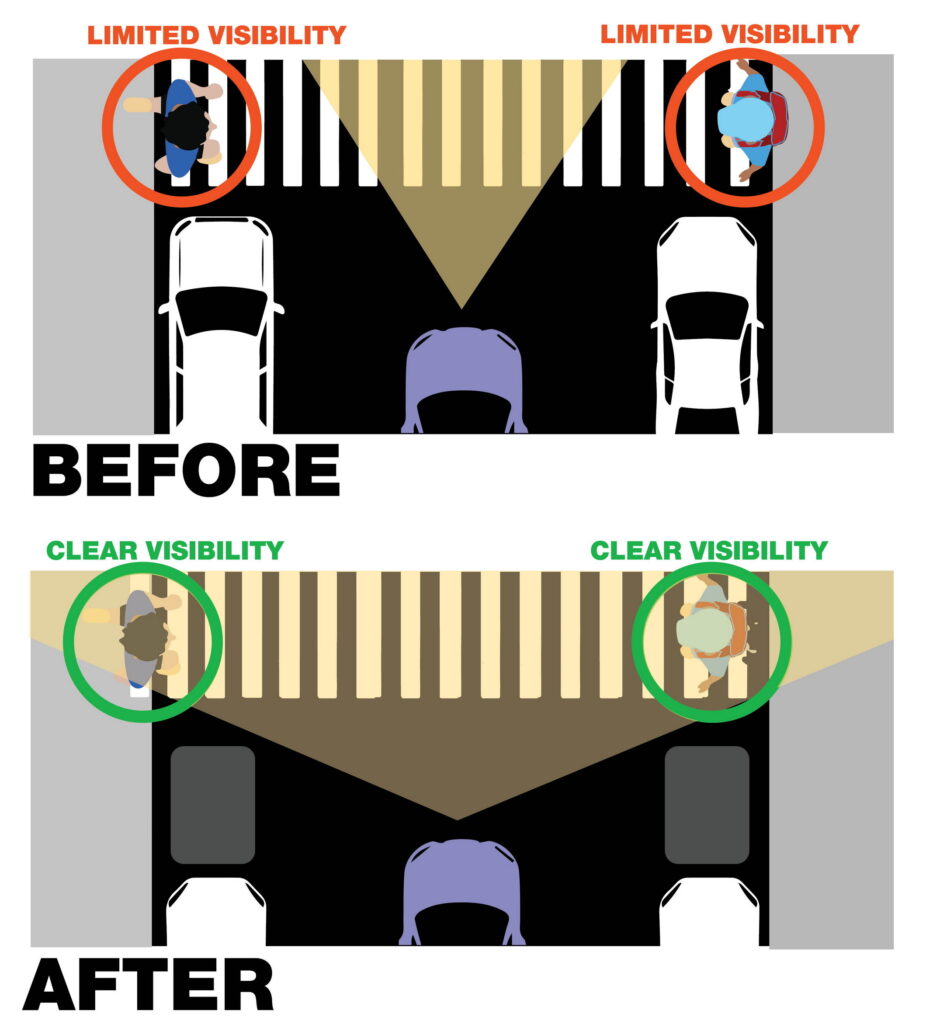
According to a new video by Safe By Design, the city focused on intersections, finding that 88 percent of accidents involving cyclists and pedestrians occur there. Their signature solution was almost comically cheap: two plastic bollards at each corner, installed to prevent cars from parking too close to intersections, for about $20 per corner.
These bollards cleared sight lines so that drivers turning right could finally see pedestrians stepping off the curb, and vice versa. This technique worked so well that it became a separate federal case study, the “Hoboken Sightline,” and formed the basis of a broader safety campaign that reduced pedestrian injuries by 30 percent between 2009 and 2019.
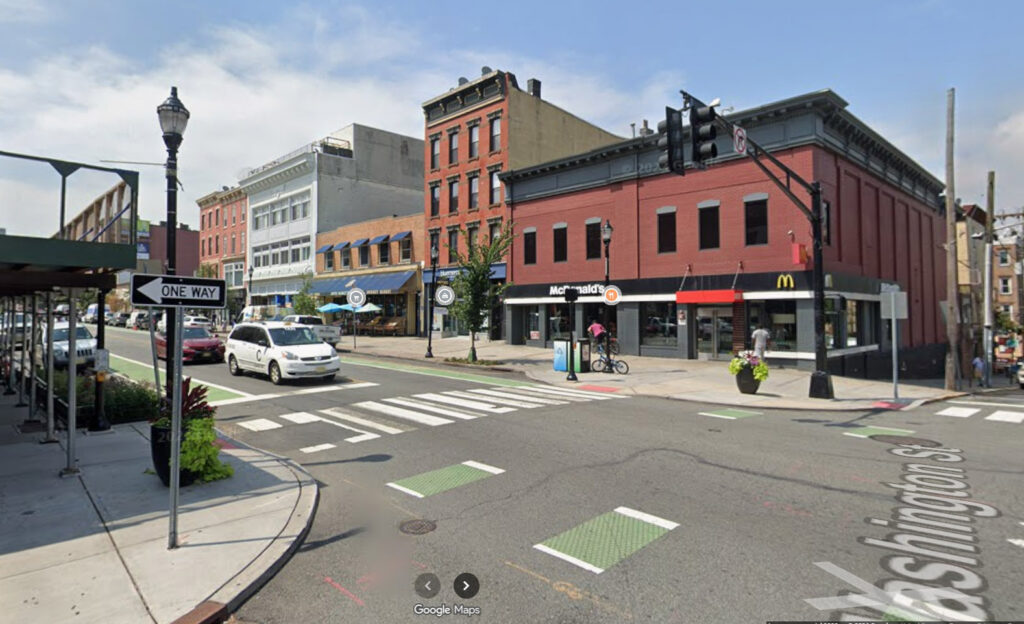
The city did not stop there. Crosswalks became more visible. Traffic light timing was adjusted to give pedestrians priority before traffic could move. Speed limits were lowered. Curb extensions shortened crossing distances.
None of these ideas are new, but what makes them effective is that they do not depend on a person making the right choice. In fact, they create additional protection for when people make mistakes. That is the lesson that no other city in America seems willing to learn the way Hoboken has.
Infrastructure beats good intentions

Safety campaigns, warning signs, and even law enforcement measures have their place, but they rely on a fatal (literally for some) flaw… relying on people to consistently make the right choice. Infrastructure is king of safety precisely because it does not depend on this, and this city in New Jersey proves it.
A driver can ignore a safety campaign. But they cannot ignore a physically narrower lane. They might forget a public service announcement. But they cannot park in a space that no longer exists. People are imperfect, distracted, tired, impatient, and sometimes reckless. Effective safety design accepts this reality, rather than pretending it can be eliminated.
Many slogans, but not enough commitment

In many ways, Hoboken’s achievement exposes the greatest weakness of Vision Zero efforts across the United States. Many cities have adopted the slogan. But far fewer have agreed to compromises, such as slower traffic, less parking, and a greater focus on actual safety rather than convenience.
At a time when traffic accidents claim tens of thousands of lives each year across America, Hoboken’s record suggests the problem is not a lack of knowledge. The solutions are widely known. Many are inexpensive, like the plastic bollards costing about $20 per corner. The data supporting them already exists. The data supporting them already exists. What seems to be missing is genuine commitment to safety, rather than the symbolic kind suitable only for loud statements or press releases.
Source: Google Maps
This example shows that even small and cheap infrastructure changes can have a dramatic impact on road safety. The main takeaway from Hoboken’s experience is that true commitment to safety requires not just slogans, but a willingness to change the physical environment, even if it goes against drivers’ habits. Other cities that continue to rely solely on campaigns and fines may want to reconsider their approaches, because the most effective way to prevent a tragedy is to make it physically impossible.